Quick answer
Fit a Rover Collar so it sits high on the neck, just behind the ears, with enough room to slide two fingers flat under the strap. That amount of snugness keeps the collar from slipping off during walks, runs, or collar grabs without pressing hard enough to rub the coat or skin. Adjust in small increments and recheck after every change.
Why collar position matters more than tightness alone
A collar that sits low on the shoulders can slide forward when your dog lowers its head to sniff, which is a common reason a collar feels too loose even when the strap is snug. Moving the collar higher on the neck, just behind the ears, uses the natural taper of the neck to hold it in place. This position also keeps the buckle or hardware away from the throat, where pressure and rubbing are more likely. If your dog has a thick coat or a very muscular neck, you may need to adjust the strap slightly tighter than you would on a short-haired dog to get the same hold.
The two-finger check: how to test correct collar tightness
Slide two fingers flat between the collar and your dog's neck. You should feel mild resistance but still be able to move the fingers. If you can fit three or more fingers, the collar is likely too loose and may slip over the head. If you cannot fit two fingers, it is too tight and can cause chafing or restrict swallowing. This check works for any adjustable dog collar, including the Rover Collar, because it measures the gap rather than relying on a number on the strap.
Common mistakes that lead to slipping or chafing
One frequent mistake is adjusting the collar only while the dog is standing still. Collars can loosen slightly as the dog moves, so check the fit after a short walk or play session. Another mistake is leaving the collar on the same setting as a puppy grows or as a dog's coat changes with the seasons. A thick winter coat can make a previously snug collar feel tight, while a summer shed can make it loose enough to slip. Recheck the two-finger gap monthly and after any major change in coat or weight.
Step-by-step Rover Collar fit
- Measure the neck at its widest point: Use a soft tape measure around the middle of the neck, just behind the ears and in front of the shoulders. Keep the tape snug but not tight. If you do not have a soft tape, use a piece of string and measure it against a ruler. Write down the measurement and compare it to the Rover Collar size range before you adjust anything.
- Choose the size that puts your measurement in the middle of the range: If your dog measures near the top of a size range, size up rather than down. A collar that is adjusted near its smallest setting can have excess strap that sticks out, while one at its largest setting may not have enough overlap for secure hold. Checkpoint: the collar should have at least a few centimeters of adjustment left in both directions.
- Put the collar on and position it high on the neck: Slide the collar up so it rests just behind the ears, not down on the shoulders. This position uses the neck's natural shape to keep the collar from sliding forward during walks. Mistake to avoid: leaving the collar low because it looks looser there. Low placement is a common cause of slipping.
- Adjust the strap to the two-finger gap: Tighten or loosen the strap until you can slide two fingers flat under it with mild resistance. Do this on both sides of the neck if the collar has a buckle or slider that can shift. Checkpoint: if you can fit three fingers, tighten one notch. If you cannot fit two, loosen one notch.
- Test the fit with movement: Walk your dog, ask for a sit, and gently tug the collar as if checking a leash. The collar should not rotate around the neck or slide over the head. Watch for any sign of rubbing, such as your dog scratching at the neck or a red mark after removal. If the collar moves more than a little, tighten one notch and retest.
- Recheck monthly and after coat changes: Weight gain or loss, winter coat growth, and summer shedding all change neck size. A collar that fit in January may be too tight in July or too loose in December. Set a monthly reminder to do the two-finger check again.
Rover Collar fit details that help
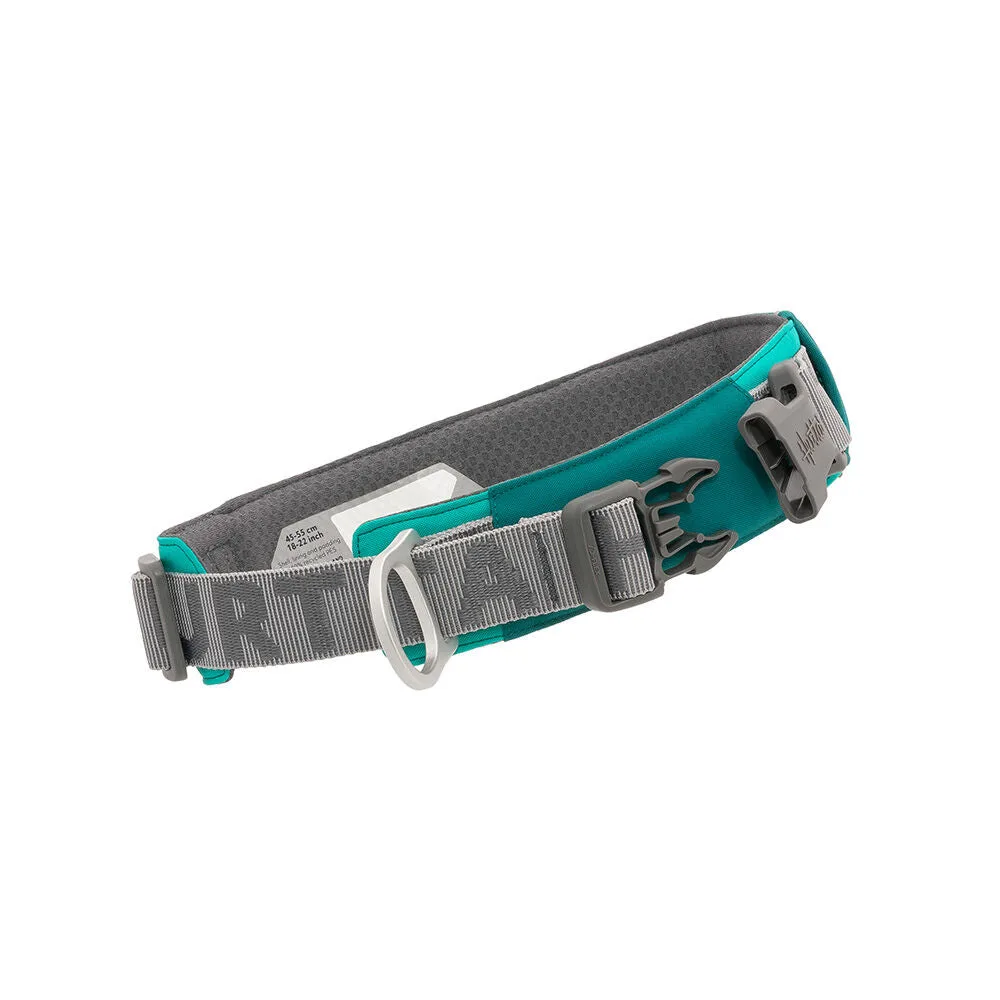
- Rover Collar: Rover Collar is engineered for rugged durability, supreme comfort, and uncompromising safety, and is designed for medium and large dogs. The medium and large sizing means the strap width and hardware are built for stronger pull, so getting the two-finger gap right matters more than on a lightweight collar.
- Rover Collar: Rover Collar is available in multiple colors and sizes. If your dog is between sizes or has a thick coat, choosing the larger size and adjusting down can give you more room to find a chafe-free fit.