Quick Answer
Fit the FORMFIT Mesh Harness by adjusting the straps to a snug but not tight fit, ensuring the chest plate sits behind the elbows and the D-ring rests on the upper back for secure leash attachment.
Why a Proper Fit Matters for Active Dogs
Active dogs need a harness that stays in place without rubbing or restricting movement. The FORMFIT Mesh Harness is lightweight and breathable, but incorrect adjustments can lead to chafing or slipping during runs or jumps.
Because the harness uses a single chest strap and a belly strap, the fit must be balanced: too loose and the dog can back out; too tight and it can cause discomfort or restrict breathing. The mesh fabric helps with airflow, but proper positioning is key to avoiding skin irritation.
Step-by-Step Fitting Guide
- 1. Loosen All Straps Before Putting On: Unbuckle the harness and fully loosen the chest and belly straps. Slip the harness over your dog's head, or if your dog is small, step the front legs through the leg openings. The D-ring should sit on the upper back, not on the neck or lower spine. Common mistake: putting the harness on while straps are too tight, making it hard to adjust later.
- 2. Adjust the Chest Strap First: Tighten the chest strap so it sits snugly behind the elbows—about two finger widths of slack. The strap should not press into the armpits or slide forward. Check that the chest plate (the padded part) lies flat against the body. If the chest strap is too loose, the harness can rotate and cause chafing under the legs.
- 3. Adjust the Belly Strap: Tighten the belly strap so it sits just behind the ribcage, leaving one finger width of slack. The strap should be snug enough that you can't pull it more than an inch away from the body. Avoid overtightening, which can restrict breathing. A common error is tightening the belly strap too much, causing discomfort when the dog runs.
- 4. Check the D-Ring Position: The stainless steel D-ring should rest centered on the upper back between the shoulder blades. If it slides to the side or neck, readjust the chest strap. A centered D-ring ensures even pull distribution during leash use. An off-center D-ring can cause the harness to twist, leading to uneven pressure and potential escape.
- 5. Test the Fit with Movement: Let your dog walk, trot, or run for a minute. Check that the harness does not shift more than an inch in any direction. Look for any red marks or rubbing on the skin after removal. If the harness rides up, tighten the belly strap slightly. Always perform a movement test before a long walk; a static fit can feel fine but fail during activity.
- 6. Secure the Side Patches (Optional): If you have the customizable side patches, attach them to the harness loops. Ensure they do not dangle or catch on objects. They are purely decorative but can help with identification. Loose patches can be a choking hazard if chewed, so ensure they are securely attached.
Product Facts
-
FORMFIT® Mesh Harness: The FORMFIT Mesh Harness features breathable mesh fabric and reflective trims for safety. The mesh keeps active dogs cool during exercise, while reflective trims improve visibility in low-light conditions, making it safer for evening walks.
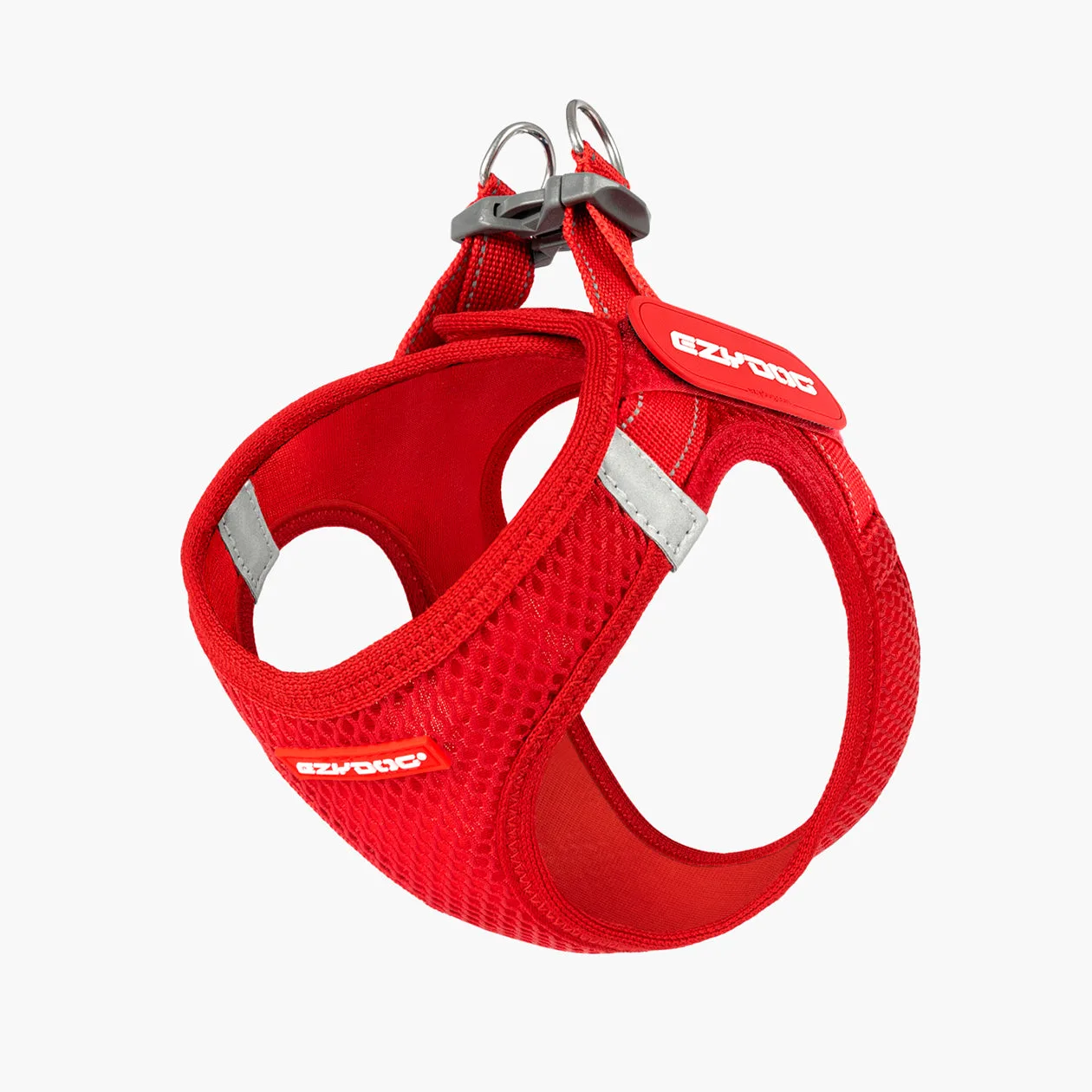
FORMFIT® Mesh Harness