Quick answer
The most reliable fix for a slippery area rug on a hard floor is to place a rug pad underneath that is slightly smaller than the rug. Choose a pad with a rubber or latex backing designed for hard surfaces, and make sure it lies flat without curling at the edges.
Why rugs slip and why it matters
On hard floors like hardwood, tile, or laminate, area rugs lack the natural grip they get from carpet. Foot traffic, vacuuming, and even pets can gradually shift the rug, creating wrinkles and a trip hazard. Beyond annoyance, a sliding rug can cause falls, especially for children or older adults.
The fix usually starts with the surface underneath. Smooth, polished floors are the hardest to grip, while textured tile or matte finishes hold better. If your rug still moves after adding a pad, the problem may be the rug's backing or the pad's size rather than the pad itself.
Rug pad thickness and material trade-offs
Not all rug pads work the same on hard floors. Felt pads provide cushioning and protect the floor, but they may not grip well on their own. Rubber-backed pads, like the Linon Home Decor Underlay Premier Plush Grey Rug Pad, combine felt cushioning with a rubber backing that grips smooth surfaces. This type works well for medium-weight rugs on hardwood or tile.
Thicker pads add more cushion but can create a bump at the rug's edge, which may become a tripping point. If your rug is thin or lies in a high-traffic hallway, a thinner, more flexible pad is often safer. Also, check that the pad is slightly smaller than the rug—usually 1 to 2 inches shorter on each side—so it does not peek out from under the rug.
Diagnose and fix your slippery rug
- Symptom: Your area rug slides, wrinkles, or bunches up when you walk on it, especially on hardwood, tile, or laminate. You may also notice the rug's edges curling or the backing wearing thin. Confirm the floor type and whether the rug's backing is smooth or textured—this determines the best fix.
- Likely cause: The most common cause is a lack of grip between the rug's backing and the smooth hard floor. Worn backing, a too-small pad, or a pad with a slippery surface can also allow movement. Check if an existing pad is the correct size and has a rubber or latex backing. If not, that's likely the culprit.
- Corrective action: Place a rug pad with a rubber backing under the rug, ensuring it is slightly smaller than the rug and lies flat. For extra grip on very smooth floors, you can also use double-sided carpet tape along the edges or a commercial rug gripper. After installing, walk across the rug and vacuum it to test if it stays in place. If it still moves, proceed to the next step.
- When to stop or choose another option: If the rug continues to slide after using a properly sized rubber-backed pad and tape, the rug's backing may be too smooth or damaged. At this point, consider replacing the rug or having it professionally re-backed, rather than stacking multiple pads, which can create lumps and a tripping hazard. If the rug still moves after these steps, stop adding layers—replace the rug or consult a professional for re-backing.
Product facts
-
Linon Home Decor Underlay Premier Plush Grey Rug Pad: The Linon Home Decor Underlay Premier Plush Grey Rug Pad is made from carpet fibers with a rubber backing, designed for use on smooth surfaces or over carpet. This pad's rubber backing grips hard floors, while the felt layer adds cushion and protects the floor from scratches—making it a solid choice for a slippery rug on hardwood or tile.
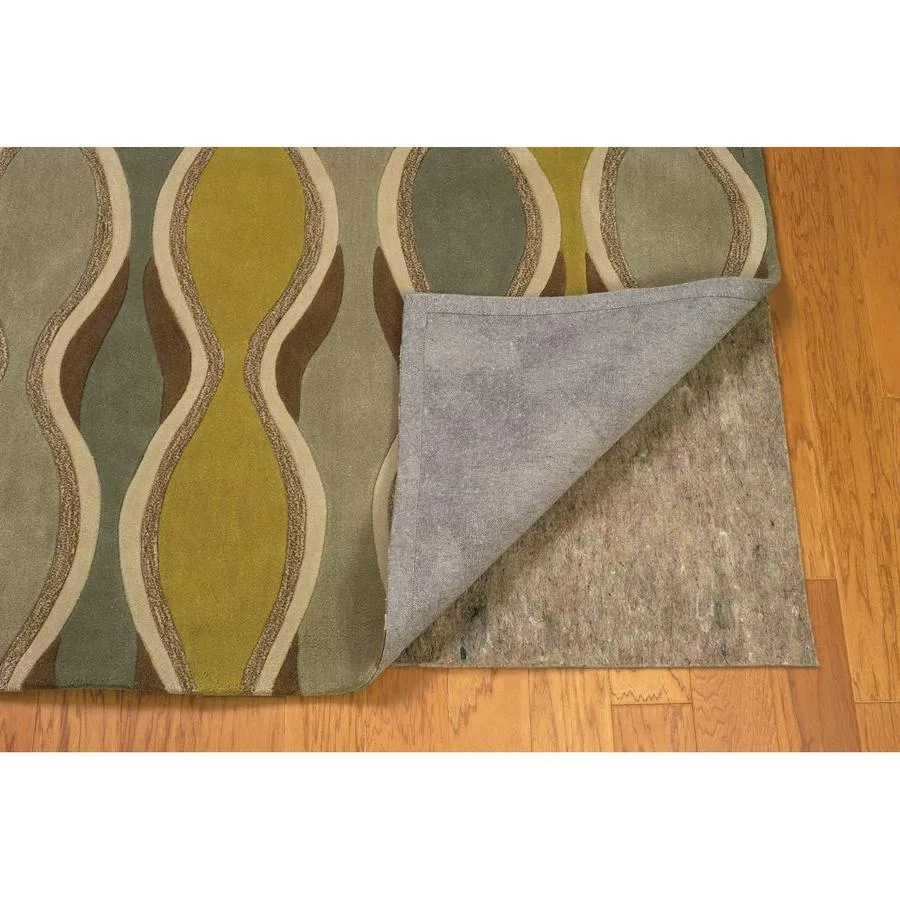
Linon Home Decor Underlay Premier Plush Grey Rug Pad