Quick answer
Most anime figure joint and pose problems come down to three causes: a joint that has worn loose, a joint that is stuck or gritty, or a figure whose center of gravity is wrong for the pose. Start by identifying which one you have, then use the gentlest fix first. If the joint is cracked, the peg is snapped, or the plastic feels brittle, stop and consider a display-only pose or a replacement instead of forcing a repair.
Why figure joints loosen, stick, or fail
Joints are mechanical parts, not just sculpted details. A ball joint, hinge, or peg relies on friction between two surfaces. When that friction drops, the limb droops. When grit, paint, or a tight mold tolerance gets between those surfaces, the joint sticks or squeaks. When the surrounding plastic is thin, repeated force can crack the socket.
Environment matters too. Heat softens PVC and can make a joint feel looser than it is, while cold makes plastic more brittle and easier to snap. Before you apply any fix, let the figure sit at room temperature and test the joint with slow, controlled movement rather than quick force.
How to test a joint without making it worse
Hold the figure by the torso or base, not by the limb you are testing. Move the joint through its intended range only, and stop the moment you feel hard resistance. A healthy joint moves smoothly with some friction; a failing joint either flops with no resistance or refuses to move at all.
If the joint is hidden under clothing, armor, or hair, do not pry those parts off unless the figure was designed for it. On many statues, including fixed-pose pieces, there is no articulation to repair, and the correct answer is to adjust the display angle or base instead.
Fixes for a loose joint
For a ball joint that droops, the goal is to add friction without adding bulk. A tiny amount of clear nail polish or a thin layer of acrylic medium on the ball, fully dried before reassembly, can restore grip. Apply less than you think you need, let it cure, test, and repeat only if necessary.
For a peg that slips out of a socket, check whether the peg is fully seated before adding anything. If it seats but will not stay, a small piece of plumber's tape or a thin strip of silicone tape around the peg can add grip. Avoid glue inside a joint you want to keep movable; cyanoacrylate can fuse the parts permanently and ruin the articulation.
Fixes for a stuck or squeaky joint
Do not force a stuck joint. First check for trapped paint, flash, or debris at the seam. A soft brush and a little warm air from a hair dryer on low can help, but keep the heat moving and stop before the plastic feels flexible.
If the joint is squeaky rather than stuck, a trace of silicone-based lubricant on a toothpick applied to the joint gap can quiet it. Avoid oil-based products, which can degrade some plastics and attract dust. Work the joint gently through its range, then wipe away any excess.
Fixes for an unstable pose
Many pose problems are balance problems, not joint problems. If a figure leans or tips, check the base first. A figure with a rocky terrain base or a dynamic effect base needs that base to sit flat and fully support the feet or contact points.
If the base is fine but the figure still tips, shift the center of gravity: angle the torso more upright, move a heavy accessory closer to the body, or rotate the figure on the base so the widest support point faces the direction of the lean. For figures with light effects or large translucent parts, keep those parts from pulling the silhouette off-balance.
Joint problem diagnosis
- Limb droops or will not hold a pose: The joint surfaces have lost friction, usually from wear or repeated posing. Add a thin, dry layer of clear acrylic medium or nail polish to the ball, or wrap the peg with a small strip of silicone tape. If the joint still droops after two thin layers, stop adding material and display the figure in a supported pose.
- Joint feels gritty, squeaky, or stuck: Debris, paint, or tight tolerances are interfering. Clean the seam with a soft brush, use low warm air if needed, and apply a trace of silicone lubricant to the gap. If the joint will not move with gentle pressure, do not force it. A cracked socket is worse than a stiff pose.
- Figure tips or leans on its base: This is usually a balance or base problem, not a joint problem. Check that the base is flat, the contact points are seated, and heavy or translucent parts are not pulling the figure off-center. If the base itself is warped or the figure cannot stand without support, use a display stand or choose a more upright pose.
Catalog details that affect joint and pose handling
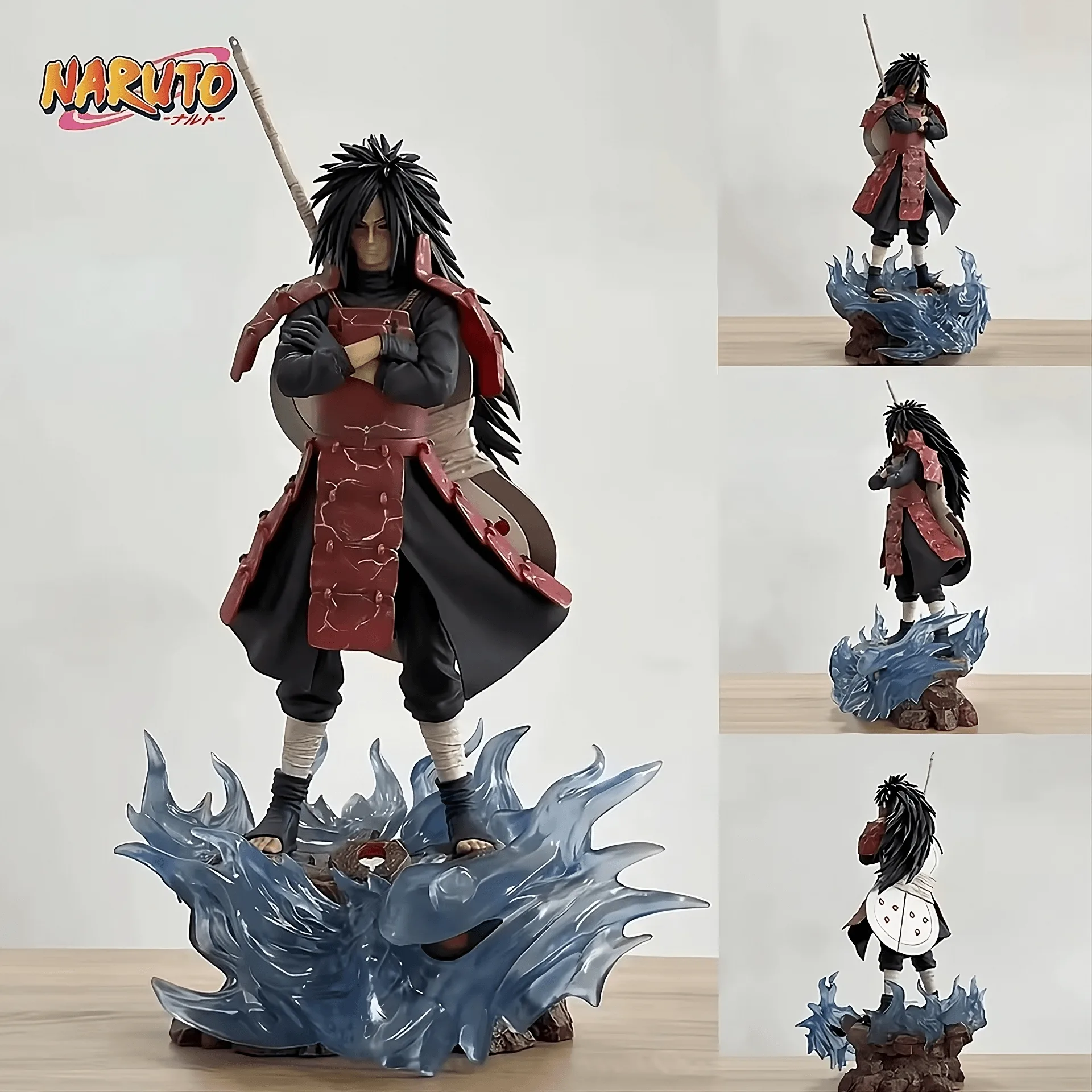
- Naruto Shippuden – Uchiha Madara Action Figure | 42cm with Light Effect: 42cm tall with intricate armour and a realistic base sculpt with chakra water effects, plus a built-in light feature. At this size, the base and armor do most of the stability work. Check that the base sits flat and that the light feature does not force you to lean the figure, since a top-heavy pose will stress any joint or contact point.
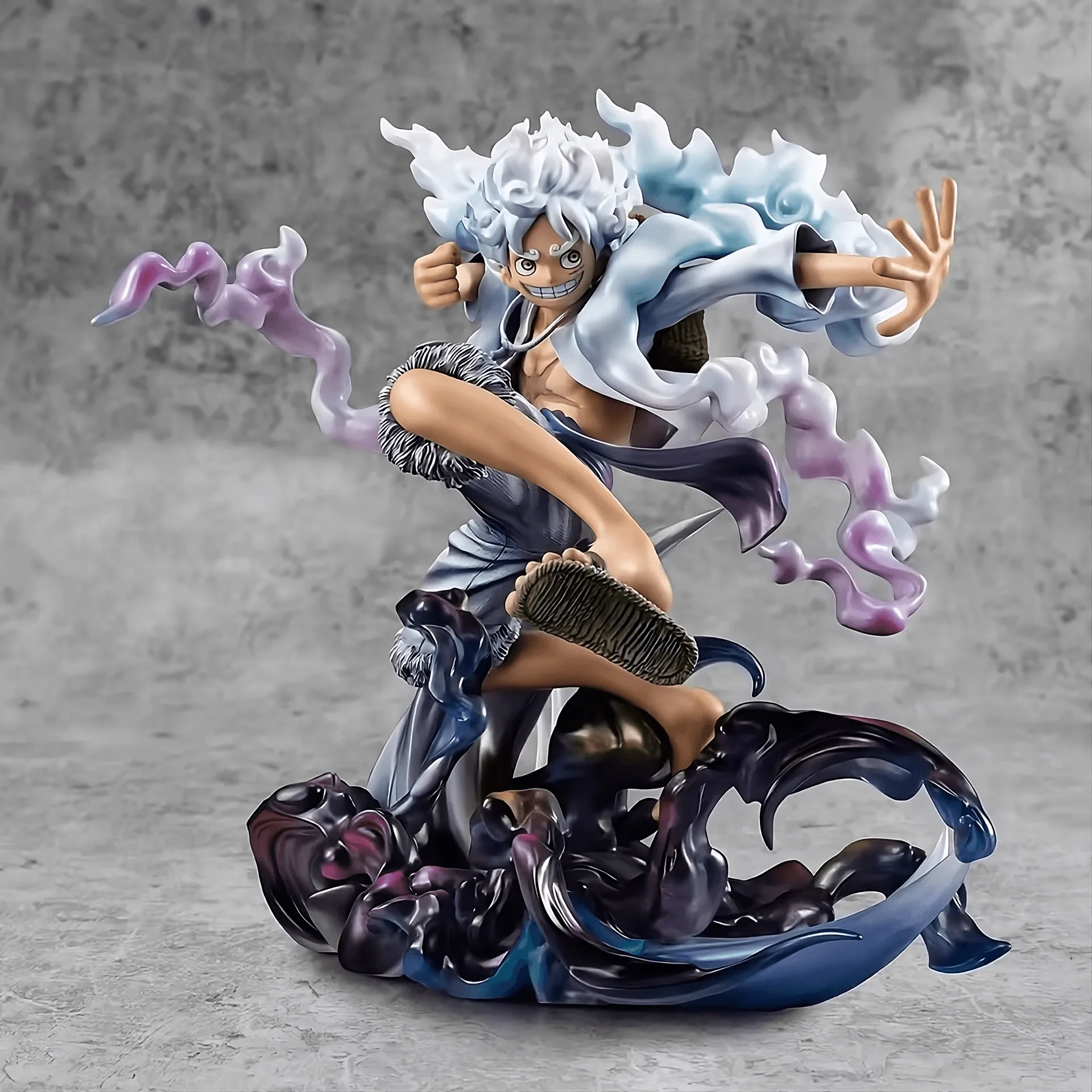
- One Piece – Gear 5 Luffy "Sun God Nika" Action Figure | 23cm Collectible Statue: 23cm Gear 5 Luffy figure with a high-action battle stance and a dynamic Haki effect base, hand-painted with translucent smoke effects. Dynamic stances and effect bases often look unstable if the contact points are not fully seated. Confirm the feet and effect parts rest correctly on the base before adjusting any articulation.
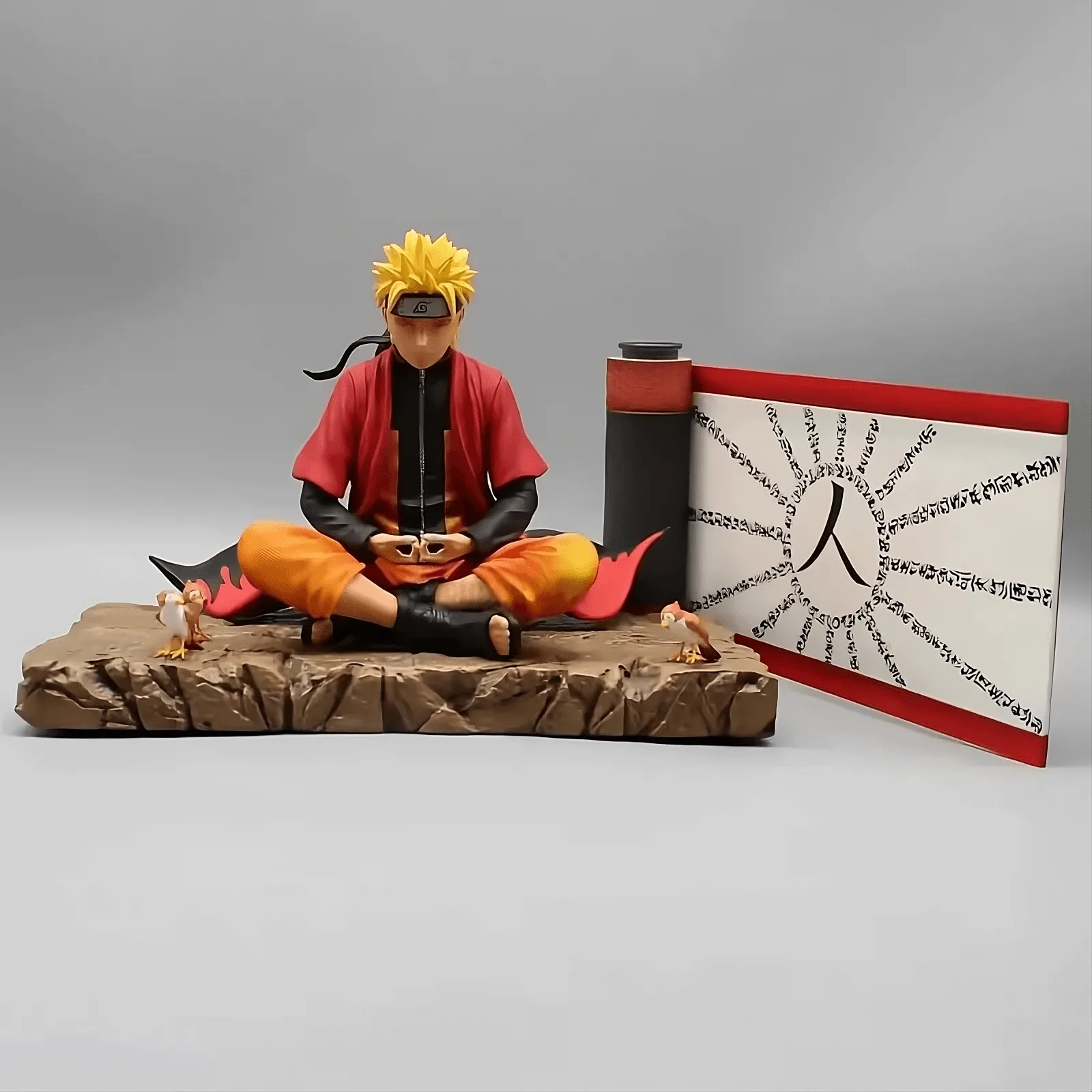
- Naruto Uzumaki Sage Mode Meditation Figure (16cm): 16cm Naruto Uzumaki Sage Mode figure in a sitting meditation pose with a scroll display, on a rocky terrain base with miniature toads and a scroll backdrop. A seated pose has a low center of gravity and usually needs no joint tightening. If it wobbles, the cause is almost always the base surface or the scroll backdrop, not the figure itself.