Quick answer
Most broken lingerie straps and hooks are fixable at home. If the strap has slipped off the slider, re-thread it and stitch a stopper. If the hook has bent or snapped, replace it with a matching hook-and-eye set from a sewing kit. If the fabric around the hook is torn or the elastic has lost its stretch, stop and replace the piece instead.
A snapped strap or a bent hook rarely means the end of a favorite set. In most cases, the damage is isolated to one small component, and you can fix it in under ten minutes with basic sewing supplies. The key is diagnosing what actually failed before you start pulling out the needle.
This guide walks through the three most common lingerie strap and hook failures, what causes them, and exactly how to repair each one. You will also find clear stopping points so you know when a repair is no longer worth the effort.
What usually breaks first: strap, slider, or hook
Before you thread a needle, look closely at where the failure happened. A strap that has slipped out of its slider is a different problem from a strap that has torn away from the cup. A hook that has flattened under pressure is different from a hook whose fabric backing has ripped. Each has a different fix and a different chance of lasting.
The most common issue is the slider: the small plastic or metal piece that adjusts strap length. The strap loops through it, and over time the loop can work loose. The second most common is the hook-and-eye closure at the back, where the metal hook bends or the thread holding it unravels. True elastic failure, where the strap itself has lost its stretch, is less common but harder to reverse.
- Check the slider first: if the strap is intact but loose, you likely just need to re-thread it.
- Check the hook: if the metal is bent but the fabric is intact, replacing the hook is straightforward.
- Check the elastic: if the strap feels limp or stays stretched out, the elastic has failed and repair is temporary at best.
How to fix a strap that slipped out of the slider
This is the easiest repair. Thread the end of the strap back through the slider, following the same path it originally took. If the strap end has a finished edge, you may need to fold it narrowly to fit. Once threaded, adjust the strap to your usual length and sew a few small stitches just below the slider to act as a stopper. This prevents the strap from slipping out again.
Use a needle and thread that match the strap color. A whip stitch or a few tight overcast stitches will hold without adding bulk. Do not knot the thread directly against the slider, as that can create a lump under clothing. Instead, anchor the stitches into the strap itself and tie off discreetly.
- If the strap end is frayed, trim it neatly before re-threading.
- Sew the stopper on the underside of the strap so it does not show.
- Test the adjustment a few times before wearing to make sure the stopper holds.
How to repair a bent or broken hook
If the hook itself is bent but not snapped, you can sometimes reshape it gently with needle-nose pliers. Work slowly and avoid bending it back and forth, which weakens the metal. If the hook has snapped or the eye is deformed, replace the entire hook-and-eye set. Cut the old stitching carefully, remove the damaged piece, and sew on a matching replacement from a lingerie repair kit.
Match the replacement hook to the original size and color as closely as possible. A hook that is too large will not sit flat; one that is too small will not hold. Use a heavy-duty thread and sew through the existing holes in the hook, reinforcing with a few extra stitches at the corners. This is the highest-stress point on most lingerie, so a secure attachment matters.
- Never reuse a hook that has already snapped once; it will fail again.
- Sew through all available holes on the replacement hook for stability.
- If the fabric around the hook is torn, reinforce it with a small patch of soft interfacing before sewing.
When to stop repairing and replace the piece
Some damage is not worth fixing. If the elastic along the strap or band has lost its stretch, the piece will not stay in place no matter how well you sew. If the fabric around the hook has torn through, a patch may hold temporarily but will likely fail under tension. And if multiple components are failing at once, you are better off replacing the set.
A good rule: if the repair requires more than ten minutes or more than two replacement parts, stop. Lingerie is designed to be delicate, and repeated repairs can compromise the fit and comfort. For bridal or boudoir pieces you wear often, a fresh set is often the more practical choice.
- Stop if the elastic is stretched out and no longer snaps back.
- Stop if the fabric around the hook or slider is torn beyond a small patch.
- Stop if you have already repaired the same strap twice in one year.
Tools and spare parts to keep on hand
A small lingerie repair kit saves you from last-minute panic. Keep a needle, matching thread in white, black, and nude, a few hook-and-eye sets in common sizes, and a pair of small scissors. Needle-nose pliers help with bent hooks. A tiny dab of clear nail polish can seal a frayed strap end and prevent it from slipping out again.
Store these supplies in a small pouch so you can find them quickly. If you travel with delicate lingerie, pack a spare strap or a mini sewing kit. That way a broken strap does not ruin an evening.
- White, black, and nude thread cover most lingerie colors.
- Hook-and-eye sets come in different widths; buy a small assortment.
- Clear nail polish is a quick fix for frayed strap ends.
Strap and hook diagnosis: symptom, cause, fix, and stop point
- Strap slipped out of slider: The strap is intact but no longer stays at your adjusted length. Cause: the loop through the slider worked loose over time. Re-thread the strap and sew a small stopper below the slider. Stop if the strap end is frayed beyond trimming.
- Hook bent or snapped: The metal hook no longer closes securely, or the eye is deformed. Cause: repeated tension or a manufacturing weak point. Replace the hook-and-eye set with a matching size. Stop if the fabric around the hook is torn through.
- Elastic lost its stretch: The strap or band feels limp and stays stretched out. Cause: age, heat exposure, or repeated washing. Repair is not practical. Replace the piece, especially if it is a frequently worn set.
Lingerie built with repair-friendly details
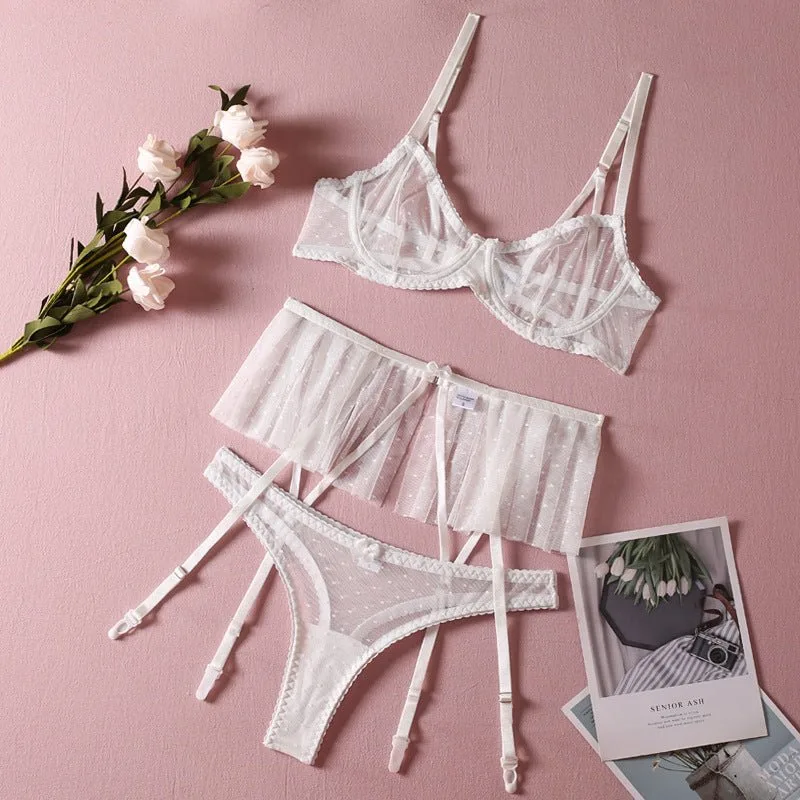
- White Frilly Bridal Lingerie Set: This set features a frilly garter and light, breathable fabric, with clothing size options available. The garter and straps are common stress points, so knowing how to repair them helps you keep the set wearable for multiple occasions.
- "I'm Yours" Bridal Lingerie Set: This white bridal set has delicate straps and sheer details, available in clothing sizes. Delicate straps are more prone to slipping out of sliders, so the re-threading fix in this guide is especially relevant.
- "I Do" Bridal White Flower Lingerie Set: This three-piece set includes a bra, thong, and belt, and is described as a great option for a boudoir shoot. A multi-piece set gives you more components that can be swapped or repaired individually, extending the life of the whole set.
A broken strap or hook is usually a five-minute fix, not a reason to retire a favorite set. Diagnose the failure first, repair what you can, and replace when the elastic or fabric has given out. With a small repair kit on hand, you can keep your lingerie wearable for longer.