Quick Answer
Bubbles in nail polish are trapped air, not a bad bottle. They usually come from shaking the bottle, thick coats, or a fan or breeze drying the surface too fast. Let each coat dry completely, apply thin layers, and roll the bottle between your palms instead of shaking it. If bubbles keep appearing, thin the polish slightly and slow down your application.
You finish a manicure, wait for it to dry, and then notice tiny raised dots under the surface. Bubbles in nail polish are frustrating because they show up after the work is done, and they are almost never caused by the polish itself.
The good news is that bubbles are a technique problem, not a product flaw. Once you know which step is trapping air, you can fix it on the next coat. This guide walks through the most common causes, how to correct each one, and when to stop troubleshooting and try a different approach.
What Bubbles in Nail Polish Actually Are
A bubble is a pocket of air trapped inside or just under the polish film. When the surface dries faster than the layers underneath, the still-wet polish below releases solvent vapor that gets caught under the skin of the top layer. That vapor forms a visible bump.
This is why bubbles often appear hours after you finish, not immediately. The polish looked smooth when wet, but as the top layer set, the trapped air pushed upward. It is a drying-speed mismatch, not contamination or a defective formula.
- Bubbles are air or solvent vapor, not dirt or grit.
- They usually appear after the manicure looks dry.
- Fixing the cause is faster than trying to pop or sand them out.
Cause 1: Shaking the Bottle
Shaking a bottle of nail polish whips air into the formula the same way shaking a water bottle creates foam. Those air bubbles go straight onto your nail. Rolling the bottle between your palms warms and mixes the polish without introducing air.
If you already shook the bottle, set it upright and let it rest for 10 to 15 minutes before applying. The bubbles will rise and settle. For polishes with shimmer or reflective glitter, rolling is also gentler on the particles.
- Roll, do not shake, before every coat.
- Let a shaken bottle rest before you use it.
- This matters most with thicker formulas and shimmer polishes.
Cause 2: Coats That Are Too Thick
A thick coat dries on top while staying wet underneath, which is the perfect setup for trapped vapor. Most polishes are designed for two to three thin coats, and building thin layers gives each one time to set before the next goes on.
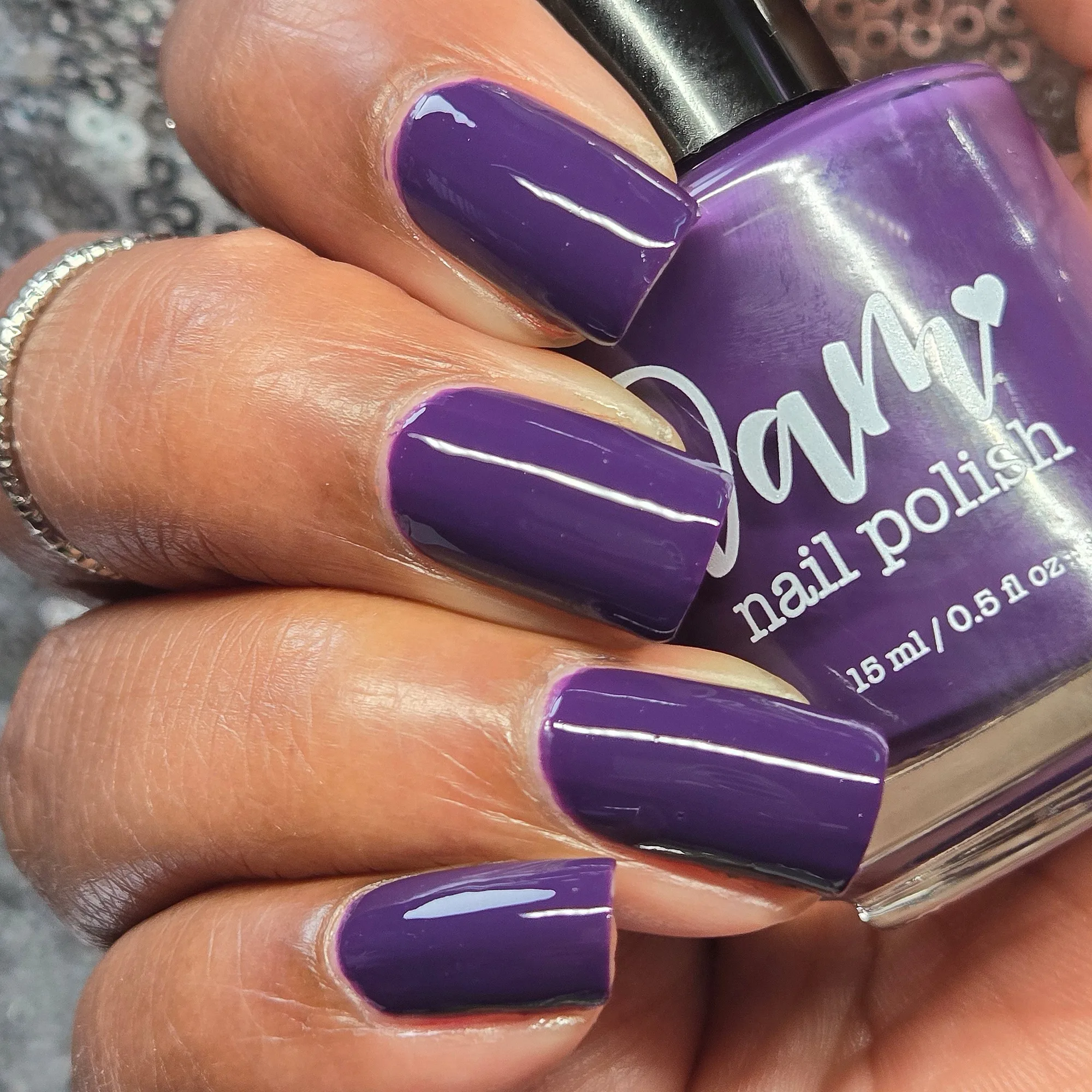
If you are used to one heavy coat for full coverage, try two thin ones instead. You will get the same opacity with far less trapped air. A cream formula like Big Eggplant Energy is a good place to practice thin layering because it builds to a smooth, opaque finish in two to three coats.
- Wipe one side of the brush against the neck before applying.
- Apply two thin coats rather than one thick one.
- Wait until each coat is touch-dry before the next.
Cause 3: A Fan, Breeze, or Fast-Drying Top Coat
Moving air pulls solvent off the surface and seals the top layer before the lower layers release their vapor. A fan, an open window, or a quick-dry top coat applied too soon can all cause this. Work in still air and let the color coats dry fully first.
Quick-dry top coats are useful, but they work best over polish that has already set. If you apply one over wet color, you trap the solvent underneath. Give the color five to ten minutes, then top it.
- Turn off fans and close windows while polishing.
- Let color coats set before adding top coat.
- If you use a fast-dry top coat, apply it to dry polish only.
Cause 4: Thick or Old Polish
Polish that has thickened with age or evaporation does not level as it dries, so air stays where it lands. If the formula strings or drags, it is too thick. A few drops of nail polish thinner can restore the consistency without changing the color.
Add thinner in small amounts and roll to mix. Never use nail polish remover or acetone to thin polish, because it breaks down the formula. If the polish is still stringy after thinning, it may be past saving.
- Use nail polish thinner, never remover, to loosen thick polish.
- Add a few drops at a time and roll to mix.
- If it stays stringy, replace the bottle.
How to Fix Bubbles You Already Have
If the bubbles are small and the polish is fully dry, a thin layer of top coat can sometimes smooth over the surface. This works best on shallow bubbles. For raised or clustered bubbles, the reliable fix is to remove the polish and reapply with thinner coats.
Do not try to pop bubbles with a pin or sand them down. You risk damaging the nail plate or creating an uneven surface that shows through the next coat. A clean redo is faster than a patch job.
- Light top coat can hide shallow bubbles on dry polish.
- For raised bubbles, remove and reapply in thin coats.
- Avoid picking or sanding the surface.
Bubble Diagnosis: Match the Symptom to the Fix
- Bubbles appear right after application: You probably shook the bottle or applied too thick a coat. Roll the bottle instead of shaking, wipe the brush, and apply two thin coats. If the next manicure is smooth, the cause was application, not the polish.
- Bubbles show up hours later: The top layer dried faster than the layers below, often from a fan, breeze, or quick-dry top coat over wet color. Work in still air and let each coat set. If bubbles still form, switch to a slower-drying top coat.
- Polish drags, strings, or looks lumpy in the bottle: The formula has thickened. Add a few drops of nail polish thinner and roll to mix. Do not use remover or acetone. If it stays stringy after thinning, replace the bottle rather than fighting it.
- Bubbles only happen with one specific polish: That formula may be thicker than the others. Thin it slightly, apply thinner coats, and allow more drying time between layers. If the polish still bubbles after two tries, it may not suit your application style.
Polishes That Reward a Thin, Patient Application
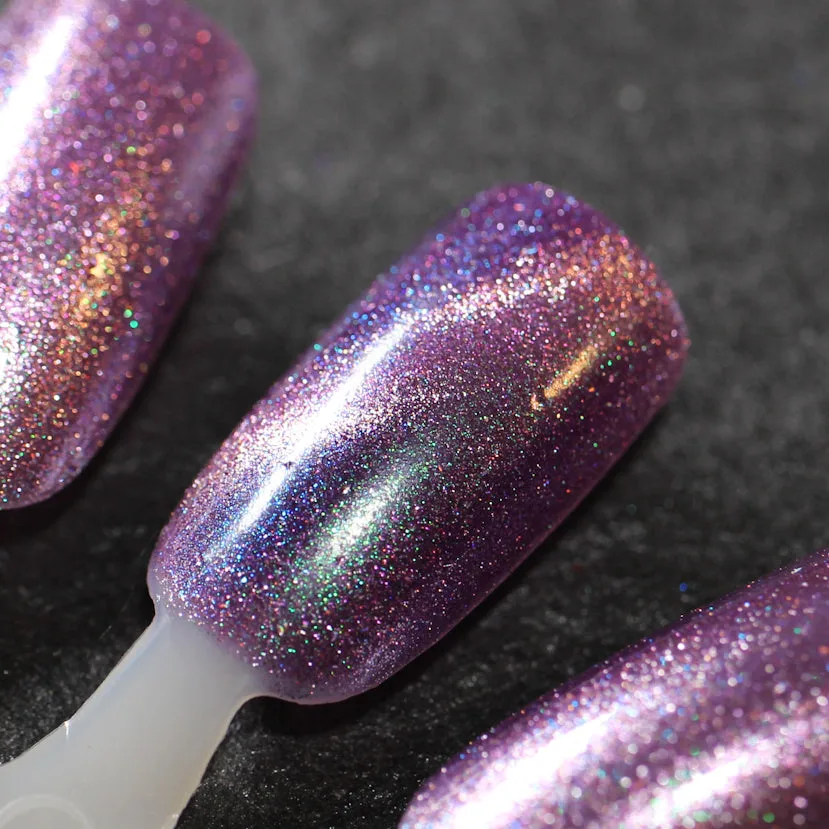
- Moonlight Mist - Purple/Pink Magnetic Indie Nail Polish - Polish of the Month - Aug 2024: Recommended 2-3 coats; magnetic polish with a dark purple base, green/blue shifting shimmer, holographic dust, and a pink magnetic effect. Magnetic polishes need thin coats so the magnetic particles can move before the polish sets. Thick coats trap air and freeze the effect before it develops.
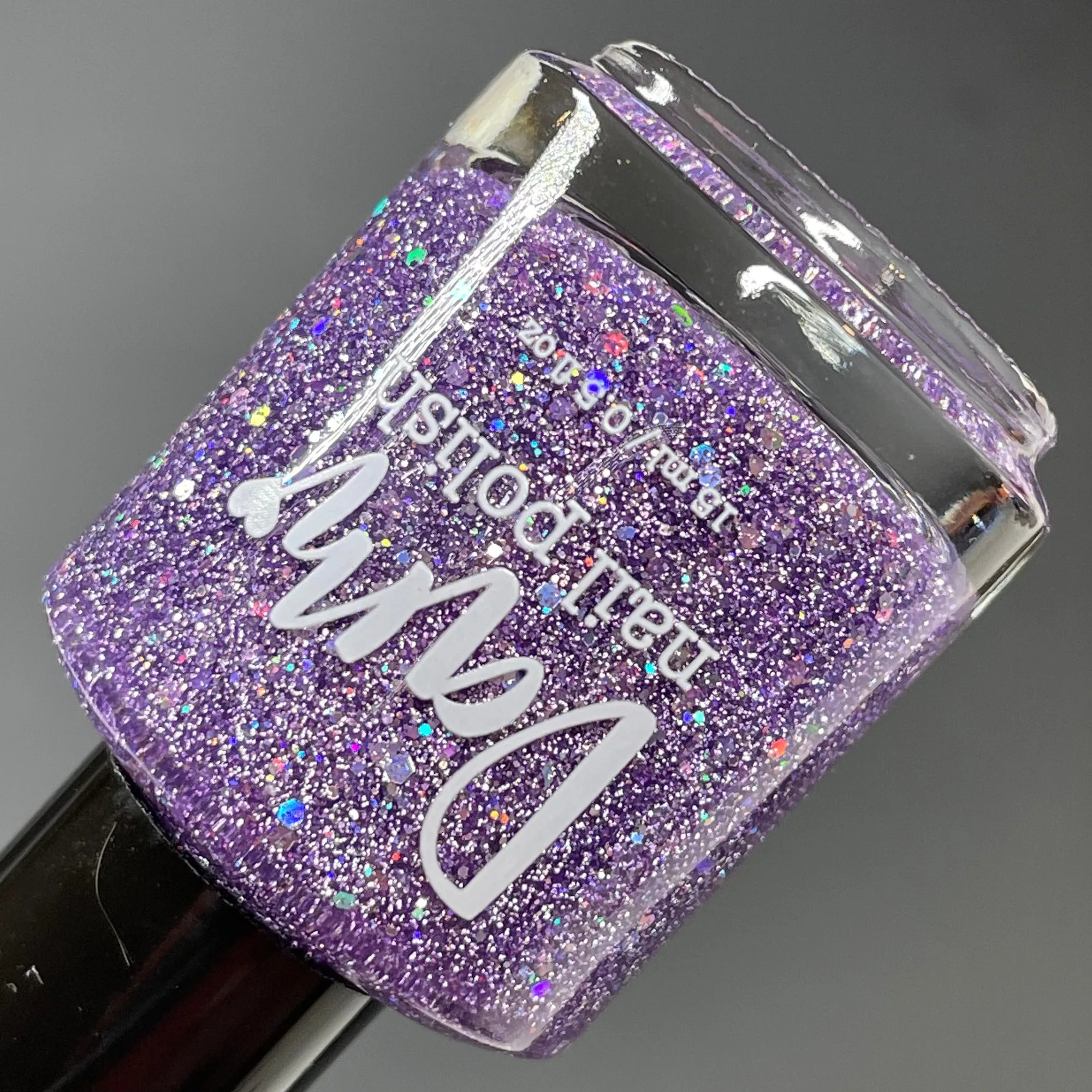
- Iris You Were Mine - Cool Purple Nail Polish - Reflective Nail Polish - Jelly Nail Polish - Punshine and Petals Collection: Recommended 2 coats; cool-toned purple jelly base with silver holographic and silver reflective glitters. Jelly formulas are already thin, so two coats is enough. Adding a third thick coat is a common cause of bubbles in reflective and jelly polishes.
- Big Eggplant Energy - Purple Cream Nail Polish - Fall Nail Polish - Autumn Harvest Creams: Recommended 2-3 coats; eggplant purple cream finish. Apply in thin, even layers and build to your preferred coverage. Creams are the easiest place to practice thin layering. Two to three thin coats give full coverage without the trapped air that one heavy coat creates.
Bubbles are almost always a sign of air getting trapped by shaking, thick coats, or fast drying, not a problem with your polish. Fix the cause, apply thin layers, and let each coat set. If a bottle keeps bubbling after you have thinned it and slowed down, it is time to replace it and start fresh.