Quick answer
Most board game component problems come down to four causes: moisture, heat, rough handling, or simple wear. Match the symptom to the cause before you try a fix, because the wrong repair can make damage permanent. For warped tiles, flatten them gradually under weight; for broken pieces, glue only if the break is clean and the part still matters to play; for worn cards, sleeve them before the damage spreads. If a component is missing or structurally failed, replacement usually beats repair.
You open the box, and something is wrong. A tile won't sit flat, a miniature snapped off its base, or a card is peeling at the corner. Board game component problems are normal, especially in games that see regular table time, and most of them are fixable without special tools.
The key is to diagnose first. A warped tile and a swollen tile look similar but need opposite treatments. A cracked plastic figure and a stressed one need different glues. This guide walks through the common symptoms, the likely cause, the corrective action, and the point where you should stop and consider a replacement or a different approach.
Start with the symptom, not the fix
Before you reach for glue or heavy books, identify what actually changed. Is the component bent, broken, faded, sticky, or missing? Each points to a different cause. Heat and humidity usually warp or swell cardboard and paper. Impact or fatigue breaks plastic and resin. Oils from hands and repeated shuffling wear card edges and surfaces.
A quick inventory helps. Lay the affected components on a flat, dry surface and check whether the problem is isolated or widespread. One warped tile in an otherwise flat game suggests a storage issue. Every tile in the box curling the same way suggests a manufacturing or environmental cause that needs a gentler, slower fix.
- Check the whole box before treating one piece; widespread symptoms often share one cause.
- Photograph the damage before you repair it, so you can tell whether your fix worked.
Warped tiles and boards: flatten slowly, never force
Warped board game tiles usually respond to gentle, even pressure over time. Place the tile between two clean, flat surfaces, add weight, and leave it for a few days in a dry room. Avoid direct heat from irons, hairdryers, or radiators. Heat can soften the printed surface and make the warp worse or permanent.
If the tile has absorbed moisture, let it dry completely before pressing. Pressing damp cardboard traps the moisture and can cause mold or delamination. For thick boards, stack them with the warp facing up and add weight gradually. Sudden heavy pressure can crack the core or split the printed layer.
- Use books or a cutting board as a flat press, not clamps that concentrate force.
- If the warp returns within a day of unpressing, the cause is environmental, not the tile.
Broken plastic pieces and miniatures
A clean break in a plastic miniature or token can often be repaired with a small amount of cyanoacrylate glue. Dry-fit the pieces first, apply glue to one side only, and hold until set. Too much glue creates a visible bead and can fog clear plastic. If the break is at a thin joint, reinforce it with a tiny pin or a thin layer of glue built up in stages.
If the piece is load-bearing, like a standee base or a connector, gluing may not hold during play. In that case, consider whether the game still works without the piece or whether a replacement part is available. A repaired piece that fails mid-game is worse than a missing one you planned around.
- Test-fit before gluing; a misaligned miniature is harder to fix than a broken one.
- For clear plastic, use a glue formulated for plastics to avoid clouding.
Worn, peeling, or sticky cards
Card wear starts at the edges and surfaces. Sleeving cards early prevents further damage and can hide minor edge wear. If a card is already peeling, a small amount of acid-free glue along the lifted edge can stabilize it, but avoid wetting the printed face. Sticky cards usually mean residue from tape, labels, or food; a barely damp cloth with a little mild soap can help, then dry completely.
If cards are marked or warped from moisture, they may be readable as a stack but not as a shuffled deck. Marked cards can reveal information and unbalance the game. At that point, sleeves with opaque backs are the practical fix, or a replacement deck if the game depends on hidden information.
- Sleeve before damage starts; it is cheaper than replacing a deck.
- Never shuffle a deck with sticky or peeling cards until they are fully dry.
When to stop fixing and choose another option
Stop repairing when the fix changes how the component works in play. A glued token that no longer stacks flat, a card that is visibly different from the rest, or a miniature that cannot stand without support are all signs that repair has reached its limit. At that point, replacement parts, a new copy, or a house rule that removes the component are better choices.
Also stop if the repair risks further damage. Solvents, excessive heat, and strong clamping force can turn a small problem into a ruined component. If you are unsure, test on a spare piece or a component you rarely use. A cautious approach usually preserves more play value than an aggressive fix.
- If the component is no longer functionally identical, treat it as a replacement decision.
- When in doubt, do nothing for a day and reassess; many problems are stable enough to play around.
Component problem diagnosis
- Warped tiles or boards: Likely cause: moisture or heat exposure during storage or play. Corrective action: dry completely, then press flat under even weight for several days in a dry room. Avoid direct heat. If the warp returns within a day, the storage environment is the real problem, not the tile.
- Broken plastic piece or miniature: Likely cause: impact, fatigue at a thin joint, or pressure during storage. Corrective action: dry-fit, glue with a small amount of cyanoacrylate, and reinforce only if the piece bears load. If the piece must support weight or stand upright, gluing is a stopgap; consider a replacement or a house rule instead.
- Worn, peeling, or sticky cards: Likely cause: repeated shuffling, hand oils, residue, or moisture. Corrective action: dry sticky cards fully, stabilize lifted edges with acid-free glue, and sleeve the deck to stop further wear. If cards are marked or warped enough to be identifiable, stop repairing and sleeve with opaque backs or replace the deck.
Component facts worth knowing from our catalog
- The Night Cage: The Night Cage is a fully cooperative, horror-themed, tile-placement game that traps 1 to 4 lost souls within an otherworldly labyrinth of eternal darkness. Tile-placement games depend on flat, readable tiles. If your copy's tiles warp, the labyrinth becomes hard to parse, so flattening and dry storage matter more here than in games with a fixed board.
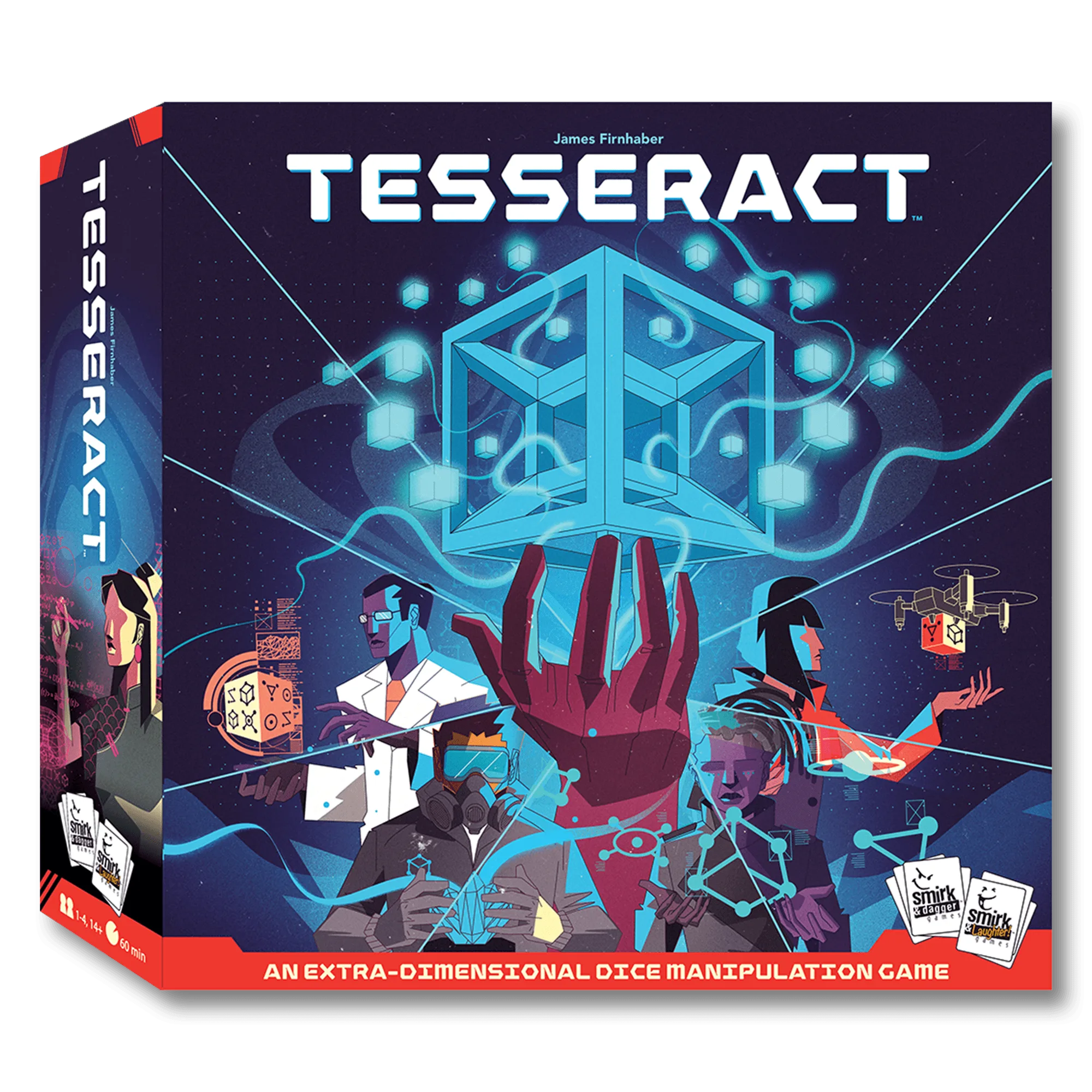
- TESSERACT: a cooperative, puzzle strategy game: The game features a cube of 64 dice, sitting on a rotating platform to examine all angles. A rotating platform and 64 dice mean many small contact points. Keeping the platform clean and the dice dry prevents sticky faces and uneven rolling, which are common component problems in dice-heavy games.
- Devious: DEVIOUS is a beautifully twisted anti-set collection card game full of bluffing, sabotage, and shifting fortunes, where your 3-card hand is arranged and placed face-down by your opponent. Because cards are handled face-down and passed between players, edge wear and surface marks are more visible and more likely to affect play. Sleeving early protects both the bluff and the game.
Most board game component problems are manageable if you diagnose the cause before you act. Flatten warped tiles slowly, glue clean breaks sparingly, and sleeve cards before wear becomes marking. Know your stop point: when a repair changes how the component plays, replacement or a house rule is the better move. A little maintenance now keeps the game at the table longer.