Quick answer
To frame and display your finished Cat in the Mirror puzzle, first decide whether you want a permanent bond or a reversible mount. For a secure, hangable piece, use puzzle glue and a standard 20x27-inch frame. If you might rebuild it, choose a frameless display or a frame with a removable backing. Always measure your assembled puzzle before buying a frame.
Measure your assembled puzzle before you buy anything
A 1000-piece puzzle from Exploding Kittens typically measures 20 x 27 inches (51 x 69 cm) when completed, but always verify with a ruler. Manufacturers sometimes vary by a quarter inch. If you plan to frame it, buy a frame that matches your exact measurements, not the box's listed size. For a 500-piece puzzle like The Slothness of Memory, dimensions are smaller, so don't assume the same frame will fit.
Choose between puzzle glue and framing (or both)
Puzzle glue creates a permanent, rigid sheet that you can frame or hang directly. Framing without glue lets you disassemble and rebuild later, but the puzzle may sag or shift. For a display piece like Cat in the Mirror, which is full of Easter eggs, glue is the safer bet if you want it to stay intact. If you use glue, apply it in thin, even layers and let it dry completely before framing.
Pick the right frame style for your space
Standard frames with glass or acrylic protect against dust and UV light. For a 1000-piece puzzle, look for a frame with a 20x27-inch opening. If you want a frameless look, use a puzzle conserver or mount it on foam board. Consider the weight: a glued 1000-piece puzzle can weigh 2-3 pounds, so choose a frame with a sturdy backing and hanging hardware.
Mount and hang your puzzle securely
If you glued the puzzle, you can mount it directly onto the frame's backing board using double-sided tape or adhesive spray. For a reversible option, use a frame with a removable back and place the puzzle between two sheets of acrylic. When hanging, use two hooks spaced 16 inches apart to distribute weight evenly. Avoid direct sunlight to prevent fading.
Step-by-step: Frame and display your puzzle
- Assemble on a portable surface: Build your puzzle on a puzzle mat or a large piece of cardboard so you can move it without breaking it apart. Common mistake: building directly on a table you can't move, making it hard to transfer to the frame. Checkpoint: Ensure the puzzle is complete and all pieces are secure before moving.
- Apply puzzle glue (if using): Use a puzzle glue that dries clear. Apply with a foam brush in thin, even coats, covering the entire surface. Let it dry for at least 4 hours. Common mistake: applying too much glue, which can warp the puzzle or cause pieces to stick to the brush. Checkpoint: The puzzle should feel dry and stiff, not tacky.
- Measure and select your frame: Measure the glued puzzle's width and height. For a 1000-piece puzzle, a 20x27-inch frame is standard, but verify. Choose a frame with a removable back if you want to avoid gluing to the frame itself. Common mistake: assuming all 1000-piece puzzles are the same size. Checkpoint: The puzzle should fit snugly with no gaps or overlap.
- Mount the puzzle in the frame: If the puzzle is glued, place it directly into the frame. If not glued, use double-sided tape on the backing board to hold it in place. For a reversible mount, sandwich the puzzle between two acrylic sheets. Common mistake: forcing a puzzle that's slightly too large, which can crack the frame or bend edges. Checkpoint: The puzzle should lie flat and not shift when you tilt the frame.
- Hang and protect your display: Use two picture hooks spaced evenly to support the weight. Avoid direct sunlight and humid areas like bathrooms. If you used a frameless mount, consider a UV-protective spray. Common mistake: hanging with a single nail, which can cause the frame to tilt and fall. Checkpoint: The frame should hang level and feel secure when gently pressed.
Product facts for your display project
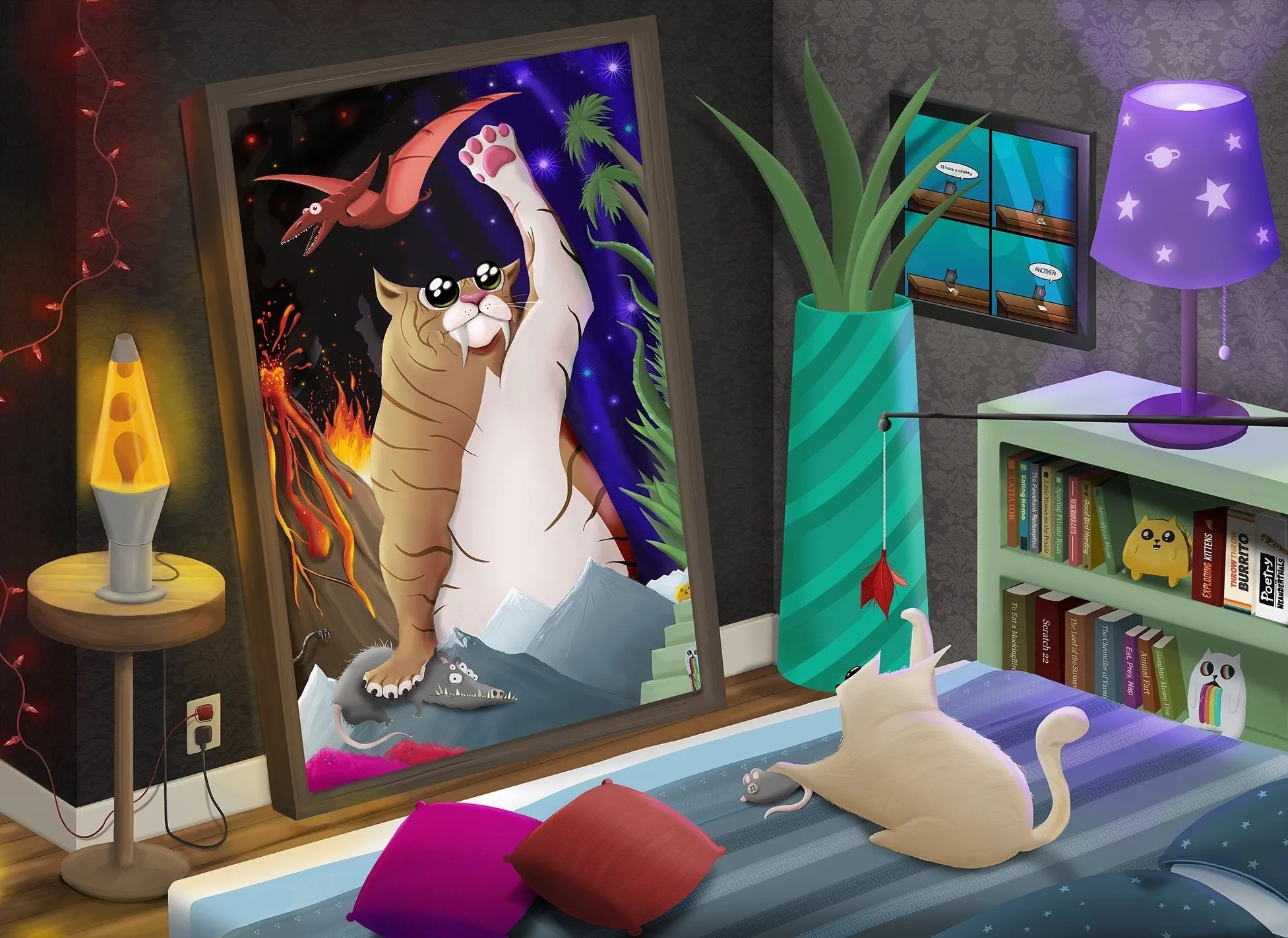
- Cat in the Mirror (1000 Piece Puzzle): Cat in the Mirror (1000 Piece Puzzle) depicts what a cat sees when it looks in the mirror, full of hilarious Easter eggs. The detailed artwork makes it a great candidate for framing and displaying, as guests will want to spot the hidden jokes.
- The Slothness of Memory: The Slothness of Memory is a 500-piece puzzle with durable Blue Board pieces that snap together effortlessly. If you prefer a smaller display or a quicker build, this 500-piece option is easier to frame and takes up less wall space.