Quick answer
To frame and store art prints without damage, use acid-free backing and matting, UV-protective glazing, and handle prints only with clean cotton gloves. Store unframed prints flat in acid-free folders away from light and humidity. Avoid dry mounting or trimming, and keep prints out of damp basements or hot attics.
Why proper framing and storage matter for limited edition prints
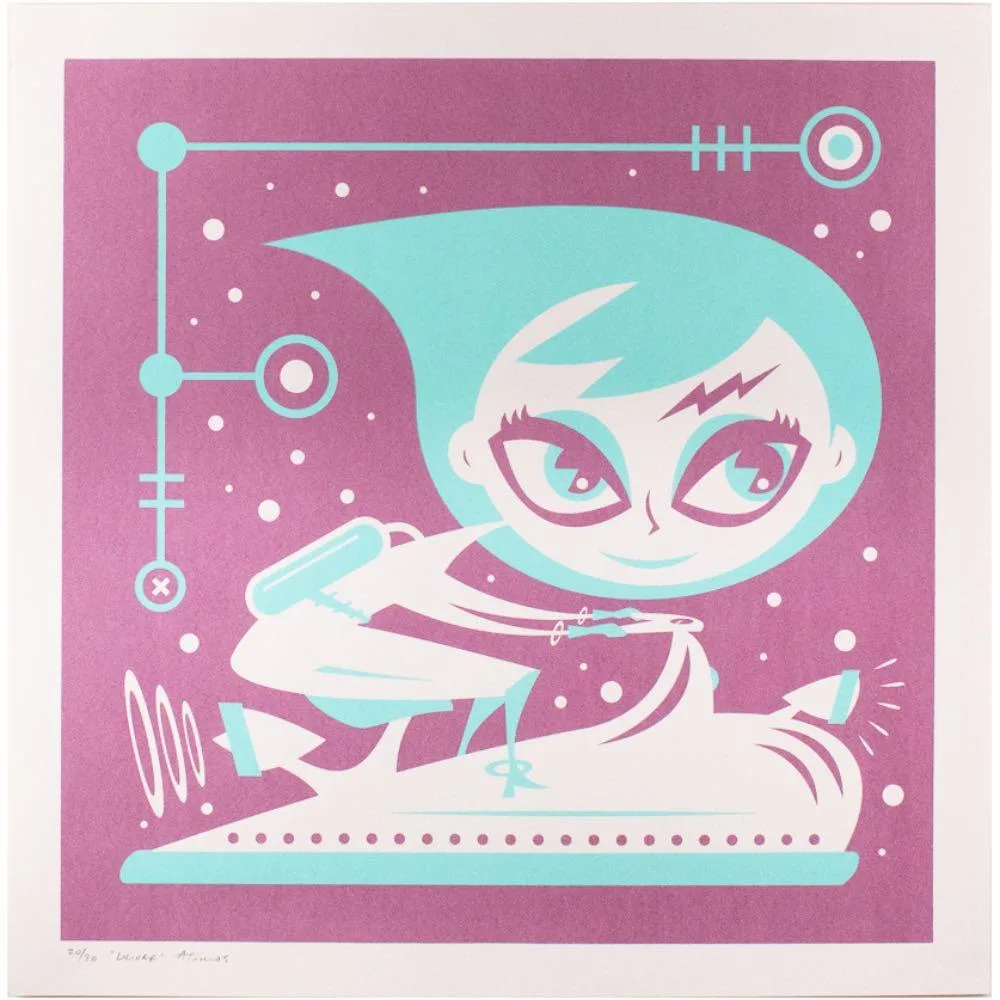
Limited edition prints like the Glider Print by Mark 'Atomos' Pilon are produced in small runs, so any damage from improper framing or storage permanently reduces the number of intact copies. Even a small crease or acid burn can lower both enjoyment and value. Proper materials and handling preserve the print's condition and your ability to display it for years.
Materials to avoid and why
Standard cardboard, masking tape, and cheap foam core contain acids that yellow and embrittle paper over time. Never use rubber cement, spray adhesive, or dry mounting tissue that permanently bonds the print to a board. Avoid glass that lacks UV filtering, as it allows light to fade inks. Skip non-archival plastic sleeves that can off-gas and damage surfaces.
Tools and supplies you will need
Gather acid-free mounting corners or hinges, a metal ruler, a self-healing cutting mat, a scalpel or craft knife, and a clean, dust-free work surface. For storage, use acid-free folders or boxes large enough to hold prints flat without bending. Cotton gloves prevent oils from your fingers from transferring to the print surface.
Step-by-step: frame and store your art prints
- Prepare a clean, flat workspace: Clear a table and cover it with a clean, lint-free cloth. Wash and dry your hands, then put on cotton gloves before touching the print. Checkpoint: no dust, food, or liquids nearby.
- Inspect the print for existing damage: Hold the print by its edges and examine both sides under good light. Note any creases, tears, or surface marks before proceeding. Mistake to avoid: ignoring small flaws that could worsen during framing.
- Choose acid-free mounting materials: Use acid-free backing boards and either photo corners or Japanese paper hinges with wheat starch paste. Never use tape or glue directly on the print. Checkpoint: all materials labeled 'acid-free' or 'archival'.
- Attach the print using reversible methods: Place the print in acid-free photo corners or attach with hinges along the top edge only, allowing the paper to expand and contract with humidity. Mistake to avoid: dry mounting or trimming the print, which permanently alters it.
- Select UV-protective glazing and a solid frame: Use UV-filtering glass or acrylic and a frame that holds the print without pressure. Add a spacer or mat so the glazing does not touch the artwork. Checkpoint: glazing does not rest directly on the print surface.
- Seal the back of the frame: Cover the back with acid-free backing paper or a dust cover to keep out insects and dust. Attach hanging hardware securely. Mistake to avoid: leaving the back open, which lets debris and pests inside.
- Hang away from direct light and heat: Display on an interior wall away from windows, radiators, and air vents. Avoid bathrooms and kitchens where humidity fluctuates. Checkpoint: no direct sunlight or heat source hits the frame.
Product facts
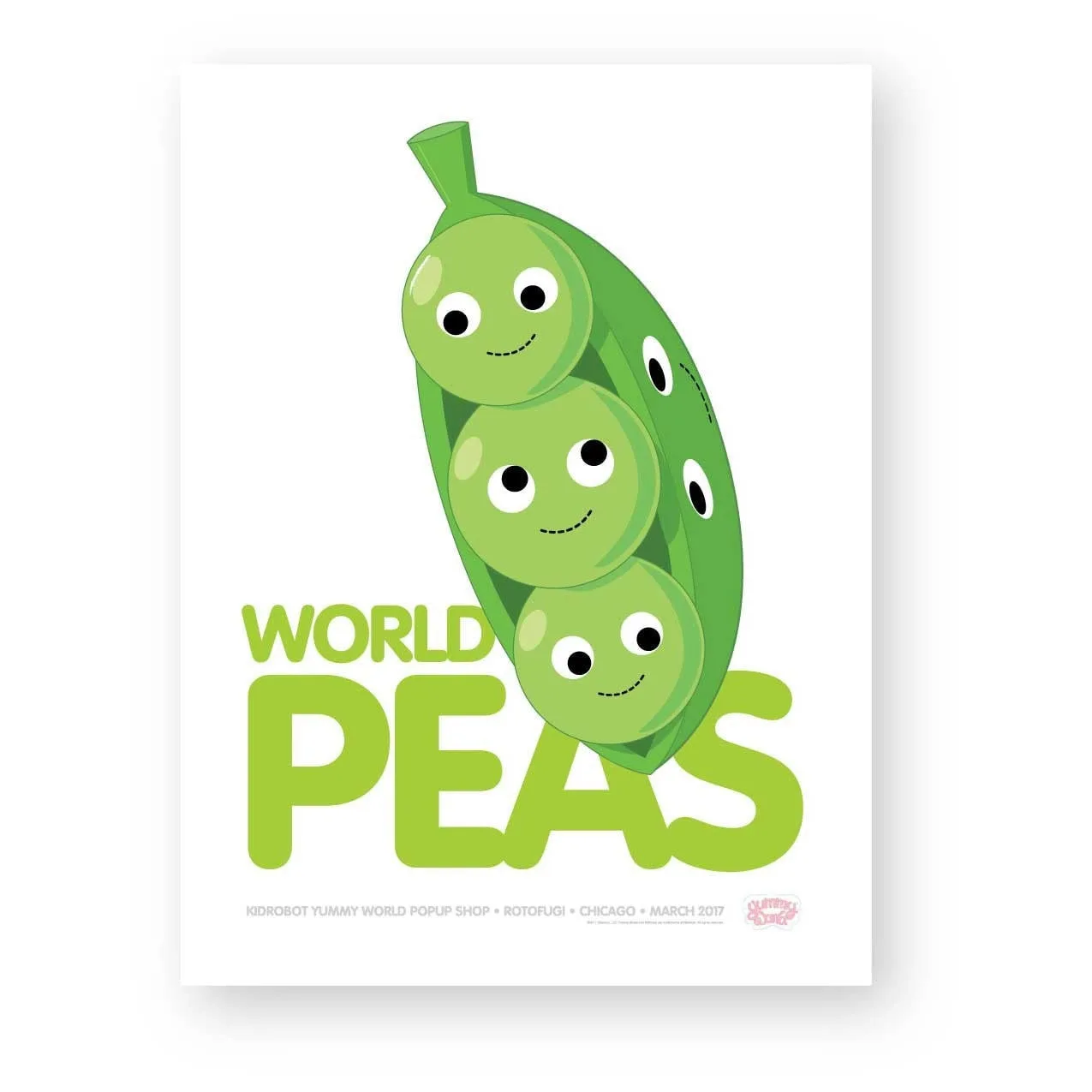
- World Peas Yummy World Limited Edition Poster: World Peas Yummy World Limited Edition Poster is an 18x24 inch poster printed on bright white 80# cover stock with a UV-protective gloss coating, limited to an edition of 250. The UV coating adds some light resistance, but framing with UV glass still helps protect the inks from fading.
- Glider Print by Mark 'Atomos' Pilon: Glider Print by Mark 'Atomos' Pilon is a screen print on paper, limited to an edition of 30. With only 30 copies, any damage from improper framing or storage significantly reduces the number of intact prints, making careful handling essential.