Quick Answer
To front carry with the Guava Lark Baby Carrier, put on the waistband, position your baby on your chest, clip the back straps, and tighten all adjusters until the carrier is snug and your baby's airway is clear.
Why Front Carry Works Well
Front carry is the most natural starting point for most parents. It lets you see your baby, respond quickly, and keep your hands free. The Lark's soft, supportive design makes it comfortable for both of you, even for longer wear.
The Lark is designed for babies from 10 to 45 lbs, starting at size 3-6 month clothing. That means it's not for newborns under 10 lbs, but once your baby hits that weight, front carry is a great everyday option.
Before You Start: Safety Checks
Always check that your baby's face is visible and their chin is off their chest. The carrier should be snug enough that you can't lean over and have your baby slump away from you. You should be able to place a flat hand between your baby's back and the carrier panel.
For front carry, the waistband should sit high on your natural waist, not on your hips. This helps distribute weight properly and keeps your baby in a good ergonomic position.
Step-by-Step Front Carry Instructions
- Put on the waistband: Buckle the waistband at your natural waist, centered over your belly button. Tighten until snug. The waistband should feel secure but not restrictive. Check that the waistband is not twisted. If the waistband slips down, tighten it more and reposition it higher before continuing.
- Position your baby: Hold your baby facing you, with their legs straddling your torso. Place them high on your chest, close enough to kiss. Their arms should be inside the carrier, and their head should be turned to one side, with their face visible. Your baby's face should always be visible and their chin off their chest. If not, reposition before clipping.
- Clip the back straps: Reach behind your back and clip the two straps together. Pull the straps to tighten until the carrier is snug against your baby's back. The straps should be at a comfortable angle, not digging into your shoulders. If the straps are too tight or too loose, adjust them before moving on. You should be able to hear a clear click when clipped.
- Tighten the side adjusters: Pull the adjuster straps on the sides of the carrier to remove any slack. The carrier should be snug enough that your baby is close to you, but not so tight that they are compressed. You should be able to fit a flat hand between your baby's back and the carrier. If you can't fit a flat hand, it's too tight. If there's more than a hand's width, tighten more.
- Do a final safety check: Look in a mirror: your baby's face should be visible, their chin off their chest, and their back supported in a natural curve. Their knees should be higher than their bottom, in an M-position. Check that the carrier is not covering their face. If anything looks off, unclip and start again. Never leave your baby in a position where their chin is tucked or their face is covered.
About the Guava Lark Baby Carrier
-
Guava Lark Baby Carrier: The Guava Lark Baby Carrier carries babies from 10 to 45 lbs, starting at size 3-6 month clothing. This tells you the carrier isn't for newborns under 10 lbs, but it will grow with your baby through toddlerhood, making front carry a long-term option.
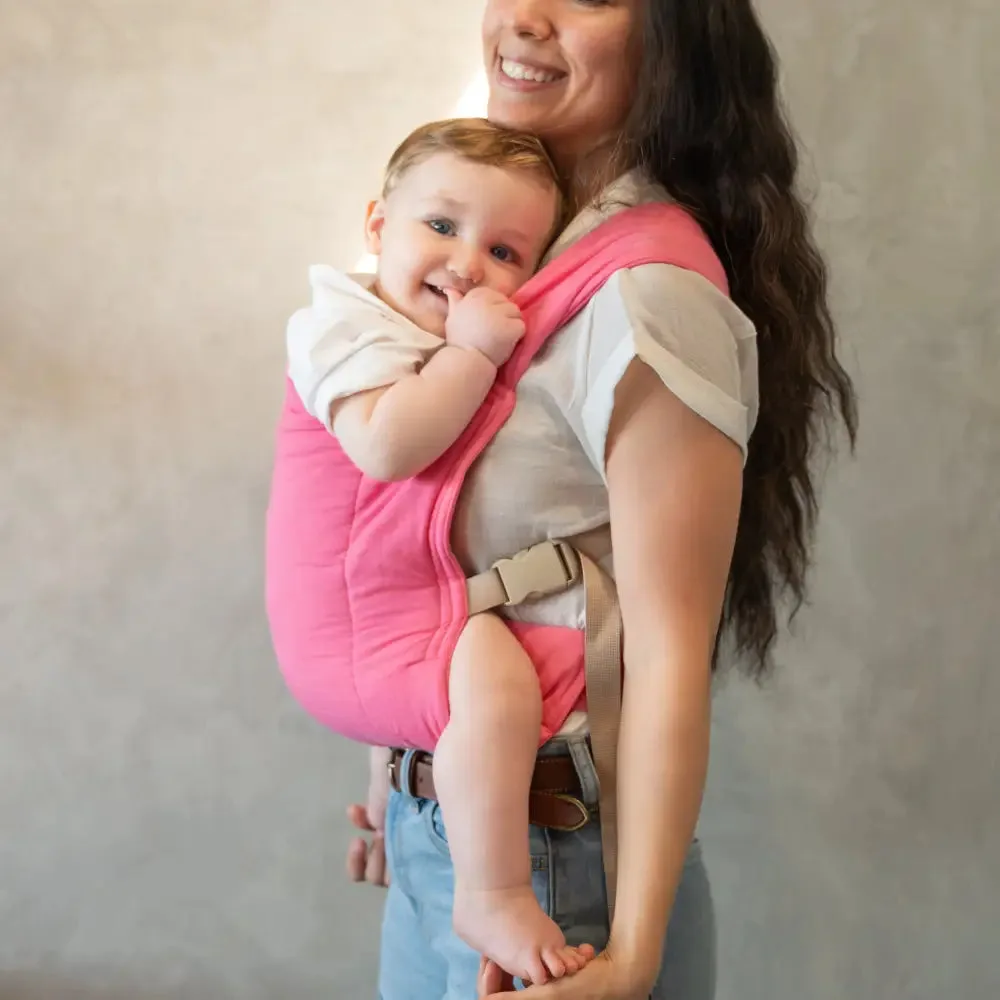
Guava Lark Baby Carrier
Once you've mastered front carry, you can explore other positions like back carry as your baby grows. The Lark's adjustability means it will continue to work for you for years.