Quick answer
Getting the perfect fit with a molded cup bra starts with measuring your band and cup correctly, then checking for gaps, spillage, and strap tension.
Why molded cup bras need special attention
Molded cup bras hold their shape, so the cup must match your breast volume exactly. Unlike unlined bras, the foam doesn't conform to small differences, making fit precision essential.
For post-surgery wearers, a molded cup bra can offer a smooth silhouette and gentle support, but only if the cup doesn't press on sensitive areas. The Lexi Full Coverage Pocketed Molded Cup Bra is designed with a seamless feel that moves with your body, reducing friction.
Common trade-off: coverage vs. flexibility
Full coverage molded cups provide more support and a smoother look under clothing, but they may feel warmer or less flexible than unlined styles. If you prioritize breathability, look for a bra with moisture-wicking fabric or mesh panels.
How to get the perfect fit with a molded cup bra
- Measure your band first: Wrap a measuring tape snugly around your ribcage, just under your bust. Round up to the nearest even number. This is your band size. Common mistake: measuring over your bust or wearing a bra while measuring can add inches and give you a band that's too loose.
- Determine your cup size: Measure around the fullest part of your bust while standing. Subtract your band size from this number. Each inch equals one cup size (1" = A, 2" = B, etc.). Checkpoint: molded cups don't stretch, so if you're between sizes, try the larger cup to avoid spillage.
- Check the band fit: Fasten the bra on the loosest hook. The band should sit parallel to the floor and feel snug but not painful. You should be able to slide two fingers under the band. Common mistake: if the band rides up in the back, it's too large. Go down a band size and up a cup size to maintain volume.
- Assess the cup fit: The entire breast should be inside the cup with no gaping at the top or sides. The center gore (the part between cups) should lie flat against your sternum. Checkpoint: if the cup wrinkles or gapes, the cup is too large. If you see spillage or the gore floats away, the cup is too small.
- Adjust the straps: Straps should be tight enough to stay in place without digging into your shoulders. You should be able to slide one finger under each strap. Common mistake: overtightening straps to fix a loose band. The band should do most of the supporting, not the straps.
Product facts
-
Lexi Full Coverage Pocketed Molded Cup Bra: The Lexi Full Coverage Pocketed Molded Cup Bra features a smooth, barely-there feel with a modern neckline that flatters and supports without restriction. This means you get the structure of a molded cup without the stiff, bulky feel, making it a good option for everyday post-surgery wear.
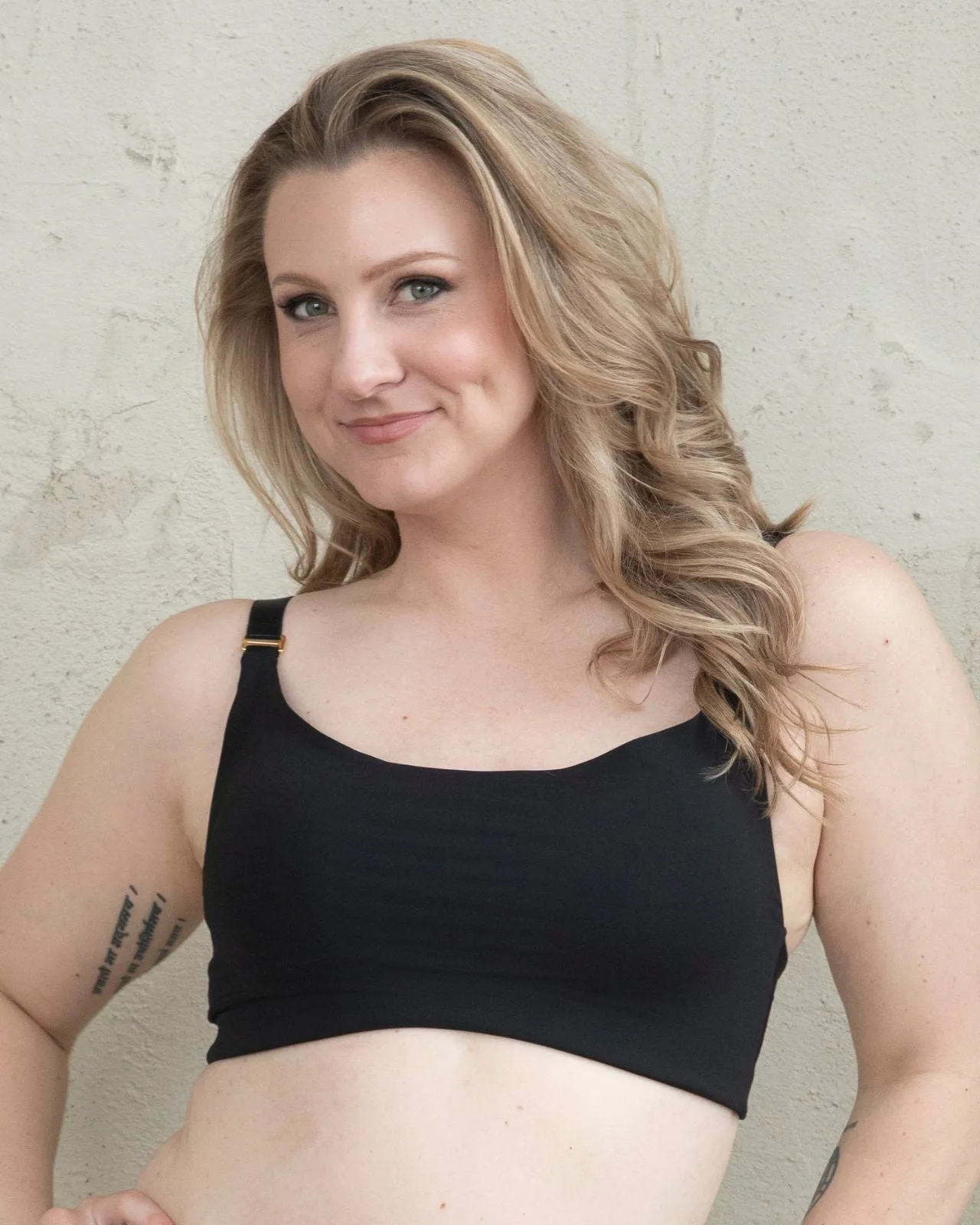
Lexi Full Coverage Pocketed Molded Cup Bra