Quick answer
Hang your limited edition print at eye level (57–60 inches from floor to center) in a spot with enough breathing room around it, using a frame that complements the small space without overwhelming it.
Why size and spacing matter in a small room
A small room amplifies every visual element. A print that is too large can make the wall feel cramped, while one that is too small can get lost. The key is to choose a print size that fits the wall proportionally—generally covering about two-thirds to three-quarters of the available wall space above furniture, or filling a narrow accent wall entirely.
Spacing around the print is just as critical. Leave at least 6–8 inches of bare wall on each side and above the frame. This negative space helps the print breathe and prevents the room from feeling cluttered.
Framing choices for small spaces
In a small room, the frame can either blend in or stand out. A thin, neutral-colored frame (black, white, or natural wood) keeps the focus on the artwork itself. A wide or ornate frame can dominate a small wall and make the room feel even smaller.
If your print has a lot of visual detail, like the misty layers in a landscape photograph, a simple frame with a mat can create a clean border that helps the eye rest. Avoid heavy, dark frames that absorb light and shrink the perceived space.
Placement above furniture
When hanging a print above a sofa, bed, or console table, the bottom of the frame should sit 6–8 inches above the furniture's top edge. This creates a visual connection without crowding. If the print is the only wall decoration, center it horizontally over the furniture piece.
For a small room, consider hanging the print slightly lower than the standard gallery height (57–60 inches to center) if the furniture is low, so the art feels grounded rather than floating.
Step-by-step guide
- Measure the wall and choose the print size: Use painter's tape to outline the print dimensions on the wall. The art should cover about two-thirds to three-quarters of the available wall space. For a narrow wall, a single medium print works better than a cluster. A common mistake is choosing a print that is too large for the wall. Tape it out first to see how it feels.
- Select a frame that fits the room: Pick a frame that is slim and matches the room's existing trim or furniture tones. A mat can add breathing room without making the frame bulkier. Avoid wide or dark frames in a small room—they can visually shrink the space.
- Hang at the right height: Place the center of the print 57–60 inches from the floor. If hanging above furniture, keep the bottom edge 6–8 inches above the furniture top. Use a level to ensure straightness. Hanging too high is the most common error. Eye level for a seated viewer is lower than standing eye level.
- Add lighting to enhance the art: Install a small picture light or aim a directional ceiling spot at the print. Soft, warm light brings out the texture and tones of a limited edition photograph without overwhelming the room. Avoid harsh overhead light that creates glare. Test the light at night to see how it affects the room's mood.
Product spotlight
-
Mistbound Island Trees Newfoundland | Limited Edition of 10: Lone Island Spruce Emerging From Atlantic Fog. Some landscapes whisper rather than shout. This one did exactly that. A quiet, misty scene like this works well in a small room because its soft tones and minimal composition won't visually compete with the limited wall space.
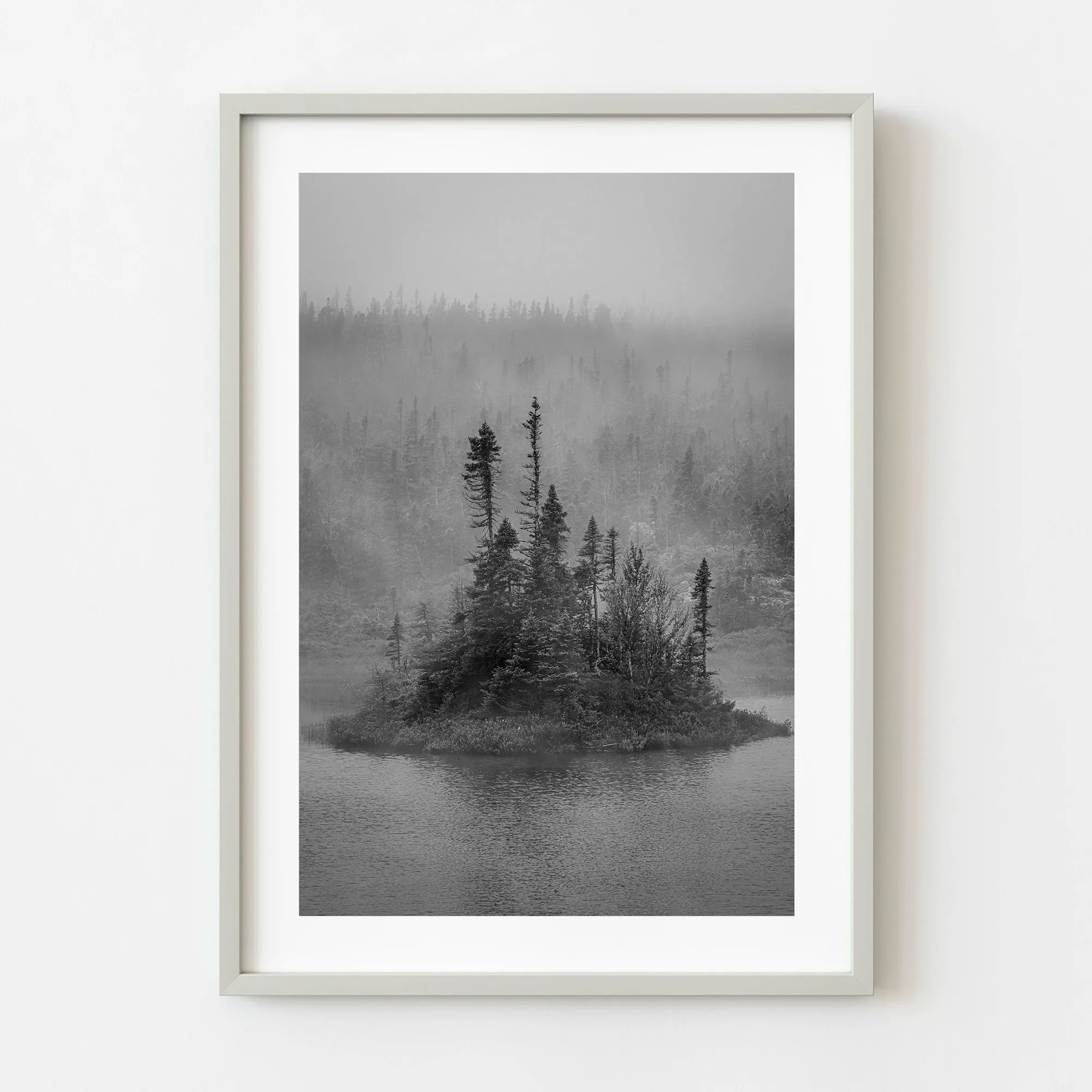
Mistbound Island Trees Newfoundland | Limited Edition of 10