Quick answer
To install a pressure fit baby gate correctly, measure your doorway width, position the gate level, tighten the pressure knobs evenly, and always check the red/green lock indicators before use.
Why correct installation matters for stair safety
A pressure fit gate relies on tension against the door frame, not screws. If it isn't installed level or the pressure is uneven, the gate can shift or pop out when your child pushes against it. This is especially dangerous at the top of stairs where a fall could be serious.
Many parents assume all pressure fit gates are identical, but the fit depends on your specific doorway width and the gate's adjustment range. Always check the manufacturer's minimum and maximum width before buying.
Common trade-off: pressure fit vs. hardware mounted
Pressure fit gates are quick to install and leave no wall damage, making them ideal for renters or temporary use. However, they are generally not recommended for the top of stairs because a determined toddler can dislodge them. For top-of-stair use, a hardware-mounted gate is safer. Use a pressure fit gate for doorways, hallways, or bottom-of-stair locations.
Step-by-step installation guide
- Measure the opening width: Use a tape measure to find the exact width of the doorway or hallway at both the top and bottom. Pressure fit gates have a specific adjustment range (e.g., 75–82 cm). If your opening is outside that range, the gate won't hold securely. Measure twice to avoid buying the wrong size gate.
- Position the gate at the correct height: Hold the gate against the frame at the height recommended by the manufacturer (usually 2–4 inches off the floor). For stair locations, the bottom rail should be low enough that a child cannot crawl under it. Check the gap under the gate — if it's more than 3 inches, adjust the height.
- Level the gate before tightening: Place a spirit level on the top rail. If the gate tilts, the pressure pads won't grip evenly, and the gate may slip over time. Adjust the angle until the bubble is centered. An unlevel gate is the most common cause of failure.
- Tighten the pressure knobs evenly: Turn both pressure knobs (usually on each side) alternately, a few turns each, until the gate is firmly pressed against the frame. Do not overtighten — you risk cracking the gate or damaging the wall. The gate should not slide when you push it firmly. Overtightening can break the plastic housing; stop when the gate feels solid.
- Check the lock indicators and test the gate: Engage the dual locking mechanism and look for the red/green indicator. Green means locked. Then push the gate from both sides to confirm it holds. Open and close it a few times to ensure the lock engages every time. If the indicator stays red, the lock isn't fully engaged — do not use the gate until it shows green.
- Recheck after 24 hours: Pressure fit gates can settle as the pads compress the wall surface. After a day, check the tightness again and adjust the knobs if needed. Repeat this check weekly. A gate that was tight yesterday may loosen over time — regular checks keep it safe.
Product that makes installation easier
-
Callowesse Kishu Baby & Toddler Pressure Fit Door & Stair Safety Gate | 75-82cm x H77cm - White: The Callowesse Kishu Baby & Toddler Pressure Fit Door & Stair Safety Gate features a dual locking mechanism with visual red/green indicators and requires no tools or screws for installation. The red/green indicators let you instantly confirm the gate is locked correctly, removing guesswork during setup and daily use.
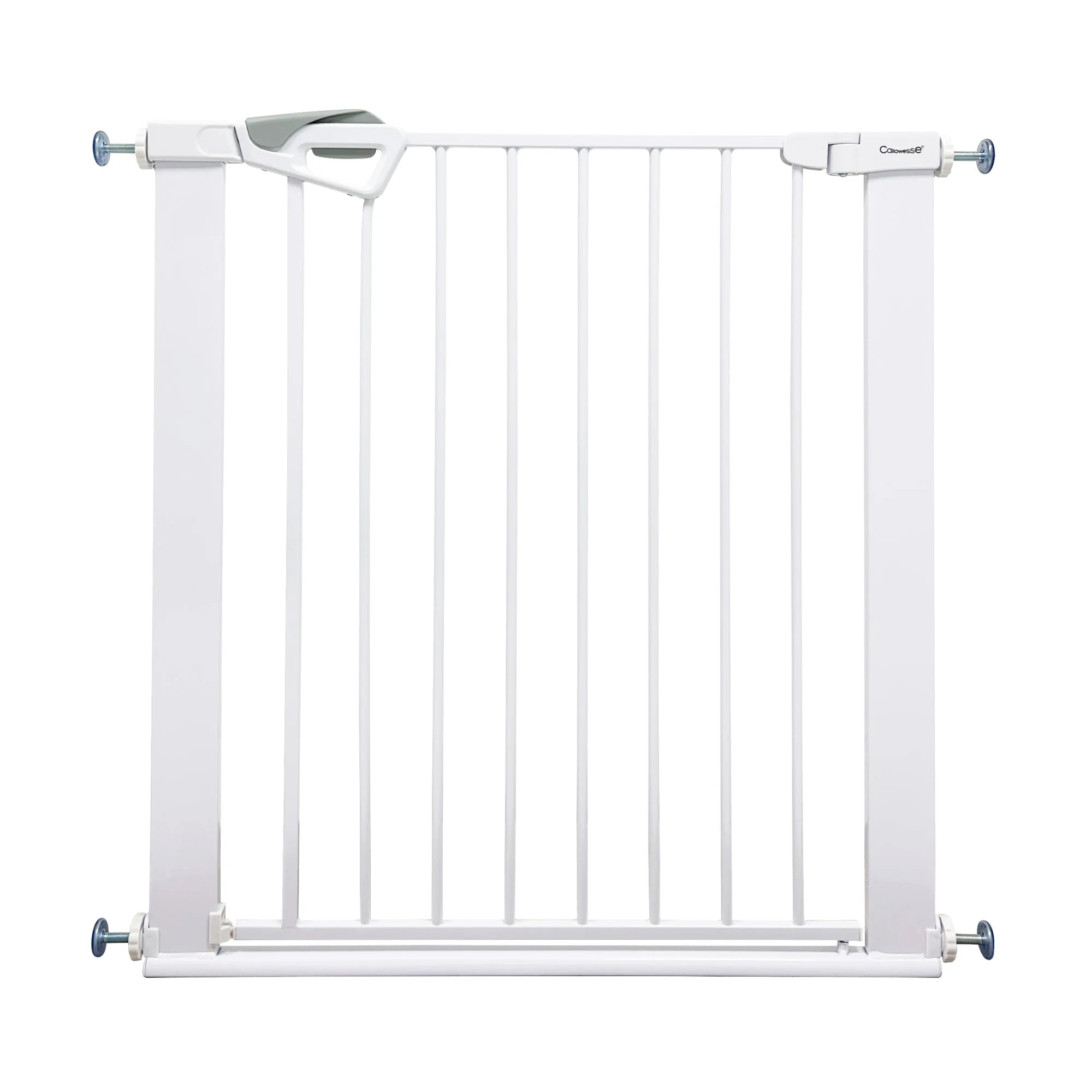
Callowesse Kishu Baby & Toddler Pressure Fit Door & Stair Safety Gate | 75-82cm x H77cm - White