Quick answer
Attach the rail saver to your board's leash plug, then secure the cuff around your calf or ankle, making sure the coiled section trails behind you to reduce drag.
Why choose a coiled leash for SUP
A coiled SUP leash keeps the cord out of the water while paddling, reducing drag and preventing it from catching on obstacles. The straight-coil-straight design on models like the Dakine SUP Coiled Calf Leash keeps the leash taut when stretched but compact when relaxed.
The main tradeoff is that coiled leashes can be slightly heavier than straight ones, and they may retain a slight coil memory. For flatwater paddling or surfing waves under head-high, the drag reduction usually outweighs the extra weight.
Calf vs. ankle: which cuff position fits your board sport
A calf leash keeps the cord higher on your leg, which reduces the chance of the leash tangling around your feet while walking on the board or during a fall. It's preferred for SUP surfing and racing where you need to move freely.
An ankle leash is simpler to put on and works well for casual paddling or when wearing a wetsuit bootie. Both options are available in the Dakine SUP Coiled series, so choose based on your primary activity and comfort.
How to install your SUP coiled leash
- Step 1: Attach the rail saver to your board: Thread the rail saver (the wide webbing loop) through your board's leash plug. Pull the leash cord through the loop of the rail saver and cinch it tight. Make sure the rail saver lies flat against the rail to avoid pressure points. Common mistake: threading the cord directly through the plug without the rail saver can damage the board's rail over time.
- Step 2: Choose your cuff position: Decide whether to wear the leash on your calf or ankle. For calf wear, slide the cuff up above your calf muscle. For ankle wear, position it just above your ankle bone. The cuff should be snug but not cutting off circulation. Checkpoint: the cuff should not rotate freely on your leg; if it does, tighten the Velcro strap.
- Step 3: Secure the cuff: Wrap the neoprene cuff around your leg and fasten the Velcro strap. Pull the strap until the cuff is firm but comfortable. Double-check that the leash cord exits the cuff on the same side as your board's leash plug to avoid twisting. Common mistake: fastening the cuff too loosely can cause the leash to slip off during a fall.
- Step 4: Route the coiled leash behind you: Let the coiled section trail behind your leg, not in front. When you paddle, the coil should stretch out behind your calf or ankle. If it wraps around your leg, you have the cuff on the wrong side. Checkpoint: the coiled section should hang freely without kinks; straighten any twists before entering the water.
- Step 5: Test the setup before paddling: Stand on your board in shallow water and simulate a few paddle strokes. The leash should extend smoothly and retract without tangling. If it catches on your fin or foot, reposition the cuff or adjust the rail saver angle. Common mistake: ignoring a twisted leash can lead to a sudden snap or a trip hazard when you fall.
Product facts
-
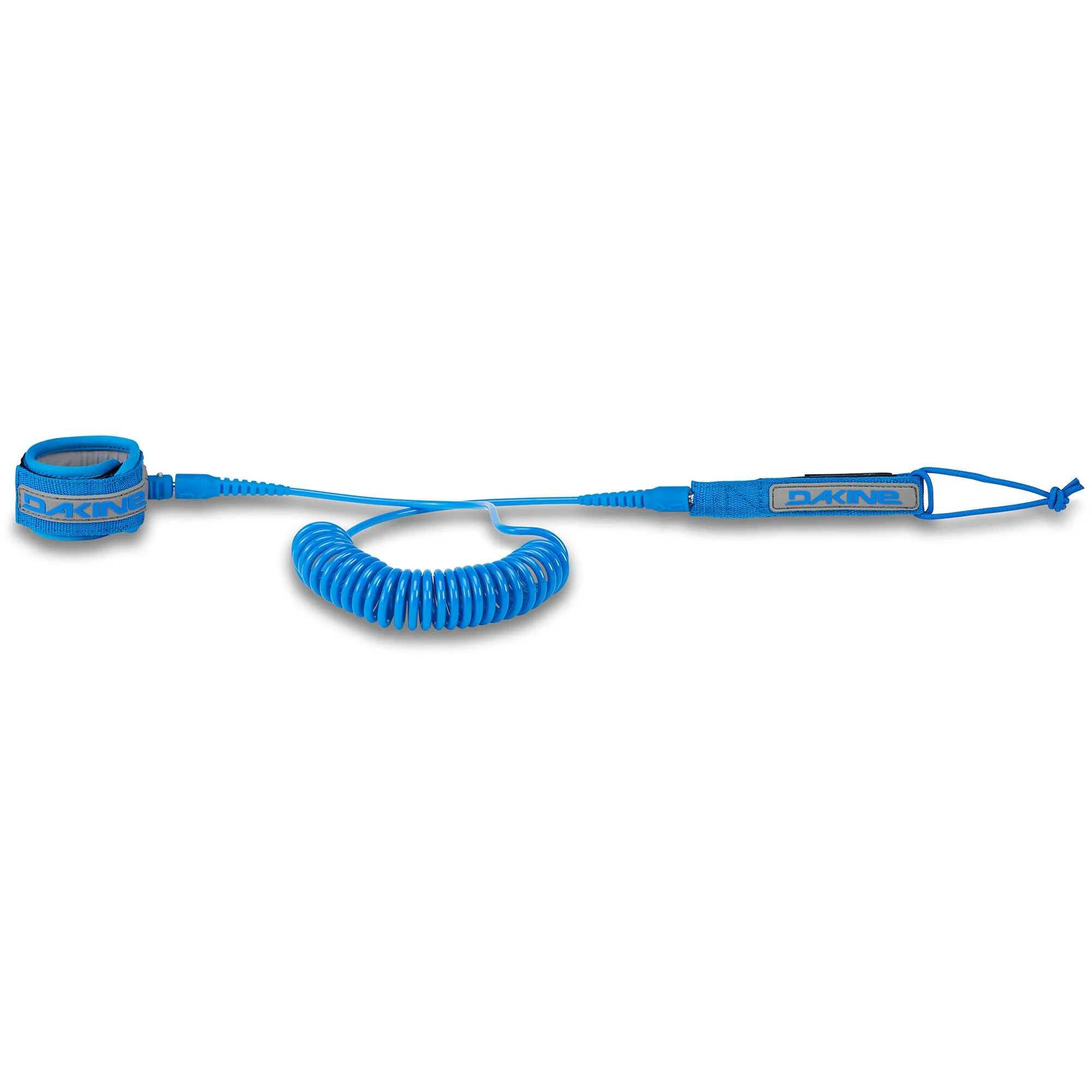
SUP Coiled Calf Leash 10' X 3/16": The Dakine SUP Coiled Calf Leash uses a straight-coil-straight design to keep the leash out of the water and reduce drag. This design minimizes resistance while paddling, so you maintain speed without the leash pulling on your leg.
SUP Coiled Calf Leash 10' X 3/16"
-
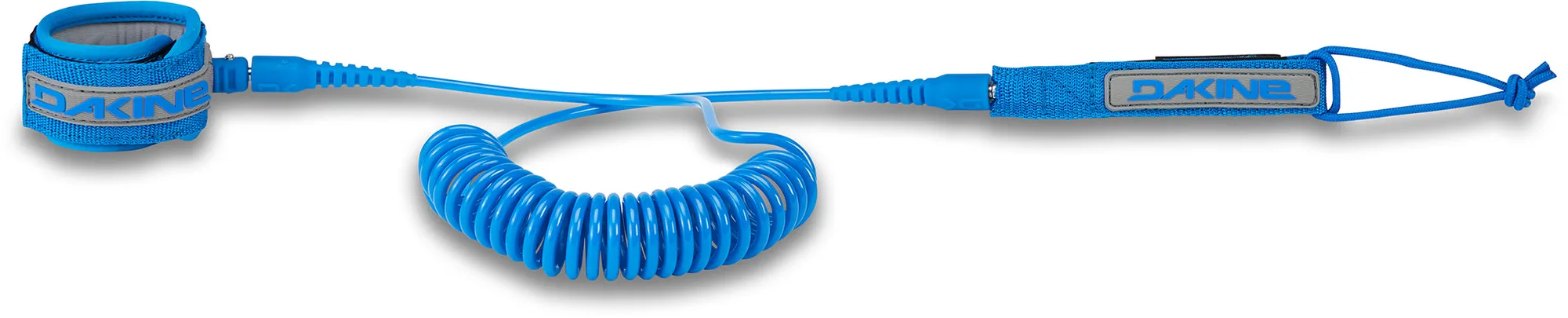
SUP Coiled Ankle Leash 10' X 3/16": The Dakine SUP Coiled Ankle Leash features a molded neoprene cuff and durable Opti-Flex leash ends. The neoprene cuff provides comfort against bare skin, and the Opti-Flex ends resist wear from saltwater and UV exposure.
SUP Coiled Ankle Leash 10' X 3/16"