When to Start Introducing a Straw Cup
Most pediatricians recommend introducing a straw cup around 6–9 months, alongside the bottle. By 12 months, the straw cup often becomes the main daytime cup, while open cups and their spills are best introduced at the table. The soft silicone straw in a baby straw cup supports baby-led weaning and helps develop the oral motor skills needed for open-cup drinking.
What the Cup with Straw - Llama Offers
-
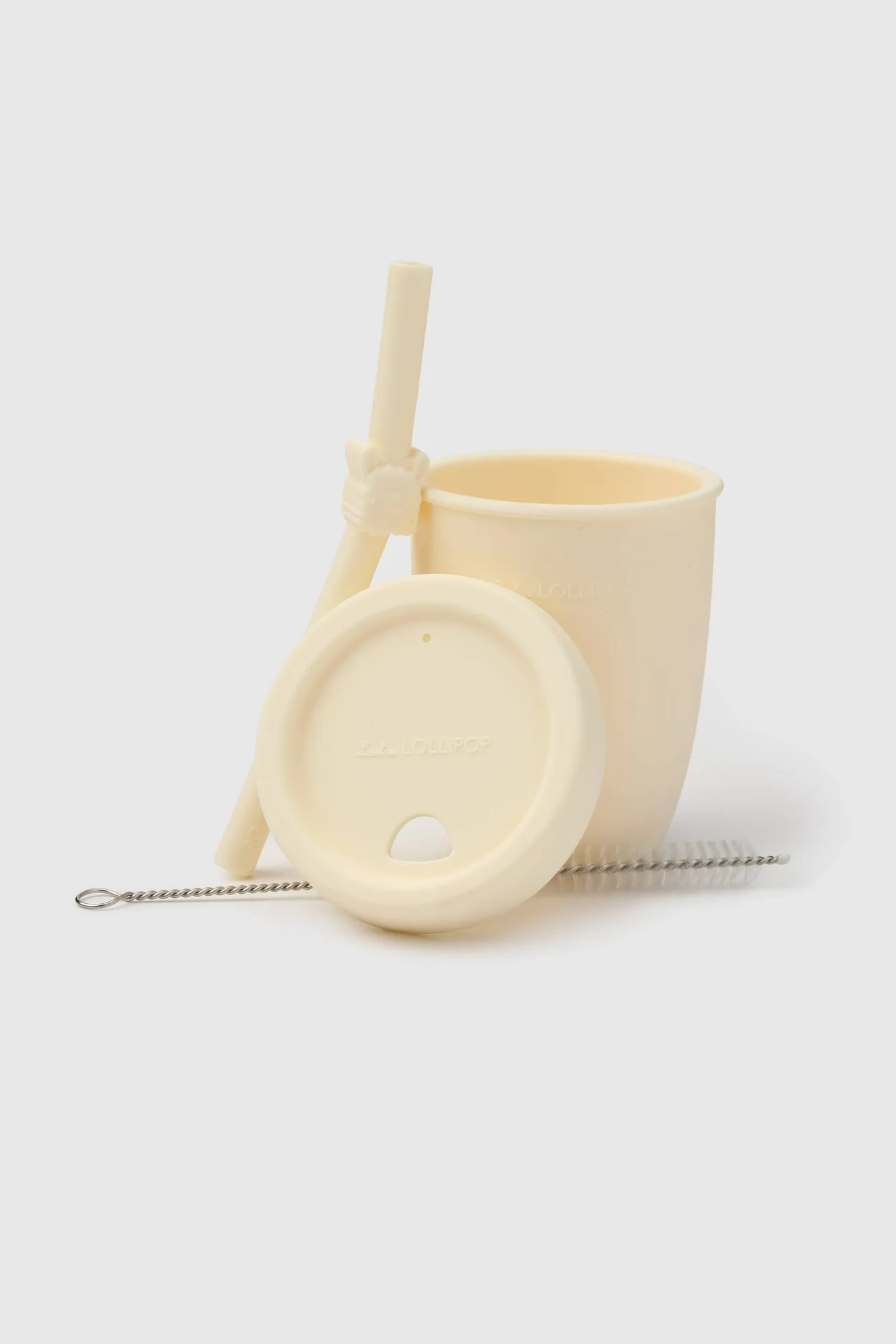
Cup with Straw - Llama: The Cup with Straw - Llama holds 5.2 fl oz (150 ml) and measures 2.7 × 2.7 × 3.3 in. It is made from LFGB-certified food-grade silicone cup, lid, and straw, and includes a straw-cleaning brush. It is dishwasher safe (top rack) and microwave safe. The size is ideal for toddler hands, and the silicone construction makes it durable enough for throwing. The included cleaning brush helps maintain hygiene.
Cup with Straw - Llama
-
Cup with Straw - Llama: The cup works with or without the straw, doubling as an open training cup that supports healthy oral and speech development. This flexibility lets you transition gradually from straw to open cup without buying another product.
-
Cup with Straw - Llama: The silicone tableware range, including this cup, received Mothers Always Right’s Best Silicone Baby Tableware award for 2026. Awards indicate that the product has been recognized for quality and safety by parenting experts.
How to Introduce the Straw Cup Step by Step
- 1. Start around 6–9 months: Offer the straw cup alongside the bottle during daytime feeds. Fill it with a small amount of breast milk, formula, or water.
- 2. Demonstrate the straw: Some babies take to the straw immediately; others need a week of you demonstrating how to suck. Gently squeeze the cup to push a little liquid into the straw, then let your baby see you sip from it.
- 3. Use the cup without the straw: The Cup with Straw - Llama is designed to work both ways. Remove the straw and let your baby practice open-cup drinking at the table. This supports oral and speech development.
- 4. Expect spills and throws: The cup is made to withstand being thrown off the high chair or across the kitchen. Its silicone construction is durable and easy to clean.
Why Straw Cups Are Recommended Over Sippy Cups
Most guidance has shifted toward straw cups because the motion to draw liquid up a straw is closer to open-cup drinking than the bottle-like suck of a sippy spout. Introducing a straw cup early can help your baby develop the oral motor skills needed for more advanced drinking. The Cup with Straw - Llama fits this approach, supporting baby-led weaning and a smooth transition from bottle to cup.