Quick answer
Start offering a small, open silicone cup around 6 months when your baby can sit upright with support. Use a gradual, patient approach and expect spills — it's a learning process.
Why silicone cups work for weaning
Silicone cups are soft, lightweight, and gentle on baby's gums, making them ideal for early drinking practice. Unlike hard plastic or glass, they won't hurt if dropped or chewed. Their flexibility also lets you gently squeeze the rim to control flow during the first attempts.
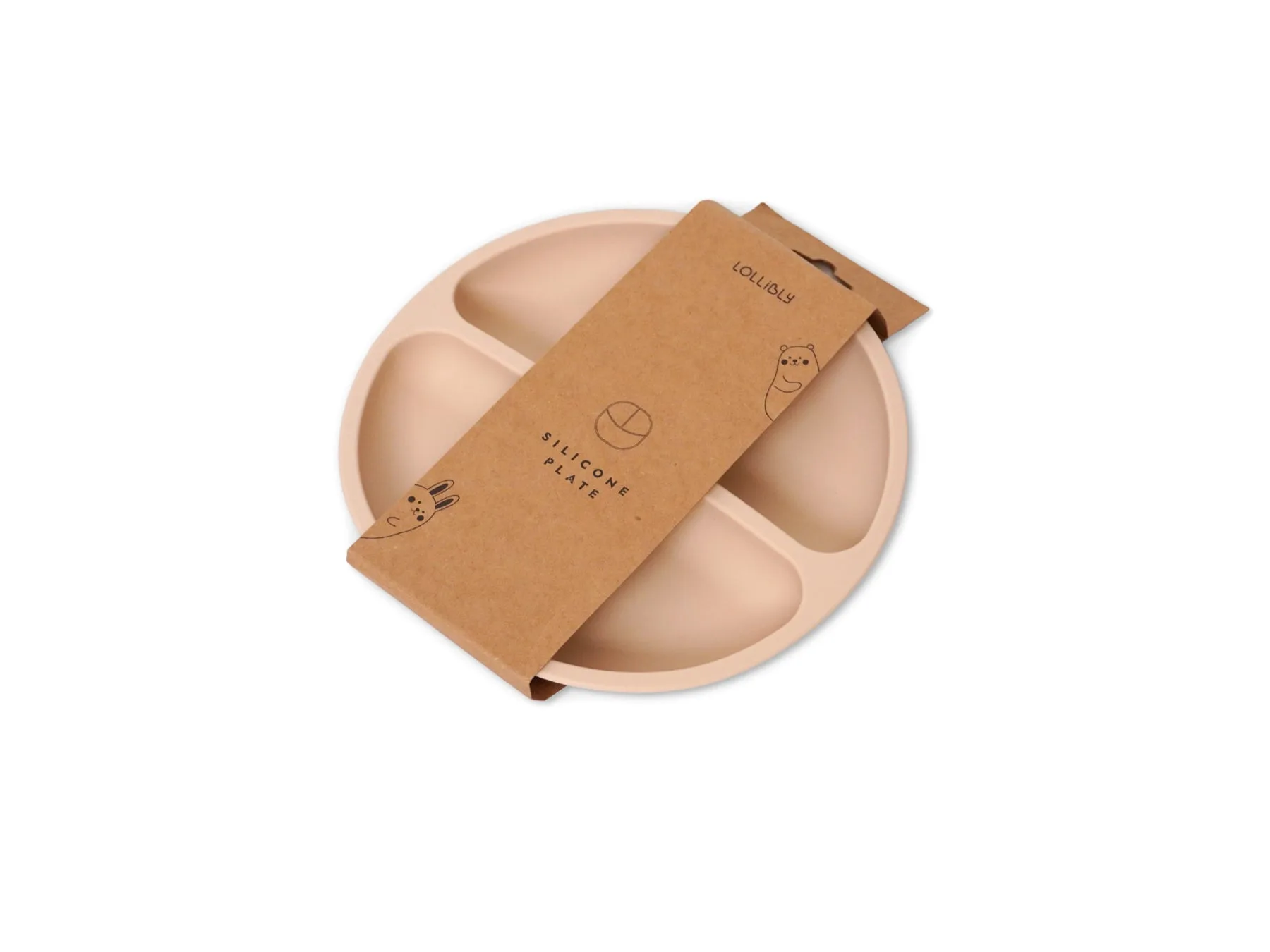
That said, silicone cups can tip over more easily than weighted or straw cups. Always supervise your baby and use a plate with a strong suction base — like the Lollibly Silicone Suction Plate — to keep mealtime gear in place while your little one focuses on drinking.
When not to start
Avoid introducing a silicone cup before your baby can sit upright with minimal support (usually around 6 months). Starting too early increases choking risk and frustration. Also, skip silicone cups if your baby has a known silicone allergy — though rare, it can cause skin irritation around the mouth.
6 steps to transition your baby to a silicone cup
- 1. Choose the right cup: Pick a small, open silicone cup (2-4 oz) with a wide base for stability. Avoid cups with spouts or valves — the goal is to teach sipping, not sucking. A wide, stable base reduces tipping. Avoid no-spill valves.
- 2. Start with a tiny amount: Pour just 1-2 tablespoons of expressed milk or water into the cup. Your baby will likely spill most of it — that's normal and part of learning. Small amounts prevent overwhelming spills and let your baby focus on the motion.
- 3. Model the action: Hold the cup to your own lips and take a sip. Babies learn by imitation. Then guide the cup gently to your baby's lower lip, tilting slowly so a small amount reaches their mouth. Never pour liquid into your baby's mouth — let them control the flow.
- 4. Use a two-handed grip: Place both of your baby's hands on the cup and support the bottom with your own hand. This gives them a sense of control while you prevent tipping. Two-handed grip builds confidence. Let go gradually as your baby gets steadier.
- 5. Practice at one meal per day: Offer the silicone cup at the same meal each day — usually lunch or a snack time when your baby is alert but not too hungry. Consistency builds familiarity. One meal per day is enough. More can lead to frustration or fatigue.
- 6. Expect mess and stay patient: Spills, dribbles, and refusal are part of the process. Keep a bib and towel handy. Celebrate small successes — a single sip without choking is a win. Patience is key. Most babies master open-cup drinking by 12 months.
Product spotlight
-
Lollibly Silicone Suction Plate: The Lollibly Silicone Suction Plate is made from 100% food-grade silicone, BPA-free, and dishwasher-safe. It features a strong suction base and three portioned sections. While your baby practices drinking from a silicone cup, this plate stays put on the table, reducing mealtime mess and helping your child focus on one skill at a time.
Lollibly Silicone Suction Plate