Quick answer
Do not remove the plastic toys your baby loves. Add one Montessori toy at a time during a calm, familiar moment, keep it in the same spot for a week, and let your baby lead. If after two weeks of low-pressure exposure your baby still ignores it, pause and try a different material or a different type of toy rather than pushing harder.
Montessori
It stings a little when you offer a beautiful wooden toy and your baby drops it for the light-up plastic one. Nothing is wrong with your baby, and nothing is wrong with you. Babies are wired to prefer what is familiar, and if plastic toys have been the everyday norm, they are the known quantity.
The good news is that toy preferences are not fixed. They shift with repetition, mood, and how the toy is presented. This guide separates the symptom from the likely cause, gives you a corrective plan you can actually run this week, and tells you when to stop and choose a different option instead of forcing the transition.
Symptom: what a plastic-toy preference actually looks like
Parents usually describe the same handful of moments. You hand over a wooden toy and it gets a two-second look before it is tossed aside. Your baby crawls past the shelf to reach the plastic toy with buttons. Or the wooden toy gets mouthed once and then ignored for days while the plastic one gets repeated play.
That is not defiance. A baby under two does not have the social reasoning to reject a toy on principle. What you are seeing is a preference built from habit, sensory feedback, and motor ease. Plastic toys often reward the smallest effort with sound, light, or movement, so they hold attention with less work from the baby.
- Track which toy gets picked up first for three days before changing anything. That baseline tells you whether the issue is the toy or the timing.
- Notice whether the wooden toy is ignored at every hour or only when your baby is tired, hungry, or overstimulated.
Likely cause 1: the plastic toy is simply easier to operate
Many plastic toys are designed to give a big reaction for a tiny input. Press one button, get a song. Montessori-style materials usually ask for more from the child: grasp, stack, sort, or turn. For a baby still building hand strength and coordination, that extra effort can feel like failure, so they go back to the toy that always works.
This is a motor-readiness issue, not a values issue. The fix is to lower the difficulty, not to lecture a nine-month-old about screen-free play. Offer materials that match what your baby can already do, then let the challenge grow with them.
- Choose a first Montessori toy with one clear action, such as grasping a cloth page or lifting an arch, rather than a multi-step puzzle.
- Put the plastic toy slightly out of reach for short windows, not away forever. Removing a comfort object entirely usually backfires.
Likely cause 2: the Montessori toy arrived with too much expectation
Adults often introduce a new toy with excitement, instructions, and a demonstration. To a baby, that can read as pressure. They sense they are being watched for a specific reaction, and the toy becomes a performance rather than a plaything.
Try a quieter introduction. Place the toy on the floor near where your baby already plays, sit nearby without narrating, and let curiosity do the work. If your baby picks it up, stay quiet and let them explore. If they do not, leave it there and try again later.
- Introduce one new toy at a time. Two new objects at once splits attention and makes both easier to ignore.
- Keep the introduction to five or ten minutes. Long, forced sessions teach your baby that the toy is a chore.
Corrective action: a two-week transition plan
Week one is about presence, not play. Put one Montessori toy in the play area and leave it there. Do not hand it over, do not demonstrate it, and do not react when it is ignored. Your only job is to make the toy a normal part of the room.
Week two is about pairing. Bring the Montessori toy into a moment your baby already enjoys, such as bath time, a stroller ride, or the calm stretch after a nap. If your baby reaches for it, great. If not, put it back on the shelf and repeat the next day. Consistency matters more than any single successful session.
- Rotate only one new Montessori toy into the mix per week so the plastic favorites still feel available.
- Model play without taking over. Sit beside your baby and use your own hands on a similar object rather than moving theirs.
- If your baby mouths the toy, that counts as engagement. Oral exploration is how infants learn texture and shape.
Where to stop and choose another option
After two weeks of calm, low-pressure exposure, look at the pattern rather than one bad day. If your baby now touches, mouths, or carries the Montessori toy even briefly, keep going. That is progress, and it usually accelerates once the toy is familiar.
If two weeks pass with zero interest and your baby actively avoids the toy, stop pushing it. That is your signal to choose a different option: a different material, a different size, or a different type of toy altogether. A toy that consistently creates frustration is not teaching anything, and a stressed baby is not learning through play.
- Stop if the toy triggers crying, throwing, or avoidance every time it appears.
- Choose another option if your baby is under six months and still working on basic grasping. Cloth and soft materials are usually a better first step than wood.
- Revisit the wooden toy in a month or two. Readiness changes quickly in the first two years.
Diagnosis: is this a phase or a real mismatch?
- Your baby is under 12 months and ignores wood: This is usually a motor-readiness mismatch, not a rejection of Montessori. Start with a soft material such as the Montessori Baby Cloth Book and keep wooden toys on the shelf for later. Recheck interest in wood around the first birthday.
- Your toddler plays with the toy only when you are watching: That is adult-directed play, and it is common. Step back and let the toy sit in the play space without narration for a week. Independent play often follows boredom. If solo play appears even once, the transition is working.
- Two weeks pass with active avoidance: Stop introducing that specific toy. Choose a different material or a different type of toy, and do not frame the change as a failure. A toy that consistently upsets your child is not the right teaching tool right now.
Products that fit a gentle transition
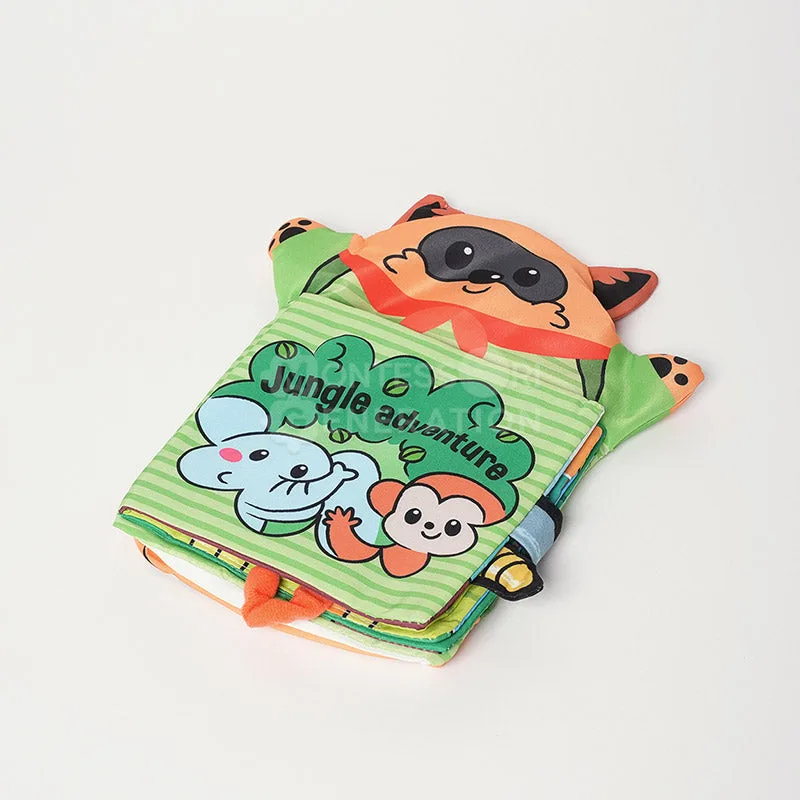
- Montessori Baby Cloth Book: Age 0+, 11.4" x 6.1" x 0.7", polyester fiber, PVC paper, and PP cotton, machine washable on lower settings. For a baby who only wants plastic toys, a soft cloth book is the lowest-friction starting point: it feels familiar in the hand, survives mouthing, and can be washed after every session.
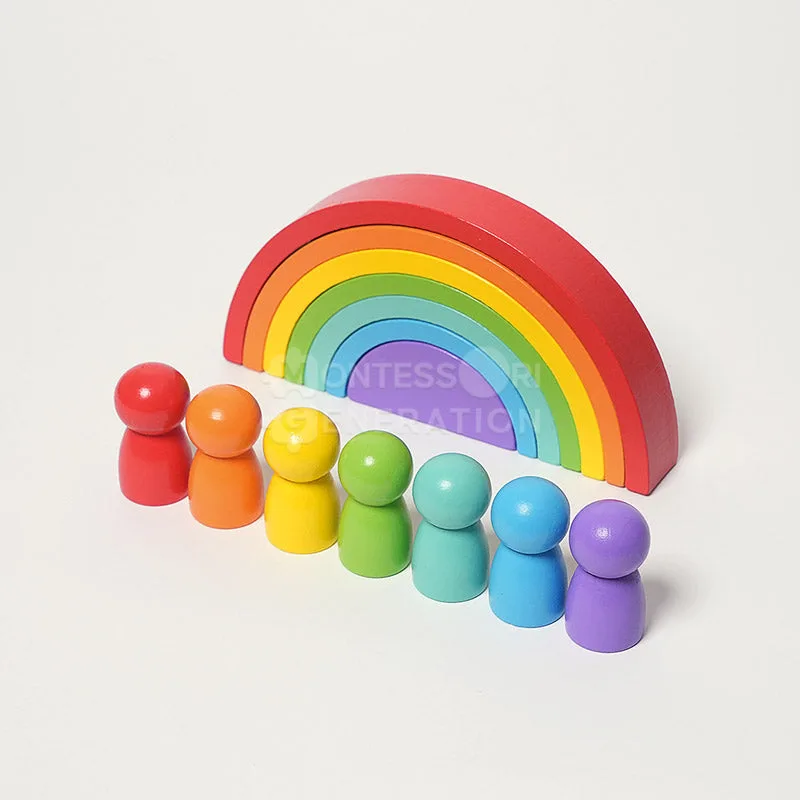
- Montessori Rainbow: Age 12+ months, includes seven arches and seven figurines, made from eco-friendly wood with non-toxic paint, clean with a damp cloth and mild soap. Once your baby is past the mouthing-everything stage, the rainbow offers open-ended stacking and sorting without the battery-powered feedback that plastic toys provide.
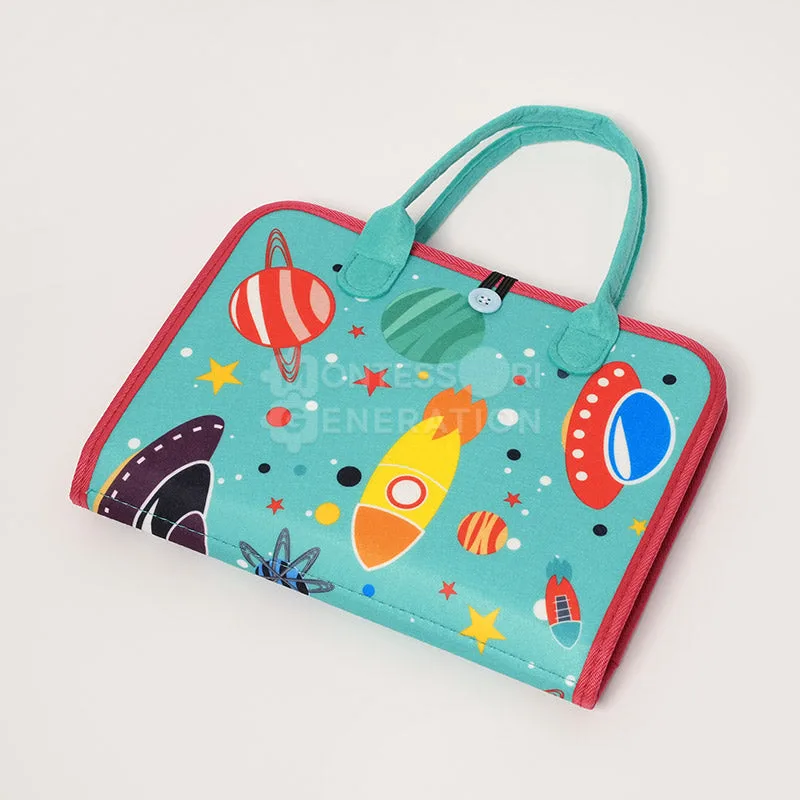
- Montessori Interactive Busy Bag: Age 3+, one felt busy bag with eight interactive pages, soft felt with strong bindings, spot clean only. For an older toddler who still reaches for plastic, the busy bag channels the same hands-on fiddling into felt pages for spelling, shapes, and dressing practice.
Switching to Montessori toys works best as an addition, not a replacement. Keep what your baby loves, add one new material at a calm moment, and give it two weeks before you judge the result. If it still is not clicking, choose a different option and try again later. Your baby's preferences will keep changing, and so should your shelf.