Quick answer
Start with one Playforever toy car, hand it over during calm floor play, and let your child roll, hold, and carry it before you add rules or more cars. Keep the first sessions short, stay close, and treat the car as a toy to be used rather than a display piece. If your child is still mouthing toys, save the first Playforever car for supervised play until that phase passes.
Why one car first works better than a set
A single car gives a young child time to notice how it moves, how heavy it feels, and how the wheels turn. When you offer several at once, the play often becomes dumping and scattering rather than rolling and pretending. Pick one model, keep the others out of sight, and let your child lead for a few minutes.
- Choose a size and shape that fits your child's hand and your play space.
- Keep the first car in one room so it does not get lost in the toy bin.
- Rotate in a second car only after the first one is used with some care.
Set up a simple rolling zone
You do not need a track or a playmat. A short stretch of bare floor, a low ramp made from a board, or a shallow cardboard box works well. Clear away hard objects that could chip the paint or trip your child, and check that the surface is not so slick that the car shoots out of reach.
- Hard floors are fast; low-pile carpet is slower and easier for toddlers to chase.
- A folded towel at the end of the run stops the car without a hard crash.
- Keep the zone small enough that you can sit at one edge and still reach your child.
Model one move, then hand over the car
Show your child one clear action, such as pushing the car forward and saying 'go.' Then stop and let them try. Young children learn by copying, but they also need space to experiment. If they push it sideways or turn it over to spin the wheels, that is still useful play.
- Name what you see: 'You made it roll,' 'It went fast,' 'It stopped.'
- Avoid correcting how they hold or push the car during the first sessions.
- End the game while it is still fun, before your child loses interest.
Add pretend play as your child grows
Once rolling is familiar, bring in simple stories. A car can go to a pretend garage, wait at a 'red light,' or deliver a block to a stuffed animal. These play ideas build language and turn a toy car into a tool for imagination rather than a thing to watch.
- Use masking tape on the floor for a road or parking spot.
- Pair the car with blocks, not with tiny loose parts that can get lost.
- Let your child decide the destination; follow their story instead of directing it.
Keep play age-appropriate as skills change
A toddler who once only mouthed and dropped the car may soon line cars up, sort them by color, or race them down a ramp. Watch for these shifts and adjust the setup: more cars, a longer track, or a new surface. If your child is still in a throwing phase, keep play on the floor and away from hard edges.
- Supervise closely when a child is learning to throw or drop toys.
- Put the car away when play turns into banging it against furniture or walls.
- Reintroduce it later; a short break often resets how a child handles the toy.
Steps for a calm first introduction
- Pick one car and one clear space: Choose a single Playforever car and a small, clear floor area. Remove other toys that compete for attention. Checkpoint: your child can see the car and you can reach them without moving.
- Let your child explore before you teach: Hand over the car and watch what your child does first. Let them turn it, tap it, and roll it without instructions. Checkpoint: if the car goes into the mouth, switch to supervised holding and put it away until the mouthing phase eases.
- Show one rolling move: Push the car gently forward once, then stop and wait. Repeat only if your child shows interest. Checkpoint: your child tries to push or chase the car, or loses interest within a minute or two.
- Add a simple pretend layer: Introduce one idea, such as a parking spot, a garage, or a delivery to a toy. Keep the story to one or two words at first. Checkpoint: your child adds their own idea, even if it does not match yours.
- Stop while it is still fun: End the session before your child gets tired or starts throwing the car. Put the car in a known spot. Checkpoint: your child is calm enough to hand the car back or help put it away.
Products that suit a first introduction
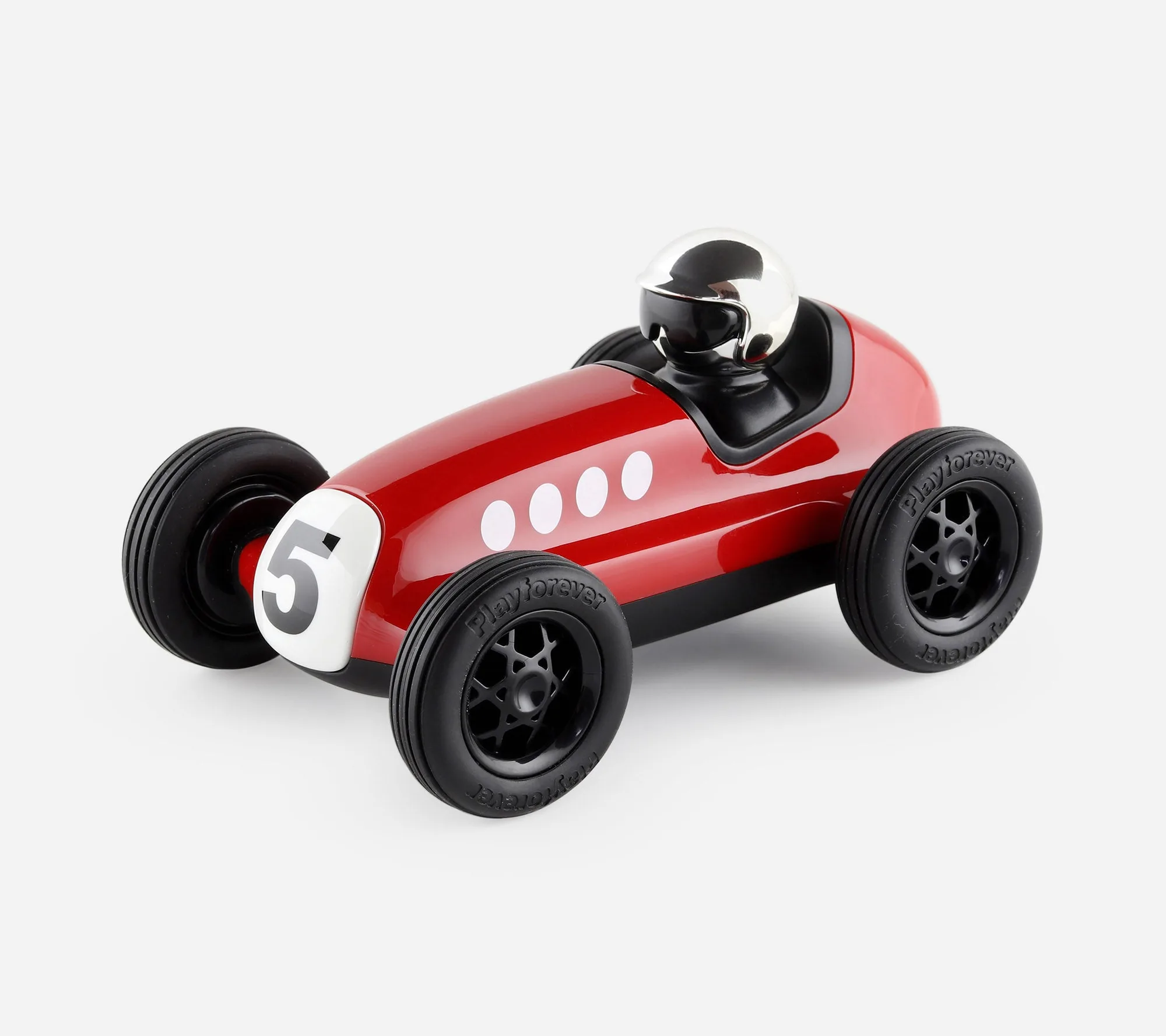
- Malibu Benjamin: Malibu Benjamin is a Rollin' Icons car inspired by the cigar-shaped Formula 1 cars of the late 1950s and early 1960s, with a modern Playforever twist and a design built for speed. Its long, low shape is easy for small hands to push, and the racing look gives you a ready-made story for pretend play.
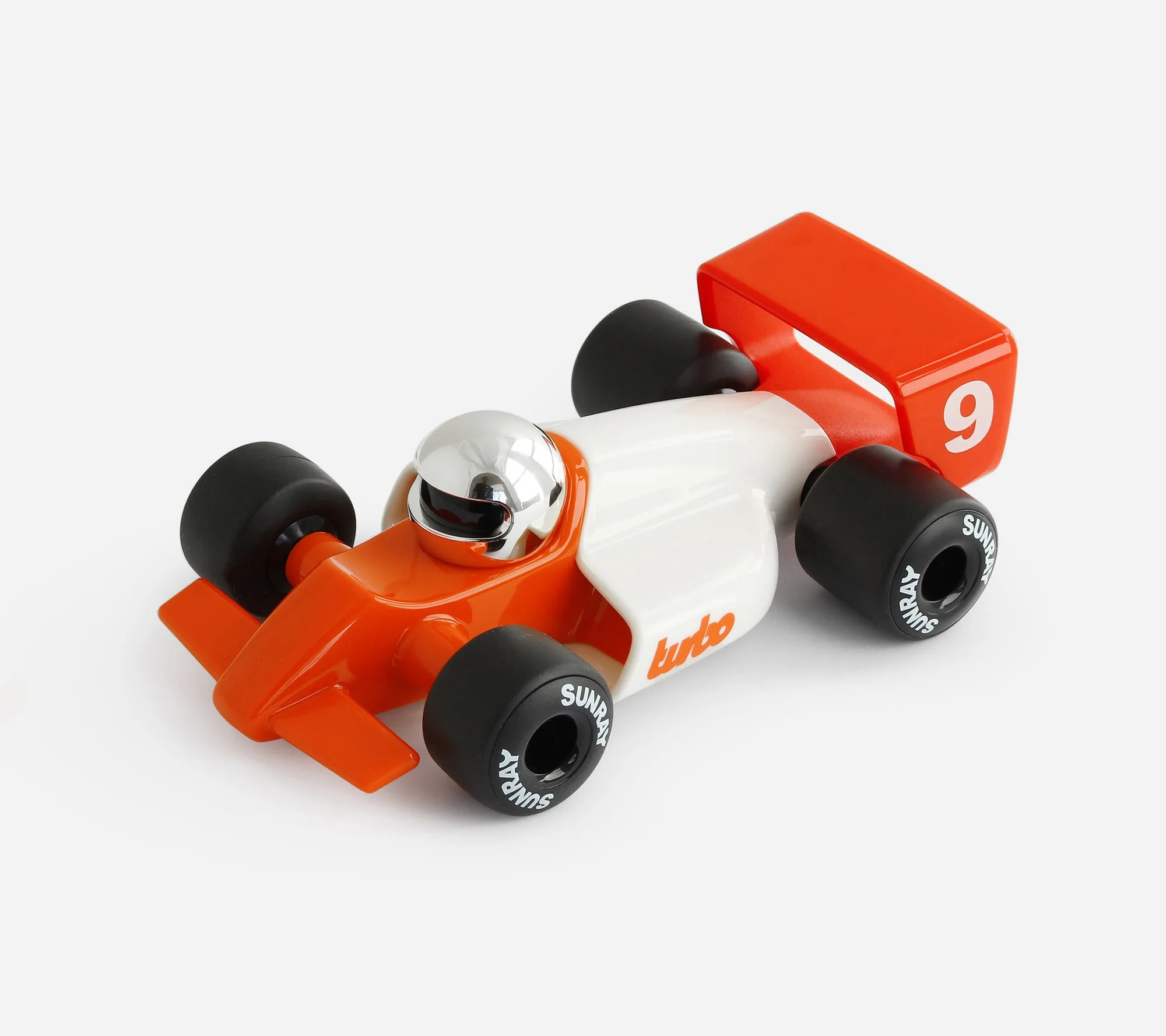
- Malibu Lucas: Malibu Lucas shares the same Rollin' Icons racing inspiration and is built for speed. If you want a second car for sibling play or a backup first car, this is a close match in shape and play pattern.
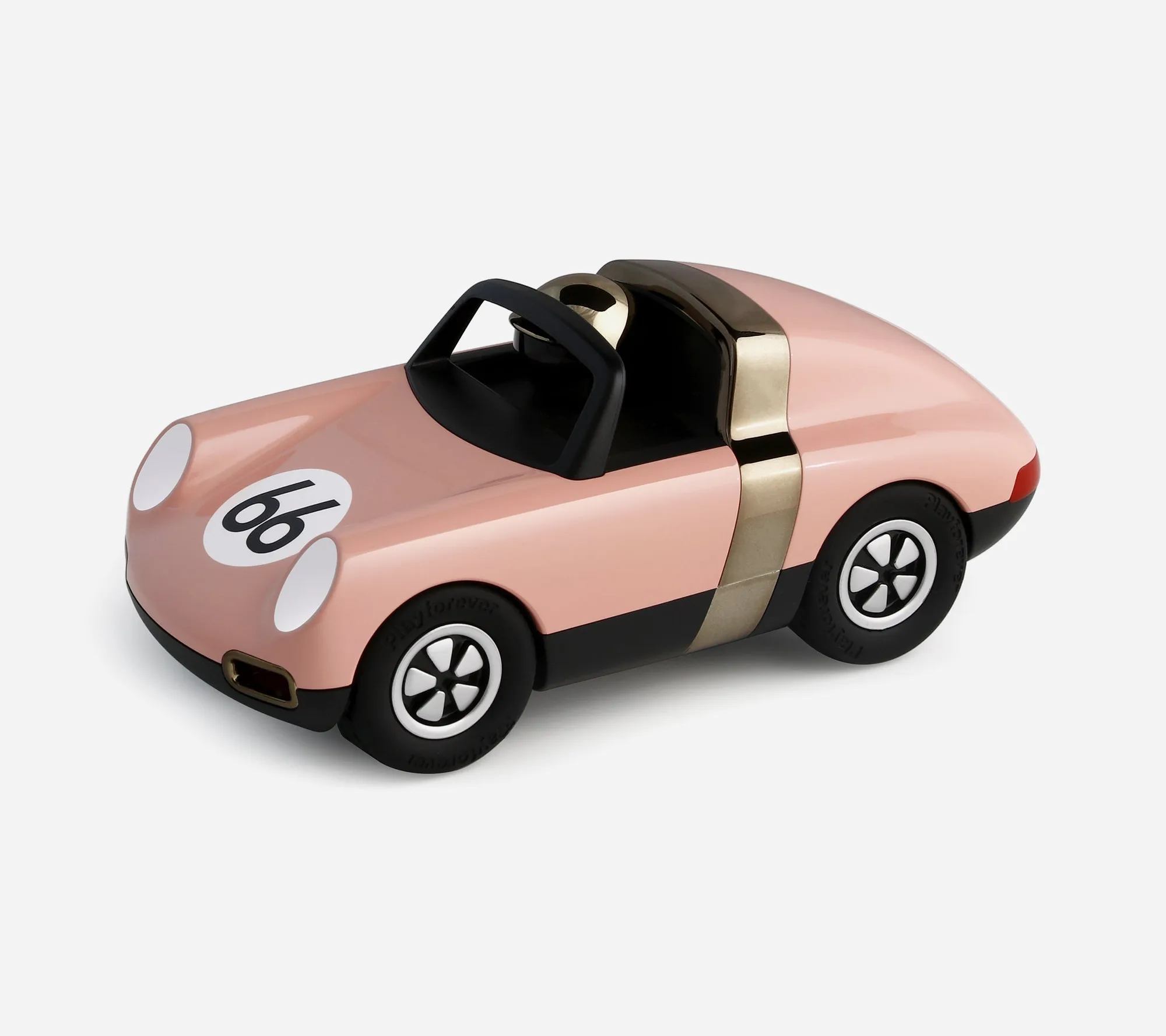
- Luft Pop: Luft Pop is a collector-grade Luft car inspired by a 1985 Porsche 911 Carrera 3.2 Targa that Playforever founder Julian Meagher owned while living in Florence, Italy. Its real-car inspiration gives older children a specific vehicle to talk about, which can extend pretend play beyond simple rolling.