Quick answer
Start offering a rattle around 3 months and a teether when you see signs of teething, usually around 4–7 months. Choose safe, easy-to-grip materials like organic natural rubber, and always supervise play.
Why a rattle and teether are different first toys
A rattle helps your baby discover cause and effect — shaking it makes a sound that builds early listening and motor skills. A teether, on the other hand, is designed specifically to soothe sore gums during teething. While some toys combine both functions, it helps to understand their separate roles so you can introduce each one at the right time.
Choosing safe materials for baby’s mouth
Babies explore everything with their mouths, so material safety matters. Organic natural rubber is a great choice because it’s free from BPA, PVC, and phthalates. It’s also soft enough to be gentle on gums but firm enough to provide counter-pressure for teething relief. Avoid hard plastics or toys with small parts that could break off.
Steps to introduce a rattle and teether
- Watch for readiness signs: Around 3 months, most babies start reaching for objects and can hold a lightweight rattle. For teething, look for excessive drooling, chewing on hands, fussiness, or red gums — usually starting between 4 and 7 months. Don’t introduce a teether before these signs appear; your baby won’t know what to do with it. If your baby isn’t showing interest yet, wait a few weeks and try again.
- Choose the right toy for each stage: Start with a simple rattle that’s easy to grip — look for a ring shape or a toy with a handle. When teething begins, offer a teether made of soft, safe material like organic natural rubber. A combined rattle and teether, such as Ralphie Reindeer, works for both stages but make sure it’s still easy for tiny hands to hold. Avoid toys with small detachable parts or long cords that could wrap around your baby’s neck.
- Demonstrate the toy first: Shake the rattle gently while your baby watches, then place it in their hand and help them shake it. For a teether, gently rub it on their gums or let them hold it and bring it to their mouth. Babies learn by imitation, so showing them how the toy works builds confidence. If your baby drops the toy repeatedly, they may be testing cause and effect — that’s normal and part of learning.
- Supervise and inspect regularly: Always stay nearby while your baby plays with a rattle or teether. Check the toy for cracks, loose pieces, or damage after each use. Natural rubber toys should be cleaned with mild soap and water and air dried. Replace any toy that shows wear. Never tie a teether or rattle to a pacifier clip, crib, or stroller — this creates a strangulation risk.
- Use the teether for bath time too: Many natural rubber teethers, like Ralphie Reindeer, double as bath toys. The warm water can further soothe sore gums, and the toy’s buoyancy adds a new sensory experience. Just rinse and dry thoroughly after each bath to prevent mold. If water gets inside the toy, squeeze it out and let it dry completely before the next use.
Product spotlight
-
Ralphie Reindeer Rattle, Teether & Bath Toy: Ralphie Reindeer Rattle, Teether & Bath Toy is made with organic natural rubber, hand painted, and designed with both soft and hard parts to soothe a baby’s irritated gums. This combination of textures makes it a versatile first toy — it works as a rattle, a teether, and a bath toy, so you don’t need to buy separate items.
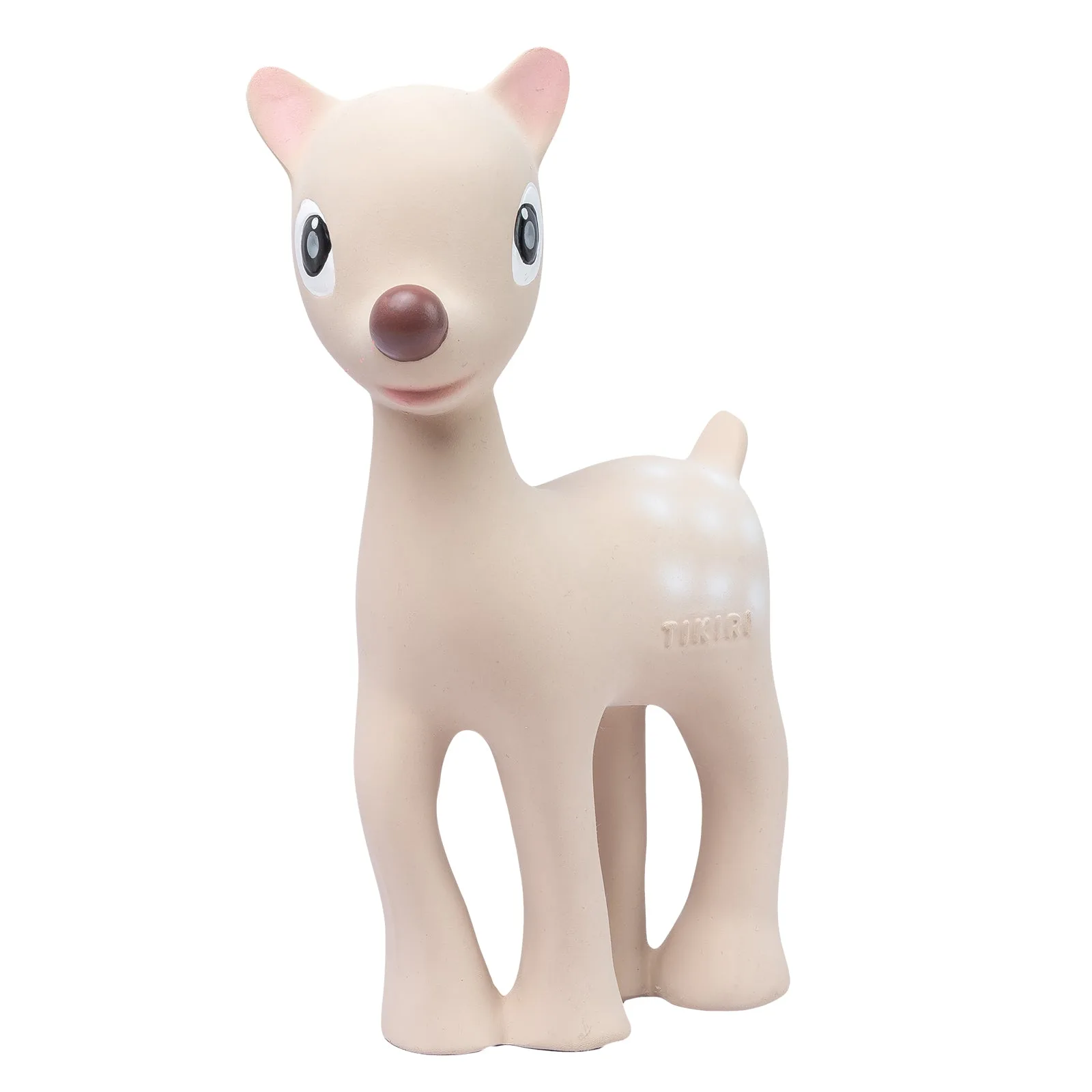
Ralphie Reindeer Rattle, Teether & Bath Toy