Quick answer
Start solids around 6 months when your baby shows readiness signs. Use a complete baby feeding set with a bowl, spoon, and cup to make the transition smooth and mess-free.
Why a dedicated feeding set matters
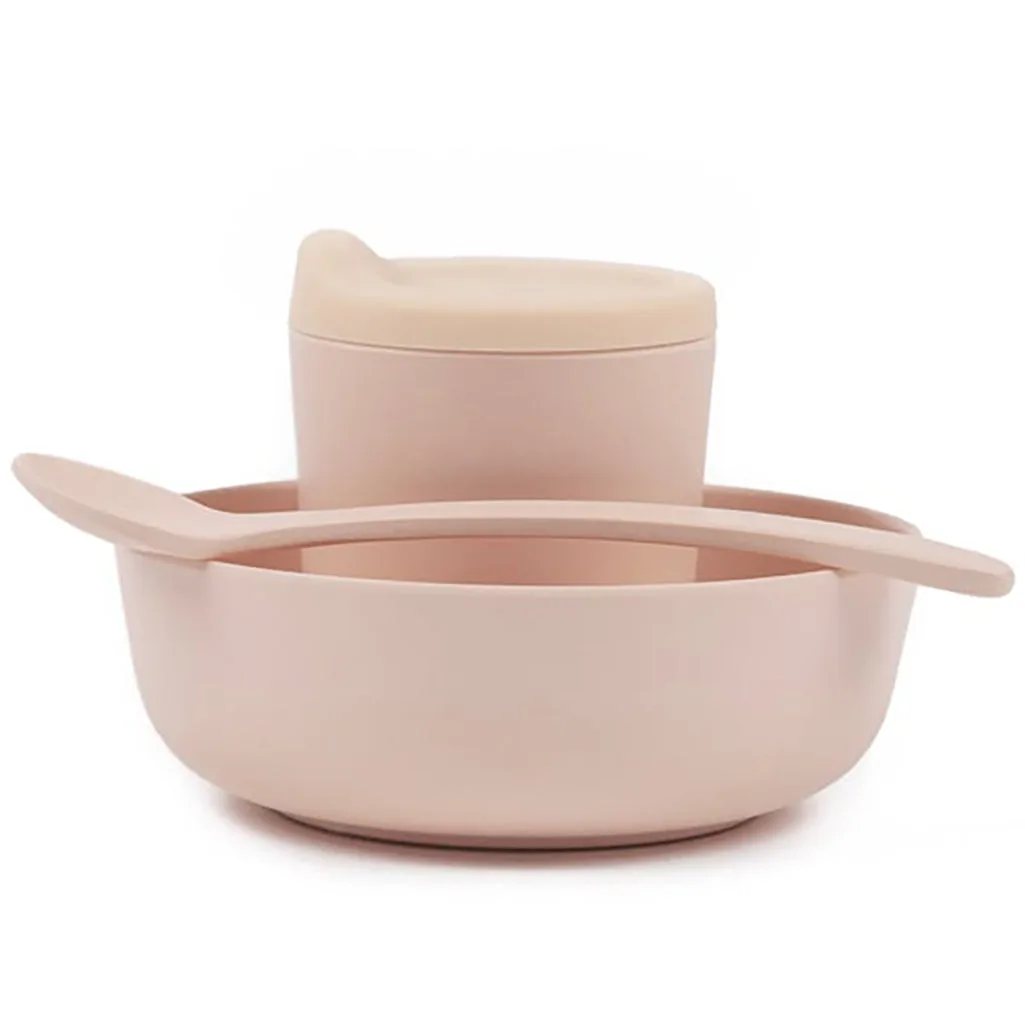
A baby feeding set designed for weaning gives you the right tools in one package. The bowl's non-slip base stays put during enthusiastic scoops, and the ergonomic spoon fits small hands or yours for easy loading. The sippy cup with a silicone topper helps your baby practice drinking without flooding the high chair tray.
What to serve first
Pediatricians typically recommend single-ingredient purees like avocado, sweet potato, or iron-fortified infant cereal mixed with breast milk or formula. Keep the texture very smooth at first, then gradually thicken as your baby gets the hang of swallowing from a spoon.
Step-by-step guide to starting solids
- Check readiness signs: Look for your baby sitting up with minimal support, showing interest in your food, and losing the tongue-thrust reflex (pushing food out). Most babies reach this around 6 months. Starting too early before these signs appear can lead to gagging and frustration.
- Pick the right time of day: Choose a time when your baby is alert but not overtired or starving. Mid-morning after a milk feed often works best because they are hungry enough to try but not desperate. A cranky baby won't cooperate. If the first attempt fails, try again the next day at a different time.
- Prepare a small amount of first food: Offer 1-2 teaspoons of a single-ingredient puree. Use the spoon from your feeding set to scoop a tiny amount and gently touch it to your baby's lips. Let them taste and swallow at their own pace. Don't force the spoon into their mouth. Let them open up naturally.
- Follow your baby's cues: Watch for signs of interest (leaning forward, opening mouth) and fullness (turning head away, pushing the spoon). Stop when they show they are done, even if only a few bites were eaten. Overfeeding at this stage can create negative associations with mealtime.
- Introduce the sippy cup: After a few successful spoon feeds, offer the sippy cup with a tiny amount of water or expressed milk. Hold it for your baby at first, tilting gently so the liquid reaches the silicone spout. Expect more liquid to end up on the bib than in the mouth at first. That's normal practice.
- Gradually increase variety and texture: Over the next few weeks, add new single foods one at a time (wait 3-5 days between each to watch for allergies). Move from smooth purees to slightly lumpy textures as your baby masters swallowing. Keep a simple food diary so you can track which foods your baby has tried and any reactions.
Product facts
-
Baby Feeding Set: Ekobo's custom design includes a certified bamboo fiber bowl with a non-slip base, a sturdy ergonomic feeding spoon, and a pint-sized sippy cup with a silicone topper. The non-slip bowl keeps purees in place, the spoon is easy to grip, and the cup lets you introduce water or milk without spills.
Baby Feeding Set