Quick answer
Start with one chunky wooden puzzle that has large, easy-to-grasp pieces, and offer it during calm, supervised floor time. Begin with free exploration before teaching the puzzle, then add one simple step at a time. A first wooden puzzle for baby works best when it matches their current grasp and attention span, not their age on a chart.
Wooden puzzles can be a lovely first toy for babies because the pieces are sturdy, quiet, and satisfying to hold. But the way you introduce them matters more than the puzzle itself. A baby who is handed a whole tray of pieces may lose interest quickly, while a baby who is guided through one piece at a time often stays engaged for months.
This step-by-step guide walks through when to start puzzles with baby, how to choose a first puzzle, and simple wooden puzzle play ideas that support hand-eye coordination without turning play into a lesson. Every baby develops at their own pace, so treat the steps as a flexible sequence rather than a schedule.
When to start puzzles with baby
Most babies are ready for a very simple wooden puzzle somewhere between 9 and 18 months, but the real signal is behavior rather than age. Watch for a baby who can sit steadily, pass an object from one hand to the other, and deliberately drop or place things. Those skills suggest they can begin exploring a chunky puzzle piece.
If your baby is still mouthing everything constantly or cannot yet release an object on purpose, waiting a few weeks is fine. A baby puzzle milestone is not a deadline. The goal is to offer the puzzle when it can be a success, not a frustration.
- Checkpoint: your baby can pick up a piece and let go of it without help.
- Common mistake: buying a 20-piece puzzle for a baby who is still working on grasping.
Choose a first wooden puzzle for baby
Your first wooden puzzle should have thick pieces, rounded edges, and a clear picture or shape under each piece. Chunky pieces are easier for small hands to grip, and a matching picture underneath gives babies a visual clue without words. Avoid puzzles with tiny pegs or thin pieces that can snap or be swallowed.
A single-theme puzzle, such as animals or vehicles, also gives you natural language to use during play. The Nessie Wooden Puzzle is a good example of a chunky, colorful design made from FSC-certified wood, with pieces sized for little hands to grasp and put together.
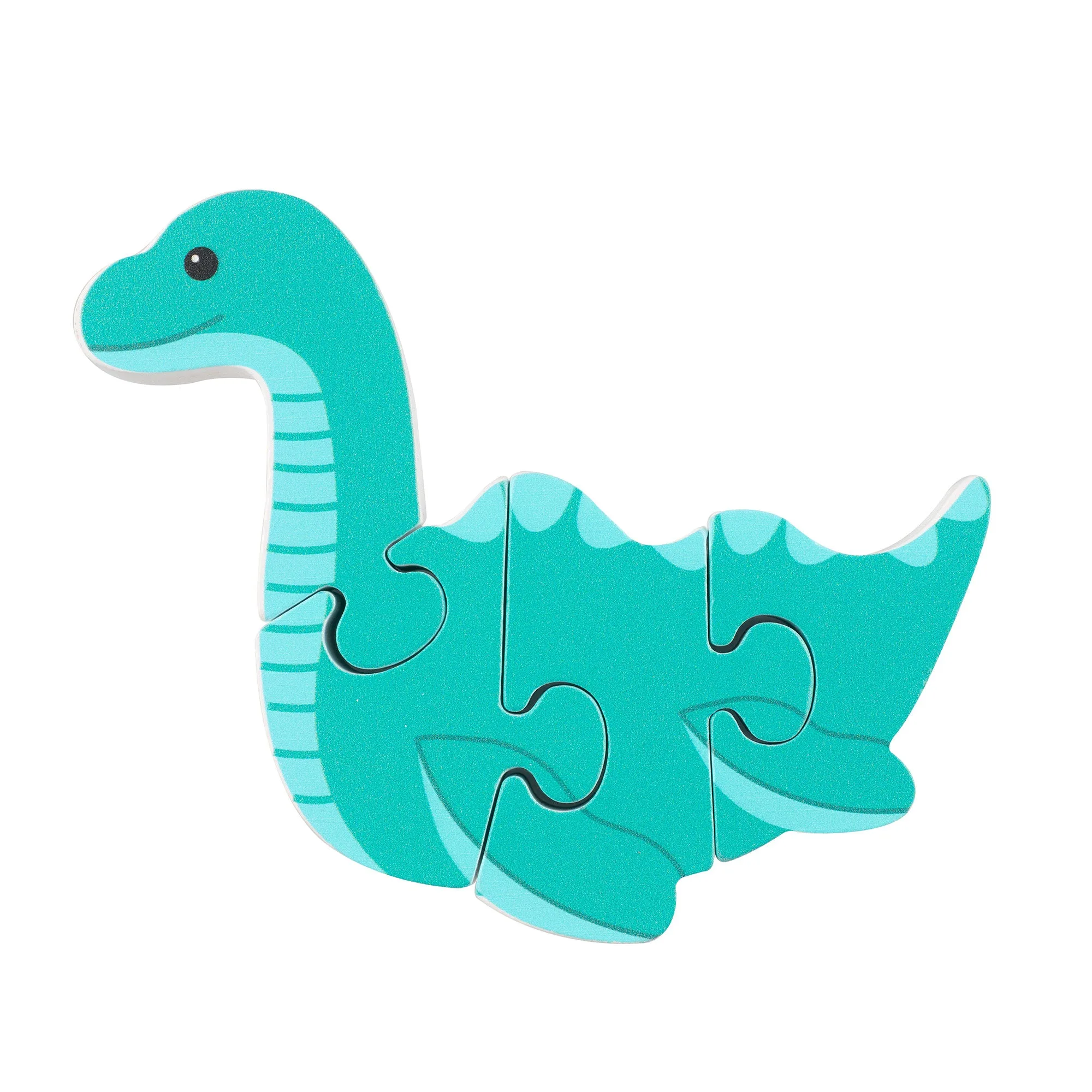
Nessie Wooden Puzzle
- Look for FSC-certified wood and smooth, painted surfaces.
- Common mistake: choosing a puzzle that is too advanced because it looks appealing on the shelf.
Set up a calm, safe play space
Before you introduce the puzzle, clear a small area on the floor and sit at your baby's level. A low table or a mat works well because it keeps pieces from rolling away and gives your baby a defined space. Keep the session short, around five to ten minutes, and stop while your baby is still interested.
Supervision is essential at this stage. Even large wooden pieces can be mouthed, so stay close and be ready to redirect. If your baby is tired, hungry, or distracted, save the puzzle for later. A calm baby learns more from two minutes of play than from ten minutes of struggle.
- Checkpoint: your baby is relaxed and reaches for the puzzle on their own.
- Common mistake: introducing a new puzzle right before nap time or a meal.
Let your baby explore before you teach
Hand your baby one piece first, not the whole puzzle. Let them turn it over, feel the edges, and mouth it safely if they want to. This free exploration builds familiarity and gives you information about how they grip and release objects. Resist the urge to guide their hand right away.
After a minute or two, place the piece near its spot on the board and see what happens. Some babies will try to fit it in; others will simply bang it on the tray. Both responses are fine. The early goal is comfort with the material, not correct placement.
- Try naming the piece simply: 'cow' or 'red circle'.
- Common mistake: correcting your baby's grip or placement too early.
Model one step, then pause
Show your baby how to place a piece into the puzzle using slow, exaggerated movements. Say what you are doing in a few words, then pause and wait. Babies learn by watching and then trying, so give them time to attempt the action before you help.
If they succeed, celebrate briefly and move on. If they struggle, guide their hand just enough to finish the placement, then let them try the next piece alone. This back-and-forth is where wooden puzzle hand-eye coordination develops, one small reach at a time.
- Checkpoint: your baby looks at the empty space and reaches toward it.
- Common mistake: finishing the puzzle for your baby to keep the session moving.
Build wooden puzzle play ideas into the week
Once your baby knows one puzzle, you can rotate it with other simple toys to keep interest high. Try a numbered puzzle for early counting exposure, or a themed puzzle that matches a book you already read together. Short, frequent sessions work better than one long one.
You can also use puzzle pieces away from the board for simple games: hide a piece under a cloth, put pieces in a small basket, or line them up and knock them down. These wooden puzzle play ideas stretch the toy without adding new purchases.
- Try the NEW Dinosaurs Number Puzzle for numbered pieces that guide sequencing.
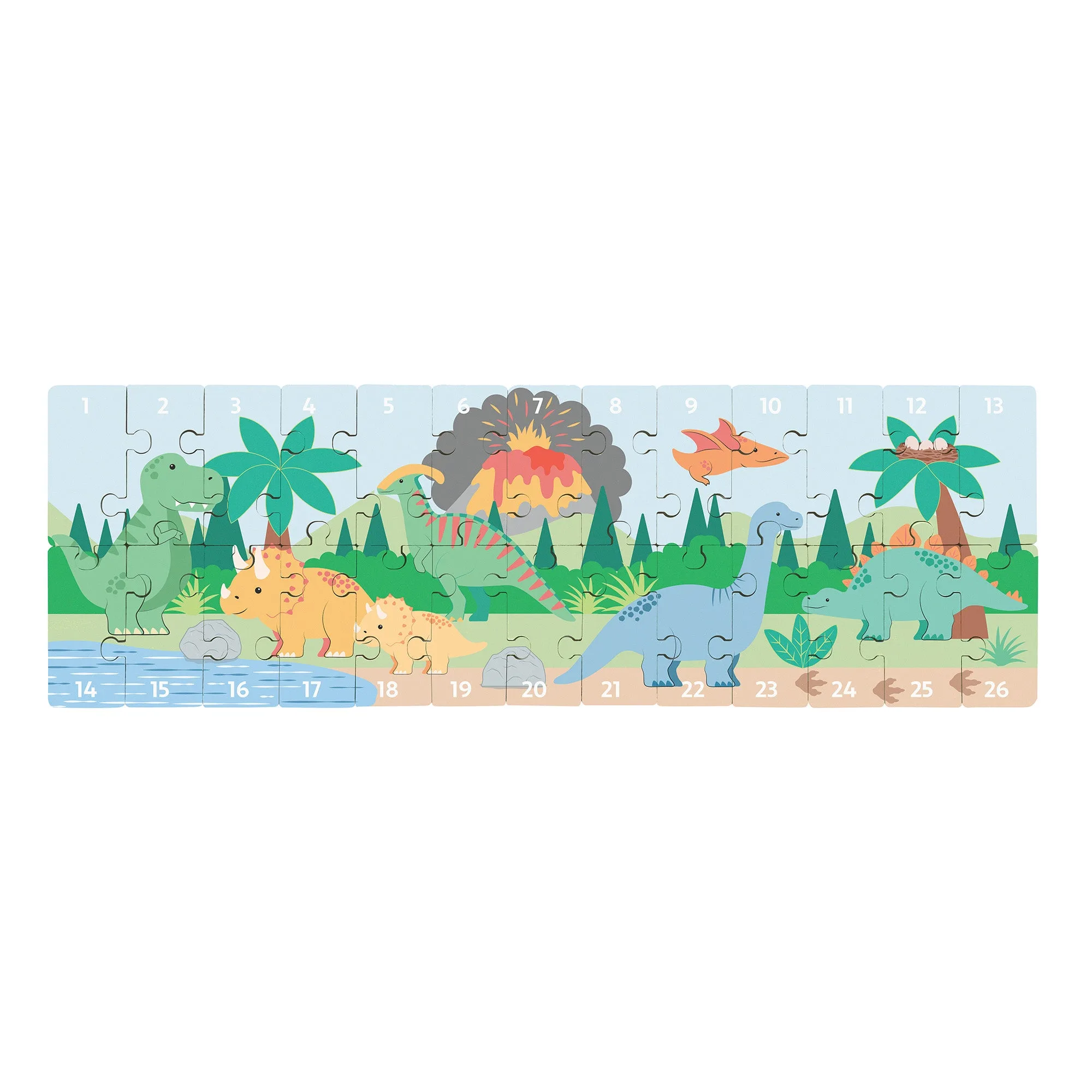
NEW Dinosaurs Number Puzzle
- Common mistake: leaving the same puzzle out all day so it becomes background clutter.
Know when to move to the next puzzle
Your baby is ready for a slightly more complex puzzle when they can complete the current one with little help and still seem interested. That might mean moving from a single-shape puzzle to one with more pieces, or from a picture puzzle to a numbered one.
The NEW T-Rex Dig - 3D Model & Puzzle is a 9-piece wooden puzzle that reveals a hidden 3D T-Rex skeleton as pieces are removed, which adds a new layer of discovery for a baby who has mastered simpler boards. Keep the tray nearby so pieces stay organized.
- Checkpoint: your baby places pieces correctly more often than not.
- Common mistake: jumping to a much harder puzzle and losing the confidence they built.
Your step-by-step introduction plan
- Step 1: Check readiness signals: Look for steady sitting, purposeful grasping, and the ability to let go of an object. These suggest your baby can begin exploring a chunky wooden puzzle. If your baby cannot yet release a piece on purpose, wait a few weeks and try again.
- Step 2: Pick one simple puzzle: Choose a chunky, FSC-certified wooden puzzle with large pieces and a clear picture underneath. Start with one puzzle only. The Nessie Wooden Puzzle is a sensible first choice because its pieces are designed for little hands.
- Step 3: Set up a short, supervised session: Sit on the floor with your baby, clear a small space, and offer the puzzle for five to ten minutes when they are calm and alert. Stop while your baby is still interested so the puzzle stays positive.
- Step 4: Let your baby explore first: Hand over one piece and let your baby hold, turn, and safely mouth it. Name the piece simply but do not correct their grip. Comfort with the material comes before correct placement.
- Step 5: Model one placement and pause: Show a slow, exaggerated placement, say a few words, then wait. Help only enough to let your baby finish the action. This is where hand-eye coordination and problem-solving grow.
- Step 6: Add play ideas and rotate puzzles: Use pieces for hiding games, baskets, or matching to a book. Rotate in a numbered puzzle or a new theme when interest fades. The NEW Dinosaurs Number Puzzle adds counting practice when your baby is ready.
- Step 7: Move up when your baby is ready: When your baby completes the current puzzle with little help, try a slightly more complex one, such as the NEW T-Rex Dig - 3D Model & Puzzle. Keep the cardboard tray nearby so pieces stay organized between sessions.
Wooden puzzles that fit early play
- Nessie Wooden Puzzle: Chunky, colorful puzzle inspired by Scotland's Nessie, made from FSC-certified wood and sized for little hands to grasp. A good first wooden puzzle for baby because the thick pieces are easier to hold and the single theme gives you simple words to use during play.
- NEW Dinosaurs Number Puzzle: Colorful dinosaur puzzle with numbered pieces in order, designed to support early number recognition, sequencing, and hand-eye coordination. Useful once your baby can place pieces with some accuracy, because the numbered sequence adds a gentle next challenge without changing the familiar puzzle format.
- NEW T-Rex Dig - 3D Model & Puzzle: A 9-piece wooden puzzle that reveals parts of a hidden 3D T-Rex skeleton as pieces are removed, sitting in a sturdy cardboard tray. A natural step up for babies who have mastered simpler boards, and the tray helps keep small pieces together between sessions.
Introducing wooden puzzles to babies is less about the perfect puzzle and more about calm, repeated, supervised play. Start simple, follow your baby's signals, and let each small success guide the next step.