Start with a Comfortable Introduction
Before you attach a bike trailer to your bicycle, let your dog explore it indoors or on the ground. Place the trailer in a familiar room, open the flap, and toss in treats or a favorite toy. Let your dog walk in and out at their own pace. This builds positive association without the pressure of movement or noise.
Once your dog enters willingly, close the flap for a few seconds while offering treats, then open it again. Gradually increase the time they spend inside while the trailer is stationary. The goal is a relaxed, happy response before you move on to the next step.
A Trailer Designed for Easy Setup and Comfort
-
VEVOR Dog Bike Trailer, Supports up to 66 Lbs, Pet Cart Bicycle Carrier: The VEVOR Dog Bike Trailer folds down in seconds for compact storage or transport in your car trunk, and its detachable wheels make setup simple. A trailer that folds and stores easily lets you bring it inside for early training sessions, helping your dog get comfortable without the pressure of being outdoors or attached to a bike.
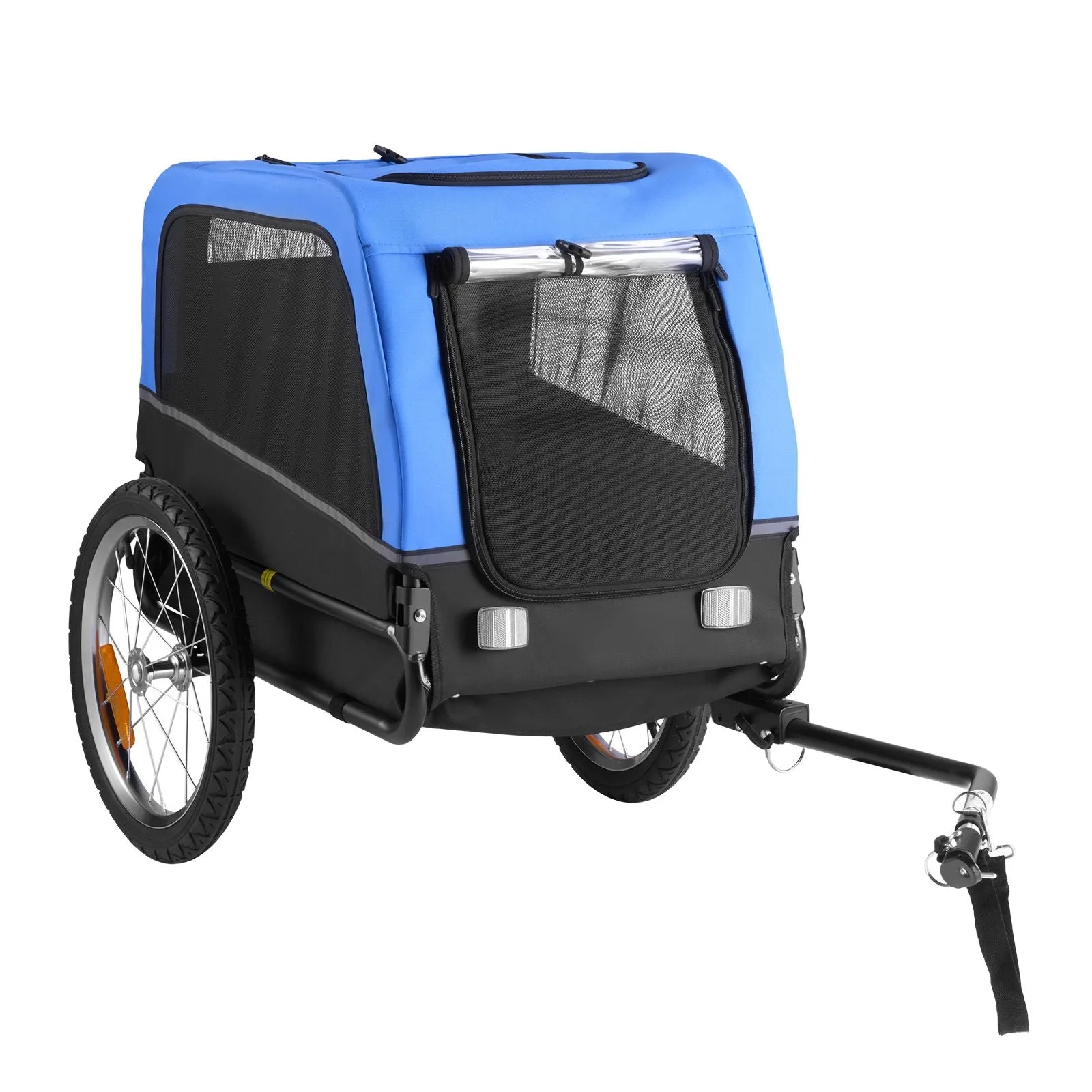
VEVOR Dog Bike Trailer, Supports up to 66 Lbs, Pet Cart Bicycle Carrier
-
VEVOR Dog Bike Trailer, Supports up to 66 Lbs, Pet Cart Bicycle Carrier: The universal coupler attaches to 22-28 inch rear wheel bicycles and is quick to set up and stable to tow. Knowing the coupler fits most adult bikes and is stable gives you confidence during the first rides, reducing wobble that might startle your dog.
Step-by-Step Training Process
Follow these stages at your dog's pace. Each stage should feel easy before you move to the next.
- Stationary trailer with open flap: Let your dog enter and exit freely while you reward calm behavior. Add a soft blanket or bed inside to make it cozy.
- Closed flap, trailer still: Zip the flap closed for short periods while your dog is inside. Stay nearby and offer treats through the mesh or opening. Gradually extend the time.
- Gentle movement indoors: With the trailer on a flat surface, gently rock it or push it a few feet while your dog is inside. Reward calmness. Repeat until your dog shows no concern.
- Short test rides without the bike: Hand-pull the trailer slowly across a quiet, paved area. Keep the first sessions brief and end on a positive note with treats and praise.
- Attach to bike and practice in a safe area: Once your dog is comfortable with hand-pulling, attach the trailer to your bicycle. Walk the bike first, then ride slowly in a flat, low-traffic area. Watch your dog's body language and keep the first ride very short.
Safety Checks Before Each Ride
Before every ride, inspect the coupler attachment to ensure it's secure on your bike's rear wheel. Check that the trailer's wheels are locked in place and the frame is fully unfolded. Confirm that the flap is zipped closed and your dog cannot push it open. Always use a leash or harness inside the trailer if your dog tends to jump out when stopped.
Start with short, smooth rides on flat ground. Avoid bumpy trails or steep hills until your dog is fully accustomed to the motion. Bring water and take breaks on warm days. Never leave your dog unattended in the trailer, especially in direct sunlight.