Quick Answer
Introduce the harness gradually with positive reinforcement, starting with short indoor sessions before moving to outdoor walks. Patience and consistency are key.
Why a gradual introduction matters
A no-pull harness is a new sensation for your dog. Rushing the process can create fear or resistance, making future walks stressful. Taking it slow builds trust and helps your dog associate the harness with positive experiences.
The goal is to make the harness a normal part of your routine. By breaking the introduction into small steps, you reduce anxiety and set the stage for successful harness training.
Understanding your dog's signals
Watch for signs of discomfort or stress, such as freezing, trying to remove the harness, or excessive scratching. These signals mean you need to slow down and offer more rewards.
Some dogs may take to the harness quickly, while others need several days. Respect your dog's pace and adjust your training sessions accordingly.
Step-by-Step Introduction Process
- Let your dog sniff and inspect: Place the harness on the floor and let your dog investigate it. Reward any curiosity with treats and praise. This builds a positive association before any wearing begins. If your dog shows fear, don't force contact. Move the harness further away and reward calm behavior.
- Introduce the harness gradually: Start by holding the harness near your dog, then gently touch it to their back and chest without fastening. Pair each touch with a treat. Repeat until your dog remains relaxed. If your dog flinches or moves away, stop and give them a break. Rushing this step can cause setbacks.
- Fasten the harness for short periods: Once your dog is comfortable with touch, put the harness on and fasten it. Keep the session short (1-2 minutes) and immediately offer a high-value treat. Gradually increase the time as your dog relaxes. Check that you can fit two fingers between the harness and your dog's body. If it's too tight or too loose, adjust before moving on.
- Practice indoors with a leash: Attach a leash to the front clip and let your dog walk around indoors. Use treats to guide them and reward loose-leash behavior. This helps your dog get used to the feel of the harness while walking. If your dog pulls, stop walking and wait for them to relax before continuing. This teaches that pulling doesn't get them where they want to go.
- Graduate to short outdoor walks: Begin with quiet, familiar routes and keep walks short. Continue rewarding loose-leash walking. Over time, increase duration and explore new environments. If your dog regresses, don't punish them. Go back to indoor practice for a few days and then try again.
Product Spotlight
-
Light Blue Denim No-Pull Dog Harness: The Light Blue Denim No-Pull Dog Harness features front and back leash attachments for flexible control and reflective edge detailing for low-light visibility. The dual attachment points allow you to switch from front-clip training to back-clip comfort as your dog improves, while the reflective edges keep you both visible during evening walks.
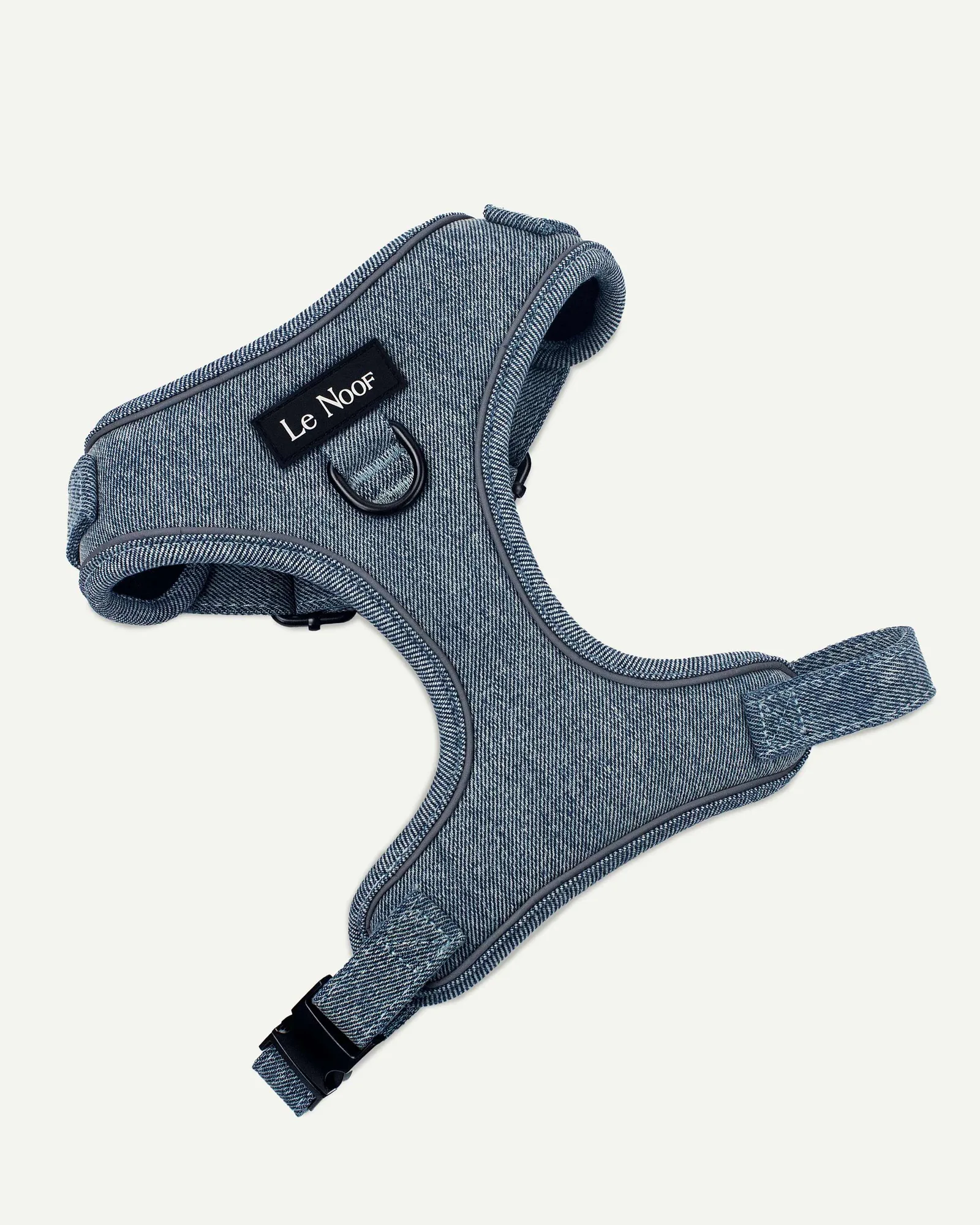
Light Blue Denim No-Pull Dog Harness