Quick answer
A cooling shemagh stays cool through evaporative cooling: it needs to be wet, exposed to moving air, and not sealed in a bag. Re-wet it whenever it feels dry or warm, wring it so it is damp rather than dripping, and drape it loosely so air can pass through the fabric. If it dries out and there is no water available to rehydrate it, the cooling effect stops until you can wet it again.
Why your shemagh stops cooling before the day is over
Evaporative cooling works only while water is leaving the fabric. Once the scarf dries out, it behaves like an ordinary cloth: it may still block sun and dust, but it no longer pulls heat away from your neck. The most common causes are not enough water in the fabric, no airflow across it, or a tight wrap that traps humid air against your skin. Heat, low humidity, and direct sun all speed up drying, so a scarf that lasts two hours on a mild morning may need re-wetting every 30 to 45 minutes at midday.
Rehydrating on the move without soaking your gear
Carry at least 500 ml of water you are willing to pour on the scarf, separate from drinking water. To re-wet it, submerge the scarf, lift it out, and wring it firmly once so it is uniformly damp. A dripping scarf soaks your shirt and dries unevenly; a wrung-out scarf cools longer because the water is spread through the fibers rather than running off. If you only have a bottle, pour along the length of the fabric, fold it, and press the wet section against the dry section to even out the moisture. Rewet before the scarf feels completely dry, because a bone-dry scarf takes longer to rehydrate than a slightly damp one.
- Wet the whole scarf, not just the part against your neck.
- Wring once, then shake it out so the fabric is damp, not dripping.
- Re-wet at the first sign of warmth or dryness, not after it is fully dry.
- Use a separate water supply so you do not run out of drinking water.
Washing and drying so the fabric keeps working
When you wash a shemagh, use cool water and a small amount of mild detergent, then rinse until the water runs clear. Detergent residue can reduce how well the fabric absorbs and releases water, which is exactly the mechanism you rely on. Avoid fabric softener and dryer sheets for the same reason. For drying tips, hang the scarf flat or over a line in the shade; direct sun and high heat can stiffen or shrink some fabrics, and a tumble dryer adds unnecessary wear. If the scarf still smells musty after washing, it was stored damp, not washed poorly.
Storage between outings
Never store a cooling scarf sealed in a plastic bag while it is damp. Trapped moisture encourages mildew, and mildew odor is difficult to remove once it sets in. Let the scarf dry completely in open air, then store it loosely folded in a breathable bag or on a hook. If you keep it in a vehicle or pack for quick access, check it before each use: a scarf that has been sitting dry for weeks will need a full soak, not a quick splash, before it cools effectively.
Symptom, cause, and fix
- Scarf feels warm within 20 minutes: The fabric is drying faster than you can re-wet it, usually because it is in direct sun with little airflow. Move to shade, loosen the wrap, and re-wet the scarf fully rather than splashing the surface. If it still dries out in under 20 minutes after a full soak, evaporative cooling is not keeping up with the conditions.
- Scarf stays wet but does not feel cool: Water is trapped against your skin with no airflow, so evaporation is not happening. Loosen the wrap, let the ends hang free, or move to a breezy spot; a tight, layered wrap is the usual cause. If loosening the wrap does not help within a few minutes, the humidity may be too high for evaporative cooling to work well.
- Musty smell after storage: The scarf was put away damp. Wash it in cool water with mild detergent, rinse thoroughly, and dry it completely in open air before storing it loosely in a breathable bag. If the smell returns after a full wash and dry, replace the scarf; mildew that has set into the fibers is not reliably removable.
Product facts
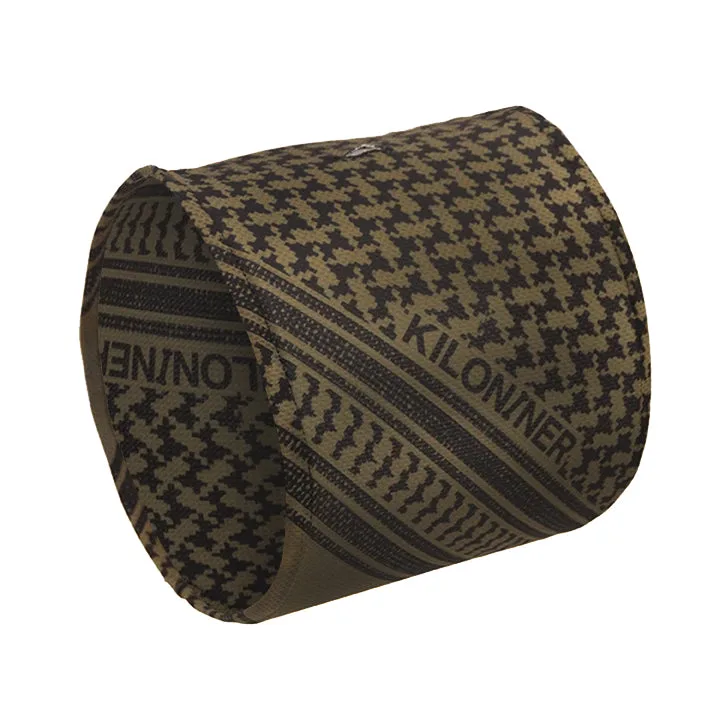
- Cooling Shemagh Scarf: Kiloniner Cooling Shemagh Scarf uses evaporative cooling technology and a double-sided tactical shemagh pattern scaled for pets. Evaporative cooling depends on keeping the fabric damp and exposed to air, so the rehydration and drying habits above directly affect how long it works. The pet-scaled pattern means it is sized for animals rather than people, so fit and airflow around a pet's neck matter as much as moisture.