Quick answer
For an open shelf display, dust lightly every 2–4 weeks with a soft brush and low-suction vacuum; for a finished kit you want to protect long-term, a fitted dust cover or enclosed display case is the only method that actually stops dust from settling. If your model has delicate paper, fabric, or LED wiring, skip wet cleaning entirely and use dry tools only.
Why miniature scenes collect dust faster than you expect
Miniature houses and book nooks are dust magnets because they combine many small horizontal surfaces — roofs, awnings, stair treads, tiny furniture — with narrow gaps that trap airborne particles. A single open shelf in a normal room can accumulate a visible film in under a month. The problem is worse near carpet, near a kitchen, or anywhere air moves constantly, because moving air carries dust and deposits it on every ledge.
The practical consequence is that cleaning frequency matters more than cleaning intensity. A five-minute pass every few weeks prevents the hardened, sticky layer that forms when dust mixes with humidity and becomes difficult to remove without touching the model.
How to dust a book nook without damaging it
Start with the right tools: a soft makeup brush or clean paintbrush for flat surfaces, a bulb blower or camera lens blower for crevices, and a vacuum with a brush attachment held several inches away — never directly on the model. Work from top to bottom so dislodged dust falls away from areas you have already cleaned.
For recessed areas, use the blower first. If dust has settled into a corner, a dry cotton swab works, but do not press. For glass or mirrored inserts, breathe on the surface and wipe with a microfiber cloth; avoid sprays that can seep into seams.
Never use a damp cloth on wooden puzzle pieces, printed paper, or anything with exposed wiring. Water can swell MDF, lift printed finishes, and short LED components. If a stain truly requires moisture, stop and consider whether the affected part can be removed and cleaned separately.
When a dust cover or display case is the right answer
If your finished kit lives on an open shelf and you are dusting it more than once a month, a cover will save you time and reduce handling risk. A dust cover for a miniature house kit — whether a rigid acrylic case or a fitted fabric cover — blocks the majority of airborne particles. The tradeoff is that enclosed cases can trap humidity, so if you live in a damp climate, choose a case with some ventilation or add a silica packet.
For book nooks specifically, a book nook dust cover that fits the exact shelf footprint is better than a loose cloth, which can snag on protruding details. Measure the finished outer dimensions before buying; a cover that is too tight will press on delicate parts, and one that is too loose will let dust in at the base.
Match the cleaning method to the materials in your kit
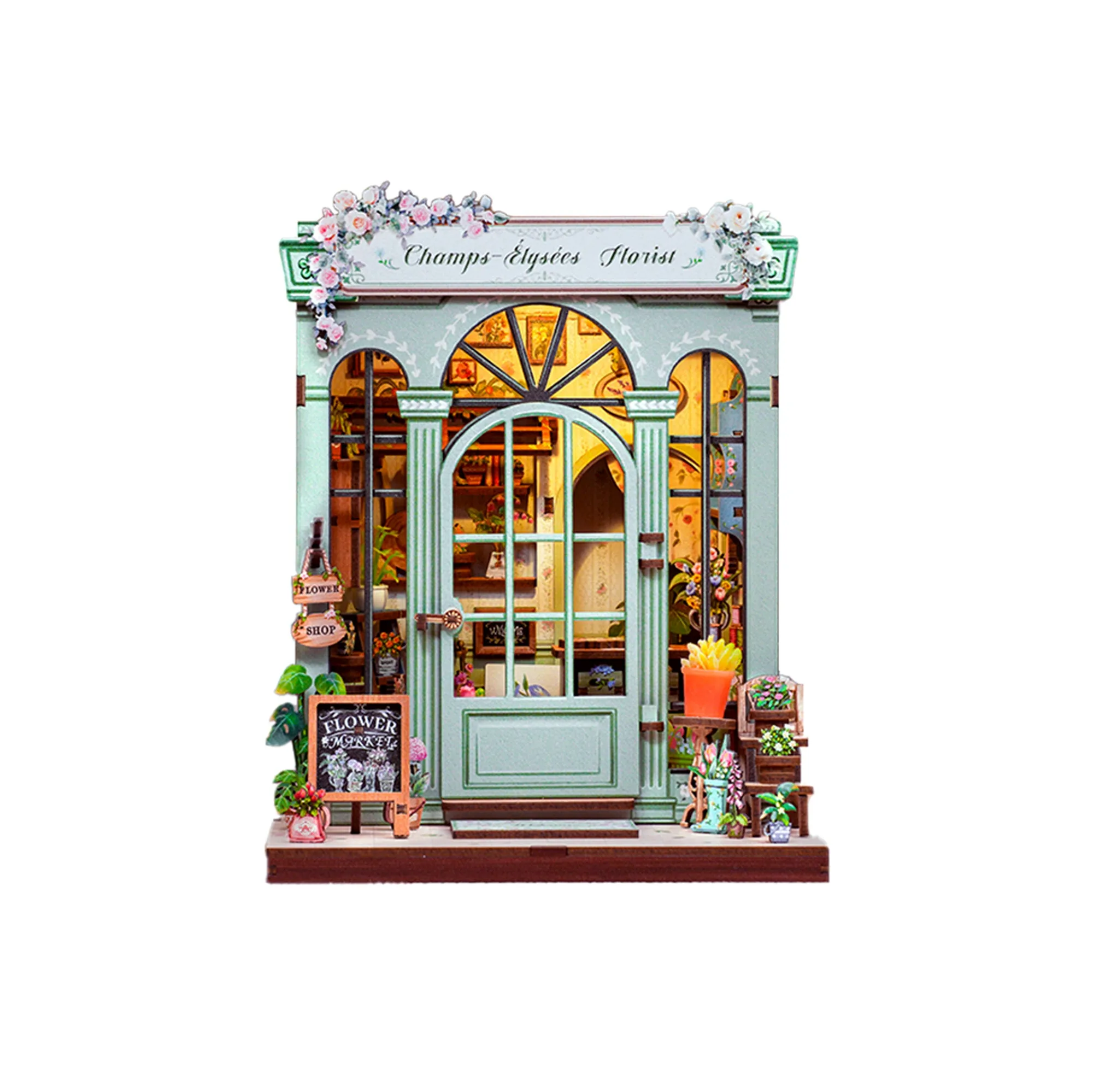
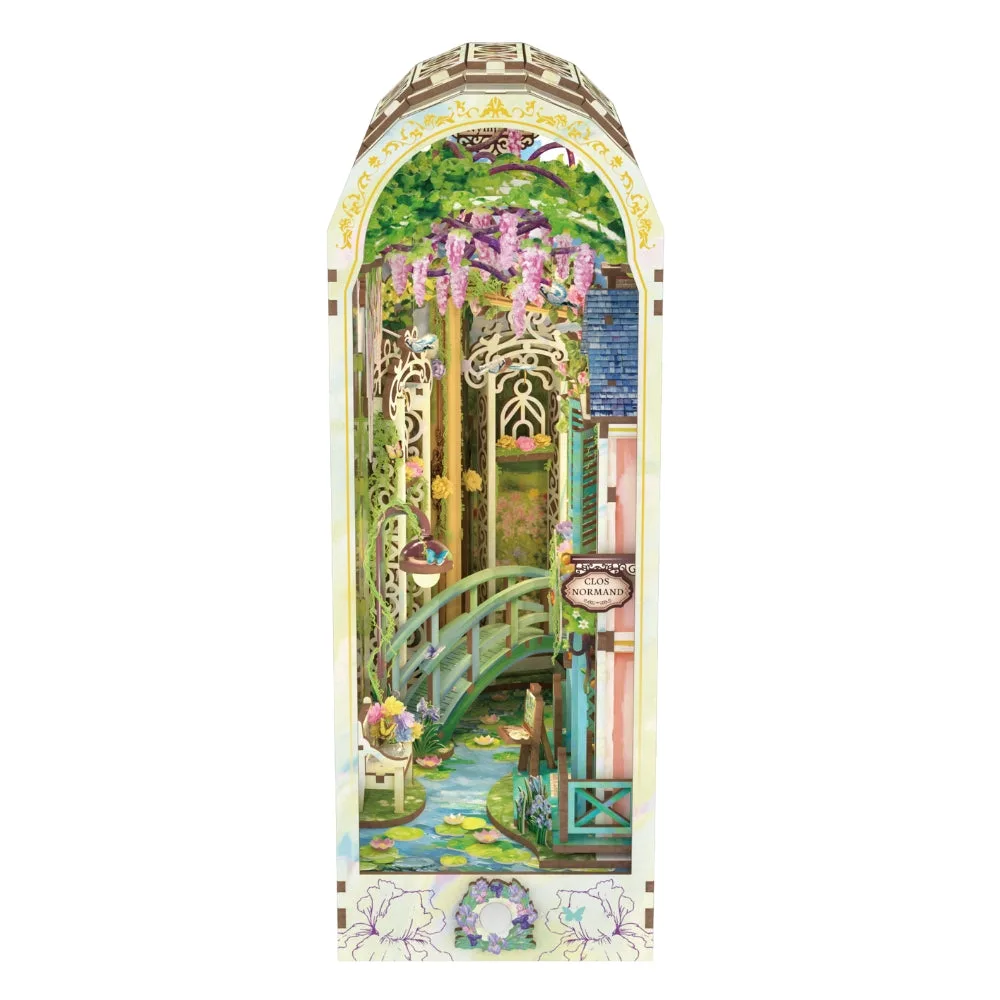
Not all Hands Craft kits are built from the same mix of materials, so check what is actually in your model before you clean. The Champs-Élysées Florist kit, for example, includes hand-painted shop signs and soft LED lighting, which means you should avoid moisture around the painted surfaces and never submerge any lit section. The Giverny Garden kit uses a touch-sensor power button and a motion-sensor function, so cleaning around the sensor area requires a dry brush only — a wet wipe can interfere with the sensor or leave residue.
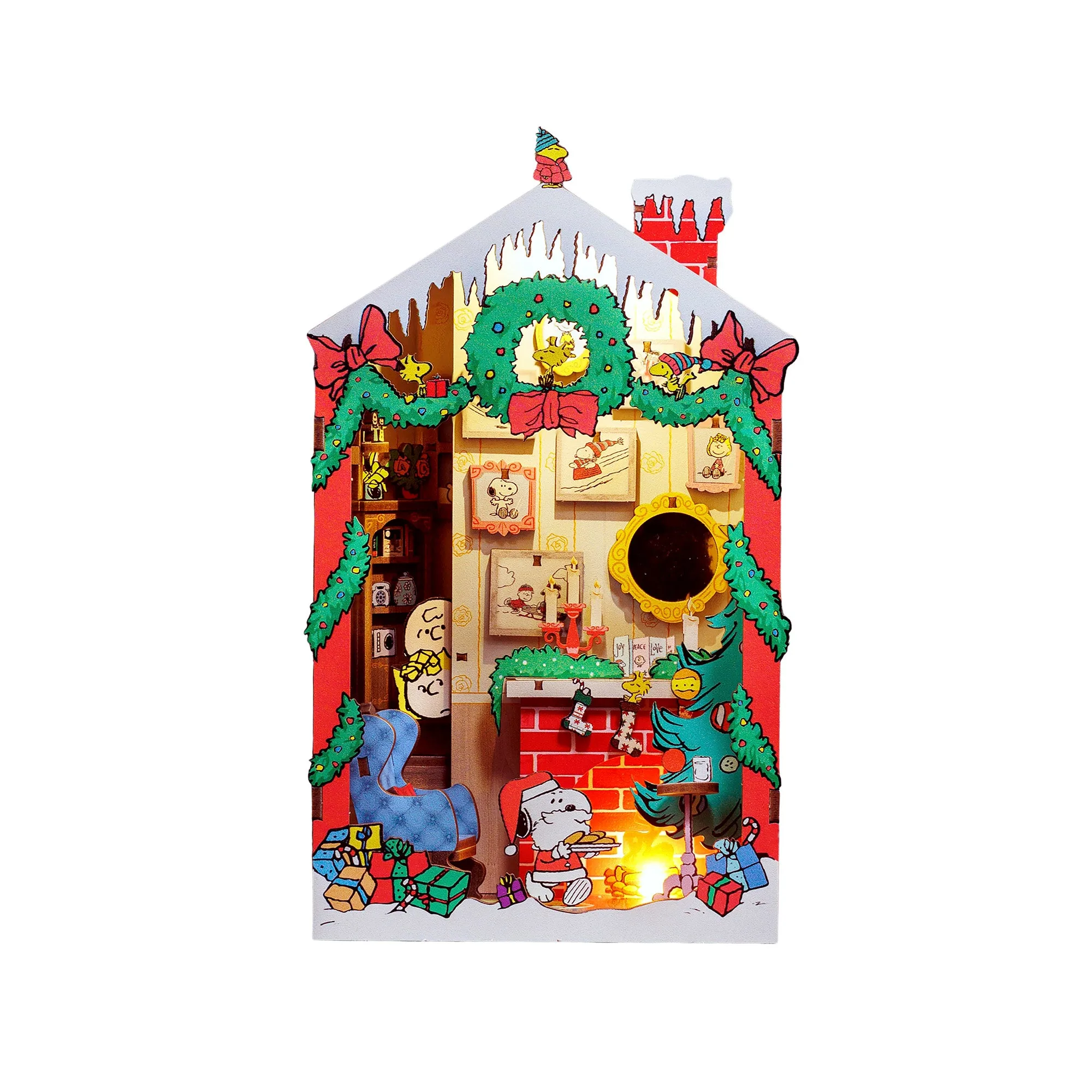
The Peanuts® Christmas kit includes a dust cover sheet, which is a useful starting point, but a single sheet protects mainly against settling dust on the top surfaces. If you display it at eye level or lower, consider whether the open sides need additional coverage.
Dust diagnosis: symptom, cause, fix, and when to stop
- Thin, even film on roofs and flat surfaces: Normal airborne dust settling over 2–4 weeks on an open shelf. Brush lightly with a soft brush every few weeks; if it returns faster than that, add a cover.
- Dust trapped in corners and around tiny furniture: Still air in recessed areas lets particles accumulate without being disturbed. Use a bulb blower first, then a dry brush; do not use compressed air, which can blast small parts loose.
- Sticky or hardened layer that will not brush away: Dust has bonded with humidity or cooking oils in the air. Stop dry cleaning and do not introduce water; if the piece is removable, clean it separately, otherwise consider a sealed display case going forward.
- You are dusting more than once a month: The display location is the problem, not your cleaning routine. Move the kit away from vents, carpets, and kitchens, or invest in a fitted dust cover or enclosed case.
Product facts that affect dusting and protection
- Hands Craft | Peanuts® Christmas: Includes a dust cover sheet. A supplied dust cover sheet reduces settling dust on the top of the scene, but it does not seal the sides, so open edges still need periodic brushing.
- Hands Craft | Champs-Élysées Florist: Features hand-painted shop signs and a warm, glowing interior with soft LED lights. Painted surfaces and LED wiring should be cleaned dry only; avoid sprays and damp cloths that can damage the finish or the lighting.
- Hands Craft | Giverny Garden: Includes a touch-sensor power button and a motion-sensor function. Sensors and wiring are sensitive to moisture, so use a dry brush or blower around the control area rather than a wet wipe.