Quick Answer
Most clips slip because the clip is too small for the amount of hair, the hair is too smooth to create friction, or the clip sits too low on the head. Start by matching clip size to your hair volume, then add texture with dry shampoo or a light backcomb at the roots. If a clip still slides after those fixes, the clip itself is the wrong tool for your hair type.
You twist your hair up, snap the clip closed, and ten minutes later it's sliding down the back of your head. It's one of the most common frustrations with claw clips, and it almost never means you're doing something wrong. It usually means one of three things: the clip is too small, your hair is too slippery, or the placement is fighting gravity.
The good news is that each cause has a different fix, and you can usually solve it without buying anything new. This guide walks through the symptoms, the likely cause behind each one, and the exact corrective action, plus the point where you should stop adjusting and reach for a different clip entirely.
Why Claw Clips Lose Their Grip
A claw clip holds hair through tension and friction, not magic. The teeth press hair against the spine of the clip, and the hinge keeps that pressure steady. If your hair is fine, freshly conditioned, or very straight, there's simply less friction for the teeth to work with. If your hair is thick or long, the clip may not open wide enough to gather everything, so it closes on a partial bundle that slowly works its way loose.
Placement matters just as much. A clip anchored low at the nape has to fight the full weight of your hair, while a clip positioned higher on the crown lets the hair rest against your head. Small changes in where you anchor the clip often make a bigger difference than tightening anything.
- Check whether the clip closes fully. If the jaws stay partly open, it's overloaded.
- Notice when it slips: immediately after styling, or hours later? Immediate slipping points to size; gradual slipping points to texture or placement.
Fix 1: Match the Clip to Your Hair Volume
The single most common cause of a claw clip not holding is undersizing. A clip should gather your hair in one pass and close with a firm snap, not a strained one. If you have to twist your hair tightly into a rope to fit it inside the jaws, the clip is too small and no amount of adjusting will keep it in place.
For thick or long hair, look for clips described as larger and stronger, with longer teeth and a wider opening. The Quilt Block Large Hair Claw Clip, for example, is built oversized and specifically designed to grip thick hair, which makes it a practical starting point if standard clips keep popping open on you. For fine hair, the opposite applies: an oversized clip can actually slip more because the teeth can't generate enough pressure on a thin bundle.
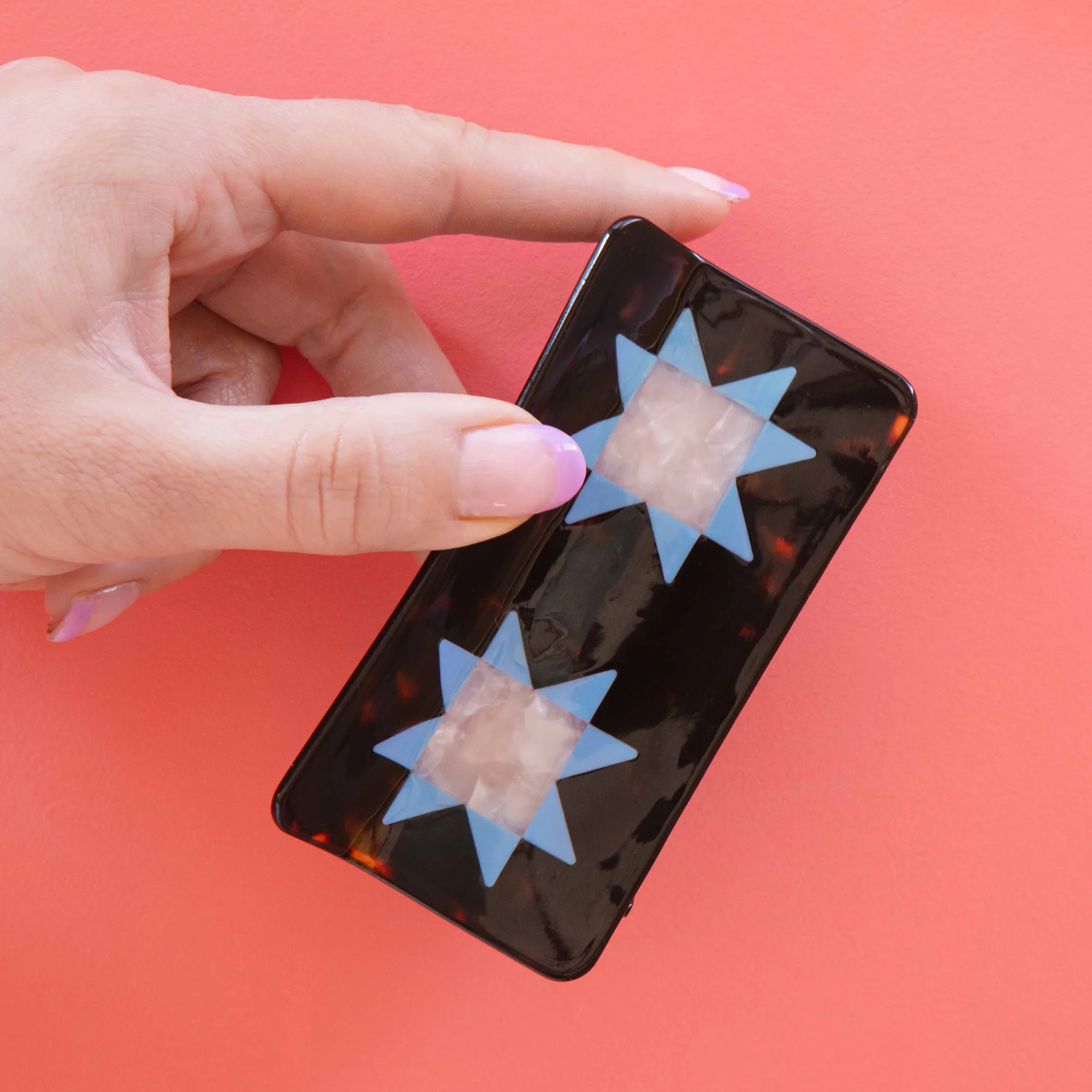
Quilt Block Large Hair Claw Clip
- Thick or long hair: choose a large clip with deep teeth and a strong hinge.
- Fine or thin hair: choose a smaller clip so the jaws close fully.
- Medium hair: a mid-size clip usually works, but test the closure before trusting it all day.
Fix 2: Add Texture Without Product Buildup
If your clip fits but still slides, your hair is probably too smooth. Clean, conditioned hair is lovely to touch and terrible for grip. A light dusting of dry shampoo or texturizing spray at the roots gives the teeth something to hold, and it takes about ten seconds. You can also backcomb the section you're about to clip, just at the base, to create a small amount of friction.
Avoid heavy oils or leave-in conditioners right before clipping. They coat the hair shaft and reduce friction further, which is why clips often slip worst on wash day. If you've just conditioned, a quick rinse of the roots or a blast of dry shampoo solves most of it.
- Spray dry shampoo at the roots, not the ends, then rough up with fingertips.
- Skip silicone-heavy serums on the day you plan to wear a clip.
- A tiny bit of texture beats a tight twist every time.
Fix 3: Change Where and How You Anchor
Placement is the fix most people skip. Instead of gathering hair at the nape, try anchoring the clip higher, around the mid-crown, so the weight of your hair rests against your head rather than pulling down. Gather hair loosely rather than twisting it into a tight rope, then let the clip close around the bundle. A loose gather with a well-sized clip holds better than a tight twist with a small one.
Also check the angle. Clips placed horizontally across the back of the head tend to rotate and slide. Angling the clip slightly, so the teeth point toward the crown, distributes tension more evenly and resists that slow downward creep.
- Anchor at the crown, not the nape, for heavy hair.
- Gather loosely; tight twists push the clip open over time.
- Angle the clip so the teeth point upward toward the crown.
When to Stop Adjusting and Switch Clips
If you've matched the size, added texture, and repositioned the clip, and it still slides within an hour, the clip is the wrong tool for your hair. That's not a failure on your part. Some hair types, particularly very fine, very straight, or very freshly washed hair, simply need a different mechanism: a clip with silicone-lined teeth, a smaller jaw, or a completely different accessory.
This is also where caring for the clip matters. A hinge that's been stretched or a spring that's lost tension won't hold no matter what you do to your hair. If the clip no longer snaps shut with resistance, it's worn out. Stop adjusting and replace it rather than fighting it.
- Still slipping after all three fixes? Change the clip, not your technique.
- If the hinge feels loose or the jaws don't snap, the clip is done.
- Keep two sizes on hand so you can match the clip to the day's hair.
Slipping Clip Diagnosis
- Symptom: clip pops open or won't close fully: The jaws are staying partly open because the bundle of hair is larger than the clip's opening. Cause: clip too small. Action: move up to an oversized clip built for thick hair.
- Symptom: clip slides down slowly over hours: Hair is too smooth for the teeth to grip, especially on wash day or after conditioning. Cause: lack of friction. Action: add dry shampoo or backcomb at the roots.
- Symptom: clip rotates or drifts sideways: The clip is anchored too low or sitting flat against the back of the head. Cause: placement. Action: anchor higher at the crown and angle the teeth upward.
- Symptom: still slipping after all three fixes: The clip's hinge or spring has lost tension, or the clip type doesn't suit your hair. Stop adjusting. Replace the clip or switch to a different accessory.
Product Facts That Matter for Grip
- Quilt Block Large Hair Claw Clip: This oversized rectangular claw clip is built larger and stronger to grip thick hair, with a tortoise shell exterior and blue and cream sawtooth stars. If your current clip pops open or slides on thick hair, an oversized clip with a stronger build addresses the size problem directly rather than working around it.
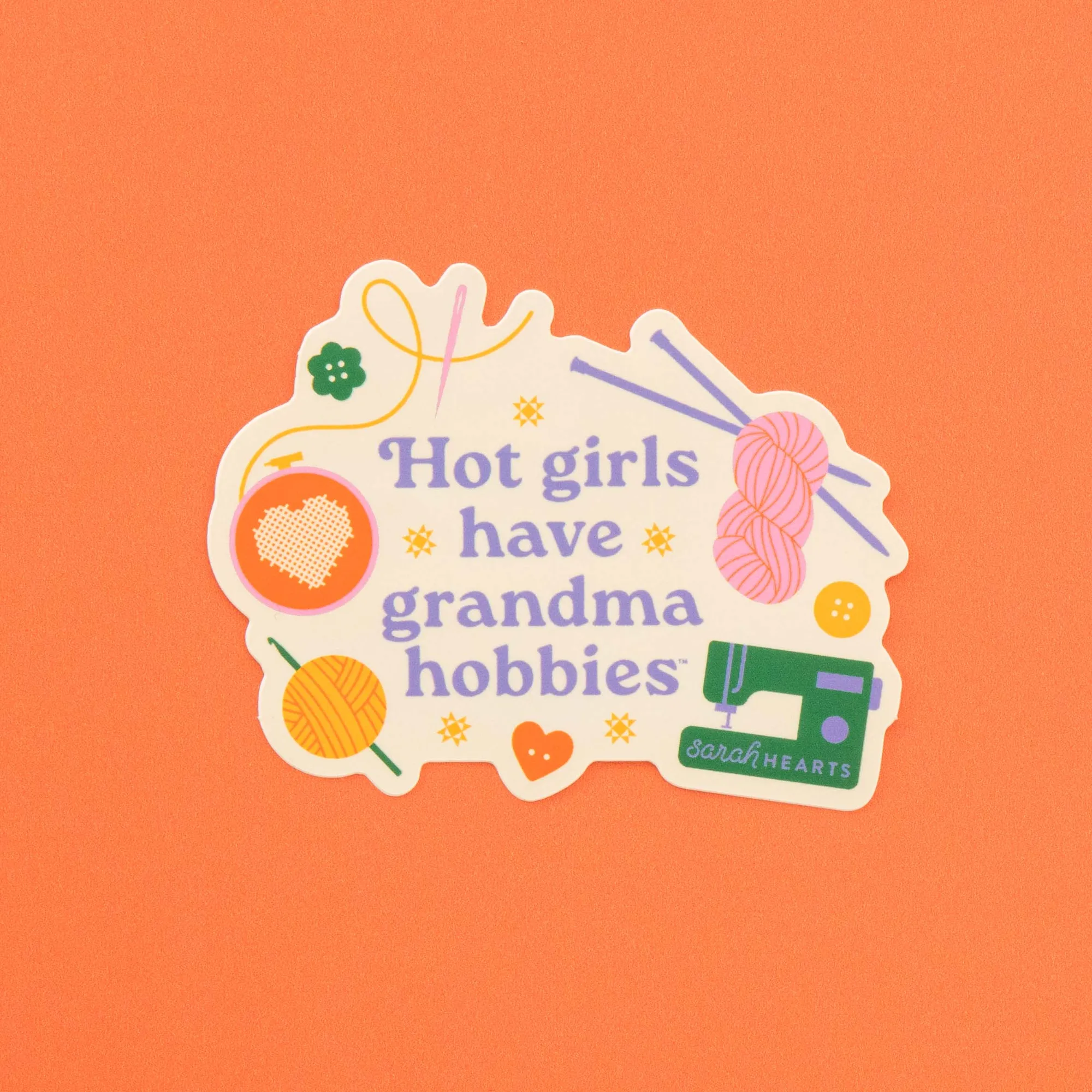
- Hot Girls Have Grandma Hobbies Sticker: This water-resistant and scratch-resistant vinyl decal sticks to hard, smooth surfaces like water bottles, laptops, sewing machines, cars, or suitcases, and measures 3.5 x 2.76 inches. A small, durable way to dress up the surfaces where you keep your hair accessories, without adding anything that affects grip.
Hair clips slipping is almost always a size, texture, or placement problem, and each one has a straightforward fix. Work through them in order, and if the clip still won't hold, trust that signal and switch to a clip built for your hair type.