Quick answer
Give the satchel a shape it can hold while it rests. Empty it, stuff the body with acid-free paper or a clean pillowcase, keep the strap relaxed, and store it upright in a dust bag away from direct sun. A light conditioning twice a year keeps the leather supple enough to spring back instead of creasing.
Why a satchel loses shape in the first place
Leather is skin: it holds the shape it dries in. A satchel that sits empty collapses under its own flap, and the fold lines set within weeks. A satchel that sits damp grows mold along the seams. A satchel that sits overloaded stretches at the handle anchors and sags at the base corners.
The fix is not constant fussing. It is a short routine after every use and a slightly longer one once a season, so the bag is always drying and resting in the shape you want it to keep.
What to keep on hand
You do not need a shelf of products. A clean cotton pillowcase, a few sheets of acid-free tissue paper or bubble wrap, a soft horsehair brush, a pH-neutral leather conditioner, and a breathable dust bag cover almost every satchel. Avoid plastic bags for storage; they trap moisture and invite mildew.
If your satchel has a structured base or a padded laptop sleeve, check whether the interior panel can be removed. A removable panel makes stuffing easier and prevents the lining from creasing against the leather.
A note on heavy-duty satchels
Thick, oiled leather satchels used as work or laptop bags need more structure support than a slim fashion satchel, because the weight of the contents pulls the base out of line. A padded compartment helps, but the leather itself still needs to rest in shape between trips.
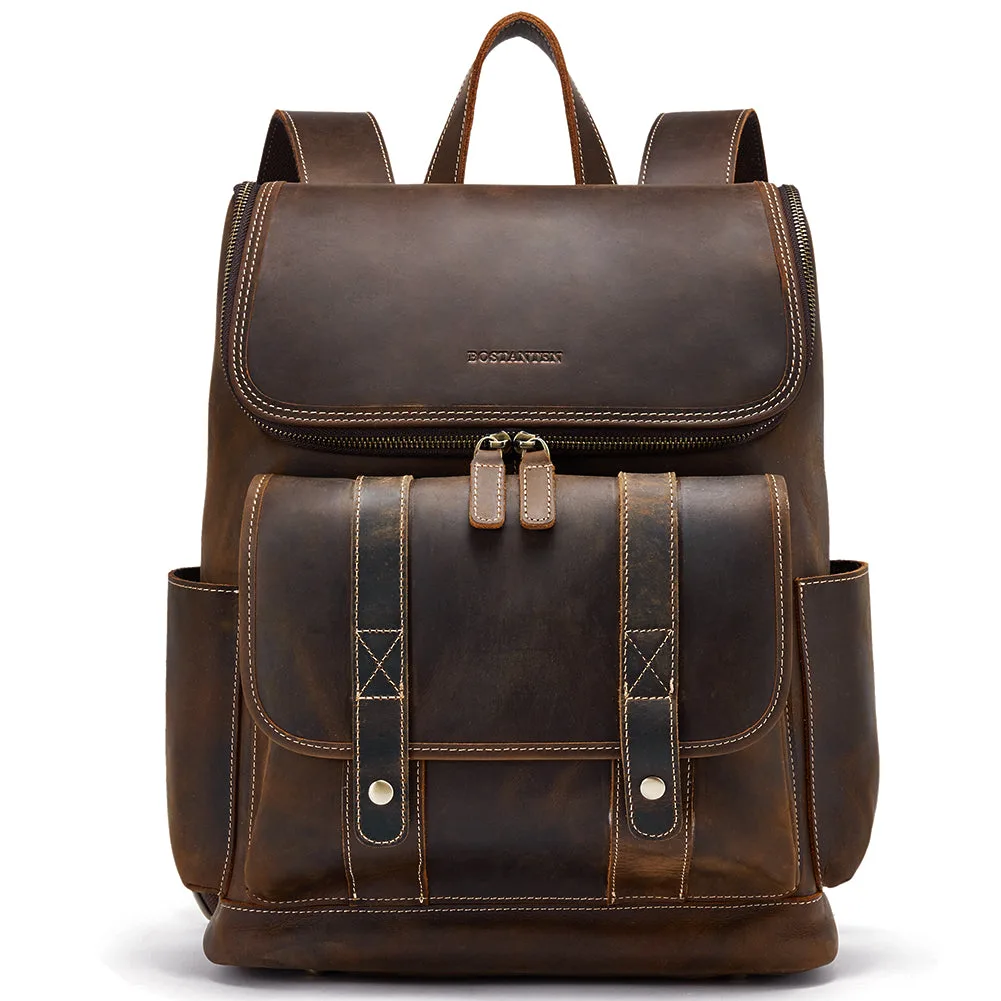
For a bag like the Vintage Laptop Backpack 15.6'' in Handcrafted Crazy Horse Leather, the padded laptop compartment and slip pockets hold the interior, but the exterior leather still benefits from being stuffed and stored upright. Crazy horse leather develops a patina with use, and consistent storage keeps that patina even rather than blotchy.
Your between-uses satchel routine, step by step
- Empty it completely, including the pockets you forget: Turn the satchel upside down over a table and shake gently. Check the back zipper pocket, the side pockets, and the slip pockets inside. A forgotten pen or receipt becomes a permanent crease mark under pressure. Checkpoint: run your hand along the interior lining and base. If you feel grit, brush it out before storing.
- Wipe the leather with a dry or barely damp cloth: Use a soft cloth wrung almost dry. Wipe along the grain, not in circles. Let the bag air-dry away from radiators and direct sun for at least an hour before the next step. Mistake to avoid: never use a wet cloth on unfinished or oiled leather. It darkens the surface unevenly.
- Stuff the body to the shape you want it to keep: Use acid-free tissue paper, bubble wrap, or a clean pillowcase. Fill the base first, then the middle, then the top so the flap rests flat instead of folding. Do not overstuff; the leather should feel gently supported, not stretched. Checkpoint: the satchel should stand on its own base without leaning. If it slumps, add more stuffing at the bottom corners.
- Relax the strap and tuck it inside or lay it flat: A strap left hanging pulls the side of the bag out of line. Coil it loosely inside the bag or lay it along the side, avoiding sharp bends that crack the leather over time. Mistake to avoid: never store a satchel by hanging it from the strap. The weight of the bag stretches the leather at the attachment points.
- Slide it into a breathable dust bag and store it upright: A cotton dust bag protects against dust and scratches while letting the leather breathe. Store the satchel on a shelf, upright, with nothing stacked on top. Keep it out of direct sunlight, which fades dye unevenly. Checkpoint: if you live in a humid climate, add a small silica gel packet inside the dust bag and replace it every few months.
- Condition lightly twice a year, not every week: Apply a pH-neutral leather conditioner with a soft cloth in thin layers, working it into the leather with small circular motions. Let it absorb for 20 minutes, then buff off any excess. Over-conditioning clogs the leather and attracts dirt. Mistake to avoid: conditioning a dirty bag traps grit in the pores. Always clean first, condition second.
Products that make this routine easier
- Vintage Laptop Backpack 15.6'' - Handcrafted Crazy Horse Leather: Made from top layer crazy horse genuine leather imported from Italy, with a padded laptop compartment and two slip pockets inside, plus a front magnetic buckle pocket, a back zipper pocket, and two side pockets. The padded compartment and slip pockets hold the interior structure, so the bag keeps its lines between uses, while the multiple exterior pockets mean you can distribute small items instead of bulging one side.
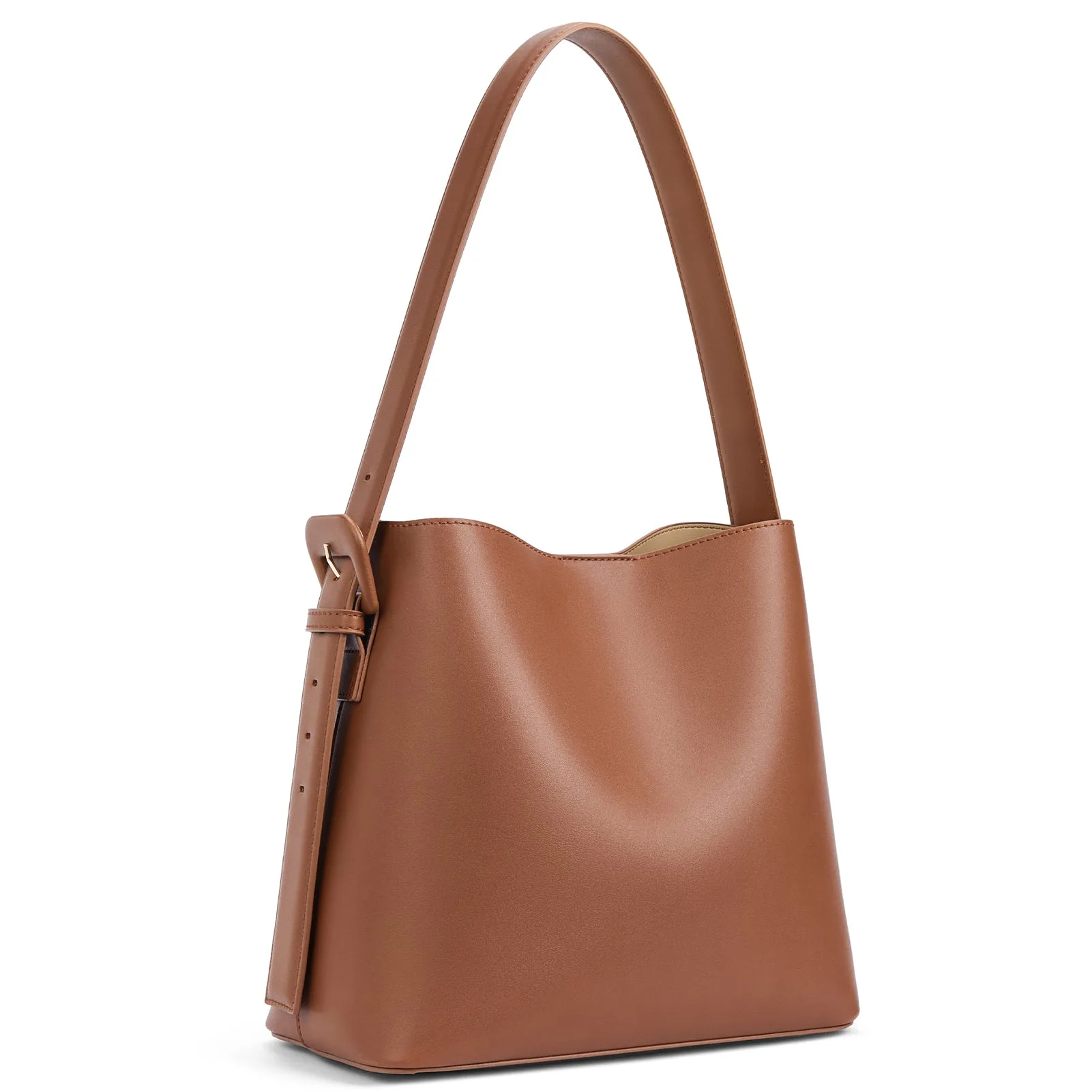
- Lotty Soft Leather Chic Bucket Bag — Brown: Structured bucket-shaped bag with ample space and multiple pockets, versatile enough to be worn as a shoulder or handbag. A structured bucket shape resists collapsing when empty, but it still needs stuffing between uses to keep the base round and the rim from folding.