Quick answer
A waistband that rolls is almost always a fit or fabric-recovery problem, not a styling problem: the band is too loose, too narrow, or the knit has lost its stretch. Sheerness is a separate issue caused by fabric stretched too thin over a curve or a color that was never opaque to begin with. Fix the roll with a wider, higher band and correct sizing; fix sheerness with a squat-and-stretch test in daylight and a darker, denser knit.
Why the waistband rolls instead of staying put
A rolling waistband is a mechanical failure. The band needs enough vertical height and horizontal tension to grip your torso without cutting in. When the band is narrow, it concentrates pressure on one line and folds over that line as you move. When the band is too wide and too loose, it has nothing to anchor against and slides down your hips. The fix depends on which one you have: a narrow band usually needs a different construction, while a loose band usually needs a smaller size or a style with more compression.
Fabric recovery matters just as much. Knit leggings rely on elastane to snap back after stretching. Once that recovery fades, the band stays stretched out and creeps downward all day. If a pair that used to stay put now rolls, the fabric is likely the cause, not your body.
How to test for sheerness before you leave the house
Sheerness is about opacity under tension, not thickness alone. Do a two-part test in bright daylight: first, hold the fabric up to a window and look for light coming through the knit. Second, put the leggings on and squat deeply in front of a mirror with a light behind you. If you can see skin tone or the outline of your underwear, the fabric is stretching too thin at the hip and seat.
Color changes the result. A light beige or buff knit shows contrast against skin far more than a dark, dense one, even at the same weight. If opacity is your priority, choose a darker color and check the squat test in that specific color, not just the one on the hanger.
Corrective actions that actually hold
Start with sizing. If the band rolls and the leggings feel loose at the waist but tight at the knee, you are between sizes and the smaller size will usually hold better. If the band digs in and still rolls, the band is too narrow, and no size change will fix it. Look for a wide, flat, high-rise band that sits at your natural waist rather than across your hip.
Layer smartly underneath. A smooth, seamless base layer reduces friction between your skin and the waistband, which helps the band stay where you put it. It also protects against sheerness by adding an opaque layer under a thin knit. Choose a base that lies flat and does not add bulk at the waistline, or the band will have something new to roll over.
Wash to preserve recovery. Heat is the enemy of elastane. Wash leggings in cold water and air dry them flat or hanging. Skip the dryer, and skip fabric softener, which coats the fibers and reduces stretch. This is the single easiest way to slow the loss of recovery that causes a band to stop gripping.
When to stop fixing and switch pairs
Stop troubleshooting when the fabric itself has failed. If the knit is pilling, thinning at the seat, or see-through even when you are standing still, no fit adjustment will bring it back. The same is true for a band that has stretched permanently: if it rolls within minutes of putting it on and cold washing no longer helps, the elastane is done.
At that point, choose a different construction rather than a different size. A denser knit with a wider band solves both the roll and the sheerness in one change. If you only need the sheerness solved and the band is fine, a darker color in the same style may be enough.
Diagnose your legging problem
- Band rolls down within minutes: The band is too loose or the elastane has lost recovery. Try one size down or a style with a wider, higher band. If a cold wash and air dry do not restore grip, the fabric is finished. Fixable with sizing or a new band construction; not fixable once recovery is gone.
- Band digs in and still rolls: The band is too narrow and concentrates pressure on one fold line. A different size will not help. Switch to a wide, flat waistband that sits at your natural waist. This is a construction problem, not a size problem.
- Fabric looks sheer when you squat: The knit is stretching too thin over your curves, or the color is too light for your skin tone. Add an opaque seamless base layer underneath, or switch to a darker, denser knit. If it is still sheer while standing still, replace the leggings.
- Sheer only at the seams or seat: Localized thinning means the fabric has worn out in high-friction areas. No layering fully hides it. Retire the pair for workouts and replace it. Wear-pattern sheerness is a replacement signal, not a fit issue.
Products that help with the fix
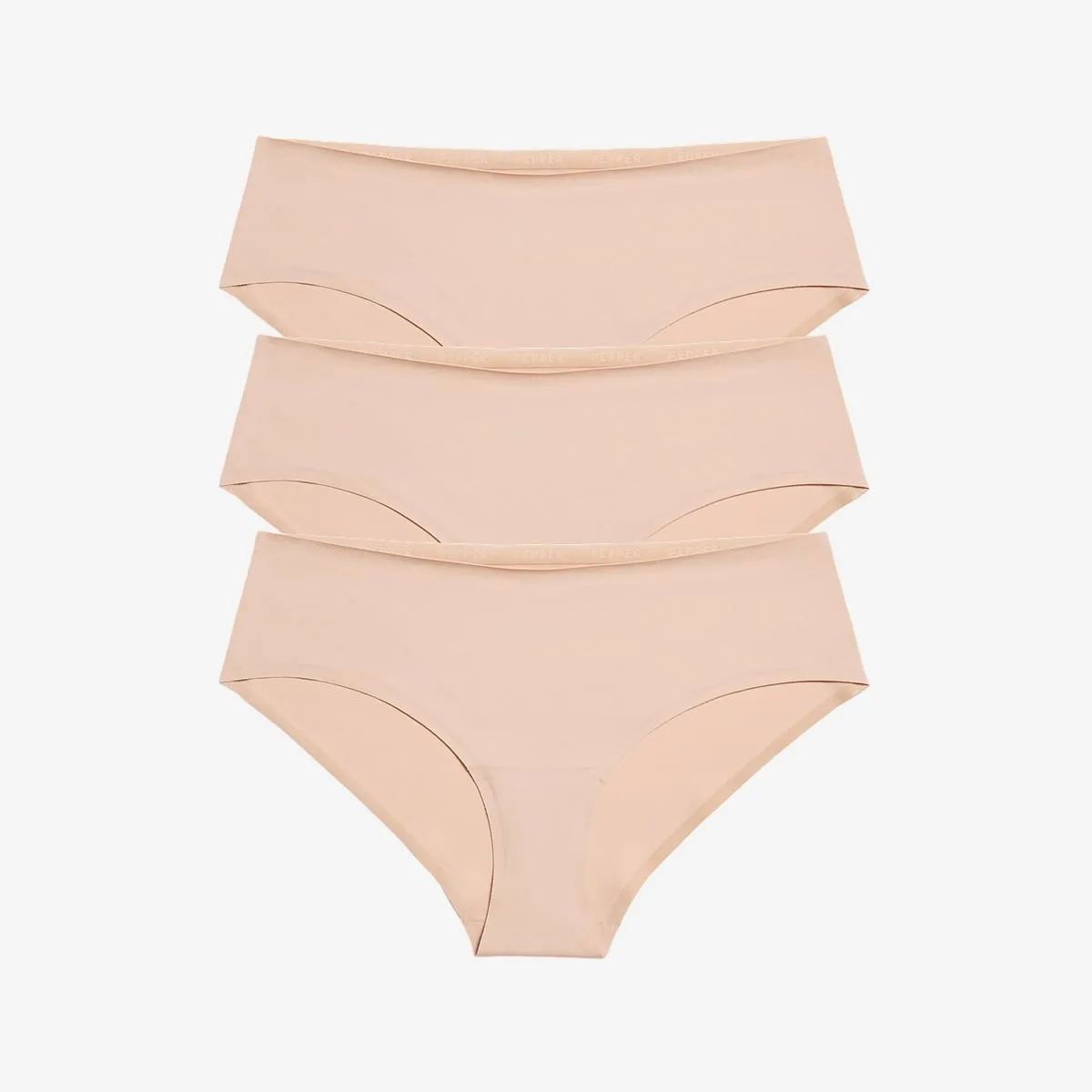
- Simply Smooth No Show Hiphugger 5 Pack Buff: https://wearpepperzem.com/products/no-show-hiphugger-custom-5-pack-57530a1c44dd5c86ce3bd639-982603https://wearpepperzem.com/products/simply-smooth-no-show-hiphugger-cherie-37acdd856ef60d793c6a7f68-984411Simply Smooth No Show Hiphugger 5 Pack Buff is a bundle of five seamless, no-show hiphuggers in Buff with a bonded waist finish. A flat, bonded waistband under leggings reduces friction at the waistline, which helps stop the legging band from catching and rolling. The seamless finish also keeps the base layer invisible under a thin knit.
- Simply Smooth No Show Thong 3 Pack: https://wearpepperzem.com/products/simply-smooth-no-show-thong-cherie-cc8070e6c67087d354f1becf-984405Simply Smooth No Show Thong 3 Pack is a bundle of three seamless no-show thongs designed to eliminate visible panty lines under fitted clothing. If visible lines are part of why your leggings look sheer or bumpy, a no-show thong removes that layer of contrast without adding bulk at the waist, so the legging band has less to grip and roll over.