Quick answer
Most underwire pain comes from a band that is too loose, allowing the wire to shift and press into your ribs or underarm. Tighten the band or size down, then check that the wire sits flat against your ribcage and fully contains your breast tissue. If the wire still digs after those two fixes, the cup shape or wire length is wrong for your body, and you should switch to a different style or a wire-free option.
Why the wire digs in even when the cup size seems right
A bra band provides about 80 percent of a bra's support. When the band is too loose, the underwire slides down and forward, concentrating pressure on a small area of your ribs instead of distributing it around your torso. This is the most common reason a wire hurts even when the cups feel fine. The fix is usually to fasten the band tighter or move down a band size while adjusting the cup size up to keep the same volume.
If the wire pokes under your arm, the cup is likely too shallow at the side or the wire is too tall for your torso. Full-bust bras with taller wires can rub the underarm if the band rides up. Check whether the band stays level all the way around; if it climbs in back, the band is too big and the front wire will dig in to compensate.
How to test whether the band or the cup is the problem
Fasten the bra on the loosest hook. Slide two fingers under the band at the side. If you can pull the band more than an inch away from your body, it is too loose. If the wire leaves red marks that fade within an hour, that is normal pressure, not a fit problem. If the marks last for hours or the skin feels bruised, the band is too tight or the wire is sitting on breast tissue instead of flat against the ribcage.
Next, check the center gore, the piece between the cups. It should touch your sternum. If it floats away, the cups are too small or too shallow, and the wire will press into your ribs as it tries to find stability. If the gore digs into your sternum, the band is too tight or the gore is too tall for your torso shape.
Fixes you can try today without buying a new bra
First, tighten the band by one hook. If you are already on the tightest hook and the band still feels loose, the bra has stretched out and needs replacing. Second, adjust the straps: they should be snug but not tight enough to lift the band off your ribs. Third, use a bra extender on a too-tight band to test whether a slightly larger band relieves the rib pain before you commit to a new size.
If the wire pokes under your arm, try a bra with a lower wire or a plunge style that removes fabric from the underarm area. For full-bust readers, a three-part underwire cup with side slings can distribute weight more evenly and reduce the pressure that causes digging. If the wire still digs after these adjustments, stop forcing the fit.
When to stop adjusting and choose a different bra
If you have tried a tighter band, a larger cup, and strap adjustments and the wire still leaves deep marks or sharp pain, the bra's wire shape is wrong for your ribcage. Some torsos need a shorter wire, a wider wire, or a softer wire channel. In that case, a wire-free bralette with removable padded cups can give you shaping without any wire pressure. Wire-free does not mean unsupportive: double-lined cups and a wide band can hold a full bust comfortably for hours.
Do not keep a bra that hurts after two days of adjustments. Discomfort that persists is a sign the style, not your body, is the problem. Return or replace it rather than hoping it will stretch into comfort.
Diagnose your underwire pain: symptom, cause, fix, and stop point
- Wire digs into ribs under the cups: The band is too loose, so the wire slides down and presses into your ribcage instead of staying flat. Tighten the band by one hook or size down a band while going up a cup. If the wire still digs after that, the cup depth is wrong.
- Wire pokes or rubs under your arm: The cup is too shallow at the side, or the wire is too tall for your torso. Try a plunge or lower-wire style. If the poke continues, switch to a wire-free bralette.
- Red marks that fade within an hour: This is normal pressure from a supportive band, not a sign of a bad fit. No change needed unless the marks last for hours or feel bruised.
- Center gore floats away from your sternum: The cups are too small or too shallow, which forces the wire to press into your ribs for stability. Go up one cup size. If the gore still floats, the bra's shape is not compatible with your torso.
Full-bust bras that address common wire pain points
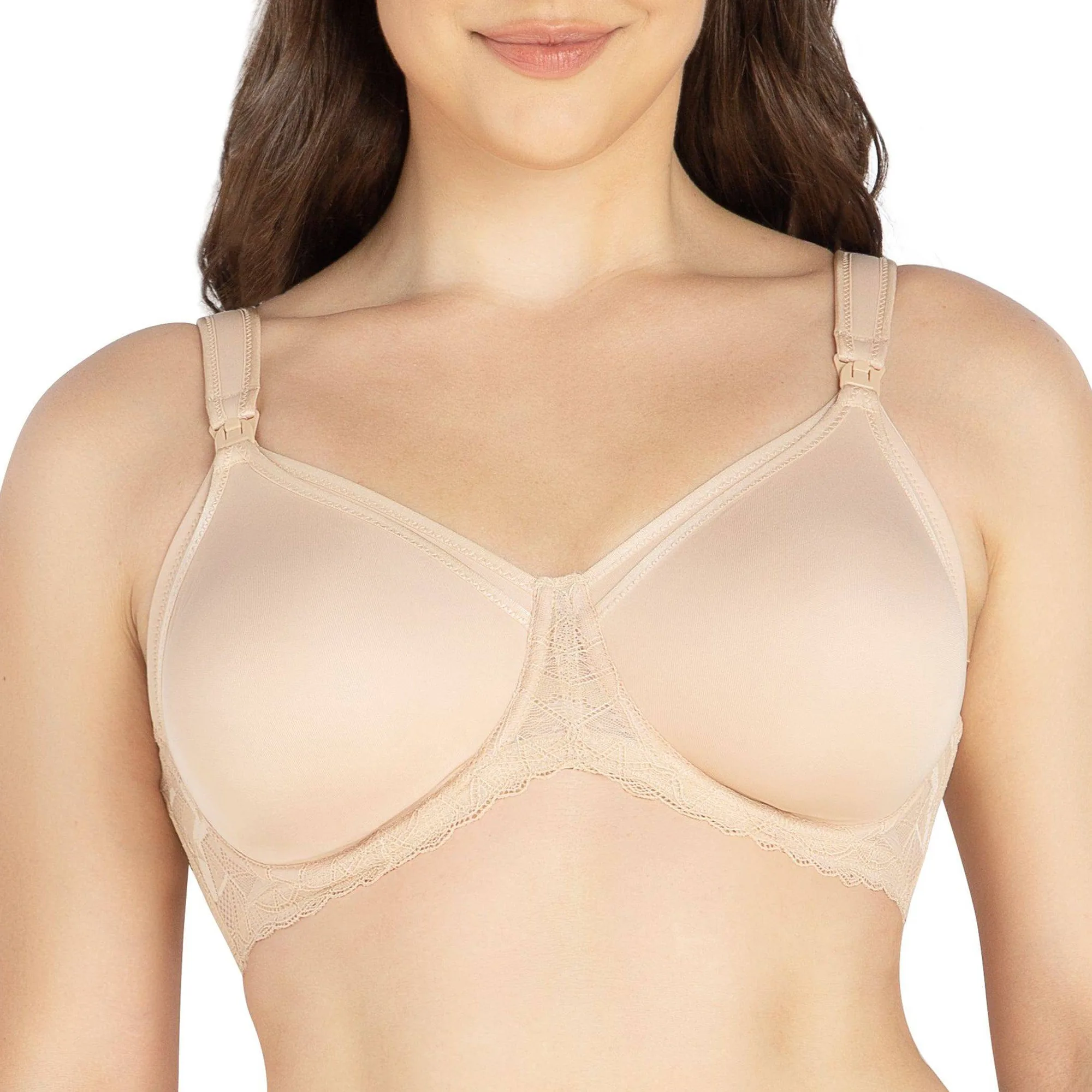
- Leila Underwire Full Bust Nursing Bra - Bare: Seamless cup design and padded straps with a sturdy snap that unhooks with one hand. Smooth cups reduce friction under clothing, and padded straps take pressure off your shoulders so you are less likely to over-tighten the band to compensate.
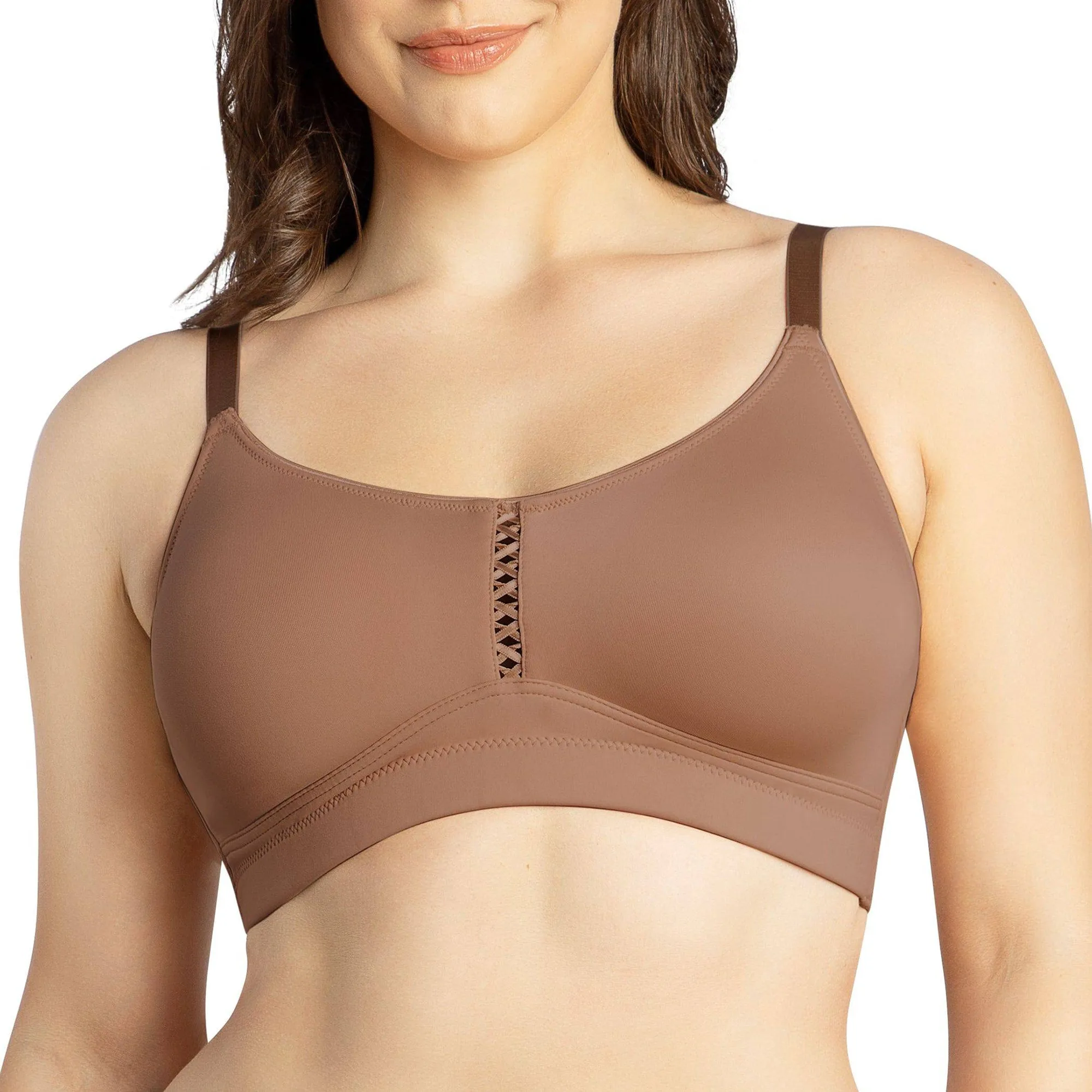
- Erika Wire-Free Full Bust Bralette - Mid Nude: Wire-free, double-lined cups with a pocket for removable thin foam cups. If underwire pain persists after fit adjustments, this bralette removes the wire entirely while still offering shaping and coverage for a full bust.