Quick answer
Start with a single bangle as your base, then add contrasting textures and widths in odd numbers for a balanced, intentional stack.
Why layering a bangle works differently than other bracelets
A bangle is rigid and circular, so it sits apart from your wrist rather than wrapping around it. That fixed shape creates natural gaps that other wristwear can nestle into or contrast against. The key is to treat the bangle as the structural anchor of your stack rather than just another link.
Because bangles don't adjust, you need to consider wrist movement and comfort. A stack that looks great on a mannequin might pinch or slide when you type or gesture. Testing the fit with a quick wrist roll is a smart habit.
Metal tone and finish matter more than you think
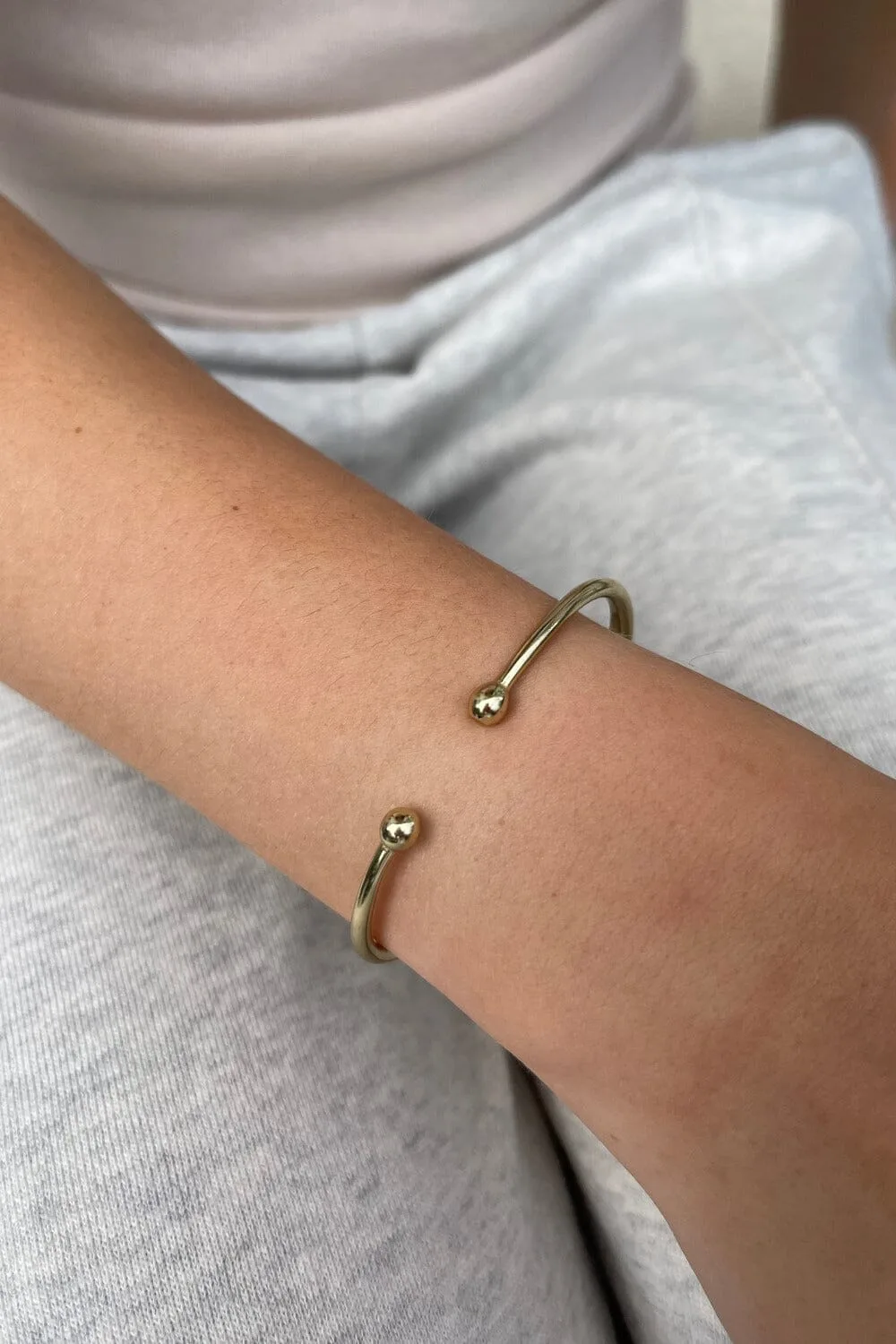
Mixing metals can work, but it requires intention. A single gold-tone bangle like the Brandy Melville Bangle Bracelet pairs naturally with other warm metals or leathers in tan or brown. If you mix silver and gold, keep the bangle as the only piece in its tone and cluster the other metal type together on the opposite side.
Texture contrast also helps. A polished bangle next to a matte leather band or a beaded bracelet creates visual separation that stops the stack from looking like a jumble. Avoid pairing two high-shine pieces directly next to each other unless they are identical in width.
How to layer a bangle bracelet with other wristwear
- Choose your anchor bangle: Select a single bangle that fits comfortably but doesn't slide past your hand bone. A gold-tone bangle like the Brandy Melville Bangle Bracelet works well because its neutral finish pairs with almost anything. Place it on your non-dominant wrist first to test movement. Common mistake: picking a bangle that's too loose. It will spin and knock against other pieces all day.
- Add a watch or cuff on the opposite side: Wear your watch or a wide cuff on the wrist opposite the bangle, or on the same wrist but separated by at least an inch of skin. If you want everything on one wrist, put the bangle closest to your hand and the watch or cuff above it. This prevents the bangle from scratching a watch face. Checkpoint: if the bangle sits on top of your watch crown, move it to the other wrist or switch to a slimmer watch.
- Layer a second bracelet for contrast: Add a beaded, chain, or leather bracelet on the same wrist as the bangle. Keep the total number of pieces on that wrist to three or fewer. Slide the new piece between your bangle and watch, or let it hang freely below the bangle if the bangle is the topmost piece. Common mistake: adding more than two bracelets on the same wrist as the bangle. The rigid shape of the bangle makes the stack feel bulky and can pinch skin.
- Balance both wrists visually: Stand in front of a mirror and look at your overall silhouette. If one wrist has a bangle plus two other pieces, the other wrist should have at least one piece (even a simple hair tie or a single thin chain) to avoid looking lopsided. The goal is visual weight distribution, not symmetry. Checkpoint: if one wrist feels bare, add a single thin bracelet or ring to that side instead of adding more to the stacked wrist.
- Test movement and adjust: Shake your hands, type a few sentences, and reach for an object above your head. If any piece slides over your hand bone or catches on clothing, remove one item or swap it for a thinner version. A comfortable stack is one you forget you're wearing. Common mistake: skipping the movement test. A stack that looks perfect in the mirror can become annoying within an hour.
Product facts
-
Bangle Bracelet: This Brandy Melville bangle bracelet is a simple gold-tone accessory that adds a polished finish to everyday looks. It is offered in the Gold color option. Its smooth, uniform finish makes it an ideal base piece for layering because it won't snag on softer materials like beads or fabric bands.
Bangle Bracelet