Quick Answer
Layer a bomber jacket for cool weather by starting with a thin base layer, adding a mid-layer for insulation, and finishing with your bomber jacket as the outer shell. Avoid bulky fabrics that distort the jacket's fit.
Why Layering Matters for a Bomber Jacket
Bomber jackets are designed to be lightweight and close-fitting, which makes them great for layering but also means you need to choose the right under-layers to maintain their shape. A common mistake is wearing a thick sweater that makes the jacket look puffy and restricts movement. Instead, focus on thin, insulating fabrics that trap warmth without adding bulk.
What to Avoid When Layering
Avoid cotton base layers if you expect to be active — cotton holds moisture and can make you feel cold. Also, steer clear of hoodies with large hoods that bunch up under the collar of the bomber jacket. The jacket's ribbed collar and waistband are meant to seal in warmth, so keep the area around your neck and waist free of excess fabric.
How to Layer a Bomber Jacket for Cool Weather
- Start with a Thin Base Layer: Choose a long-sleeve merino wool or synthetic thermal shirt. It should fit snugly against your skin to wick moisture and provide a smooth foundation. Avoid cotton or thick knits. Checkpoint: If the base layer bunches under your arms or shoulders, it's too loose — size down or switch to a thinner fabric.
- Add a Mid-Layer for Insulation: Wear a lightweight fleece or a thin cashmere crewneck sweater. The mid-layer should be no thicker than a standard hoodie. Tuck it into your pants to keep your lower back warm and prevent the jacket from riding up. Checkpoint: Zip up your bomber jacket over the mid-layer. If the zipper pulls or the fabric puckers, the mid-layer is too thick — swap for a thinner option.
- Finish with the Bomber Jacket as Outer Shell: Put on your bomber jacket and zip it up fully. The ribbed collar should sit flat against your neck, and the waistband should hug your hips without gaping. Adjust the sleeves so they cover your wrists but don't bunch up inside the jacket. Checkpoint: Raise your arms overhead and twist side to side. If the jacket restricts movement or feels tight across the back, remove the mid-layer or try a size up in the jacket.
- Accessorize Strategically: Add a thin scarf or a beanie to protect exposed areas like your neck and ears. Avoid bulky scarves that push the collar away from your neck. For extra warmth, wear thin gloves that fit under the jacket sleeves. Checkpoint: If you need a heavy scarf or thick gloves, consider a different outer layer — the bomber jacket is best for cool weather, not extreme cold.
Product Facts
-
Bells Hells Collection: Orym of the Air Ashari Bomber Jacket: The Bells Hells Collection: Orym of the Air Ashari Bomber Jacket features a ribbed collar and waistband, a Critical Role logo zip-closure, and a quilted inside lining. The ribbed collar and waistband help seal in warmth, and the quilted lining adds a layer of insulation without extra bulk — perfect for cool-weather layering.
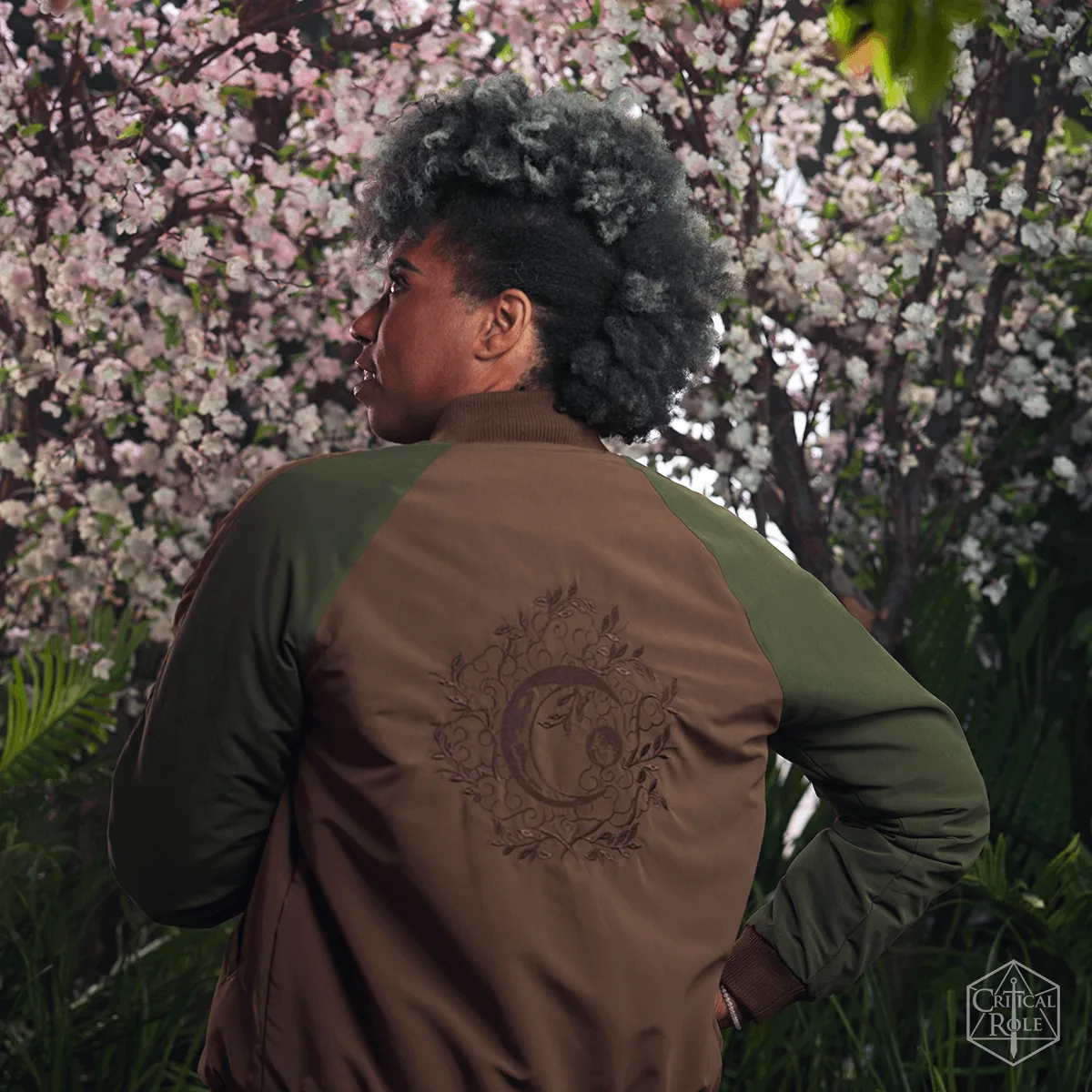
Bells Hells Collection: Orym of the Air Ashari Bomber Jacket