Quick answer
Choose a soft, organic cotton scarf or snood with flat seams and no internal labels, then layer it loosely over your neckline to avoid friction and overheating.
Why fabric choice matters for eczema neck protection
The neck is a common eczema flare zone because it rubs against collars, scarves, and coats. Synthetic fabrics or rough wool can trigger itching, while organic cotton is breathable and less likely to irritate. Both the Snood - 95% Organic Cotton and the 100% Organic Cotton version offer softness, but the 100% option is latex- and elastane-free, which may suit those with additional sensitivities.
Trade-offs: snood vs. scarf
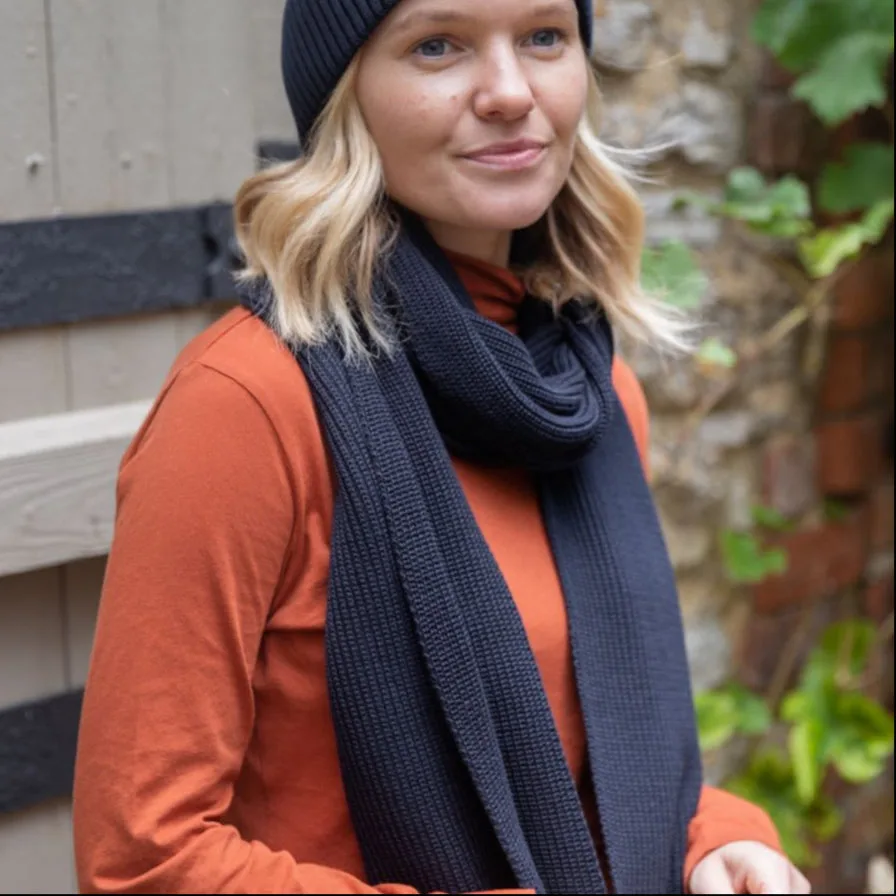
A snood sits closer to the skin and provides even coverage without dangling ends, making it ideal for active wear or under jackets. A scarf, like the Navy Ribbed Knit Scarf, offers adjustable layering but may bunch up if wrapped tightly. For eczema, a loose wrap reduces friction and heat buildup.
How to layer a scarf or snood for eczema-prone skin
- Choose the right fabric and finish: Pick 100% organic cotton if you avoid elastane or latex. Look for flat seams and no internal labels. The Snood - 100% Organic Cotton meets these criteria. A common mistake: choosing a scarf with a sewn-in label that rubs the neck.
- Wash before first use: Wash your scarf or snood with a non-bio liquid or powder to remove any manufacturing residues. The 100% organic cotton snood can be washed at 60°C, while the 95% version tolerates up to 40°C. Skipping the first wash can leave residues that irritate sensitive skin.
- Layer loosely without tight wraps: Drape the scarf or snood around your neck so it sits comfortably without pulling. Avoid multiple tight layers that trap heat and moisture. For a scarf, leave one end longer to adjust. A tight wrap can cause friction and sweating, which may trigger eczema flare-ups.
- Position it over your collar, not under: Place the scarf or snood over your shirt or jacket collar to create a soft barrier. This prevents the outer fabric from rubbing directly against your neck. Wearing it under a rough collar can defeat the purpose of the soft layer.
- Remove and air out after wearing: Take off the scarf or snood when indoors to avoid overheating. Let it air out before storing. Wash regularly according to care instructions. Leaving a damp scarf on can encourage irritation or bacterial growth.
Product facts
-
Snood - 95% Organic Cotton: 95% organic cotton, 5% elastane, finished with a raw edge rather than a seam. The raw edge feels smooth against sensitive skin, but the elastane content may not suit those avoiding all synthetics.
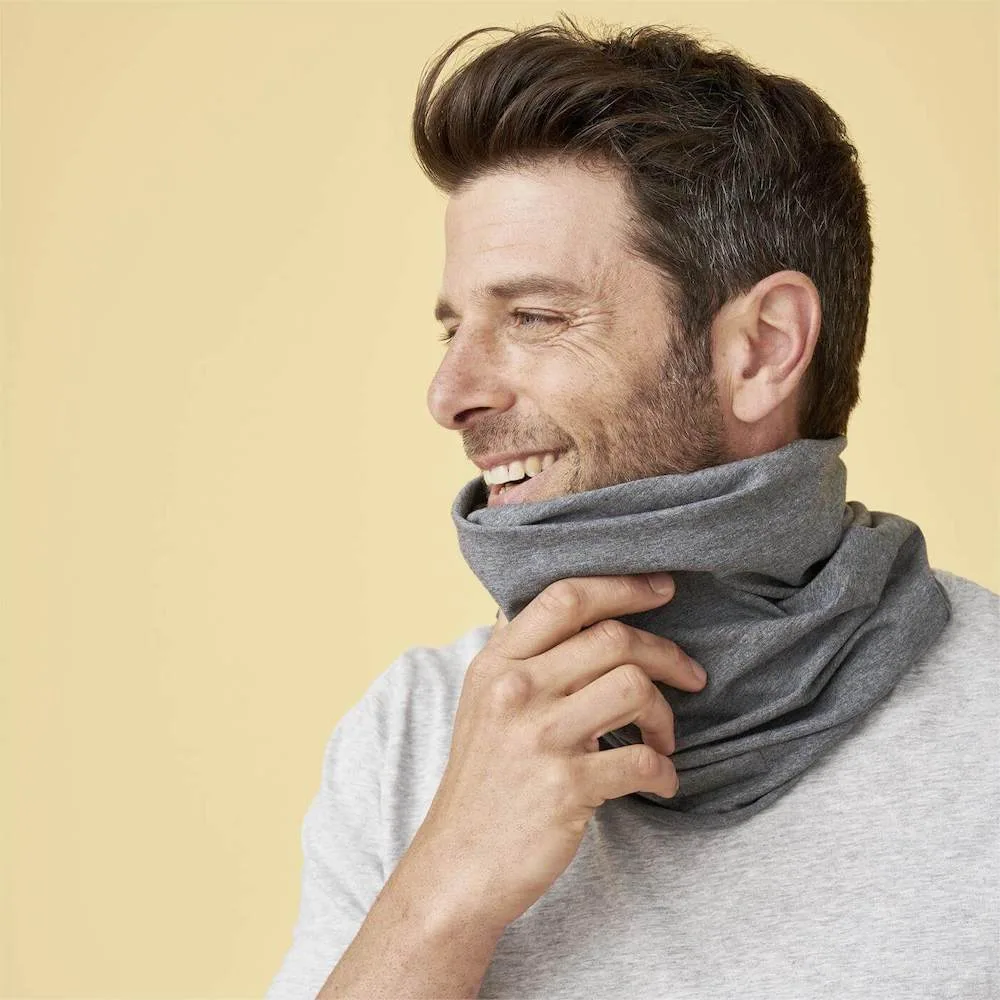
Snood - 95% Organic Cotton
-
Snood - 100% Organic Cotton: 100% organic cotton, no latex or elastane, flat seams, no itchy internal label. This snood is ideal for very sensitive skin because it eliminates common irritants and has no label to scratch the neck.
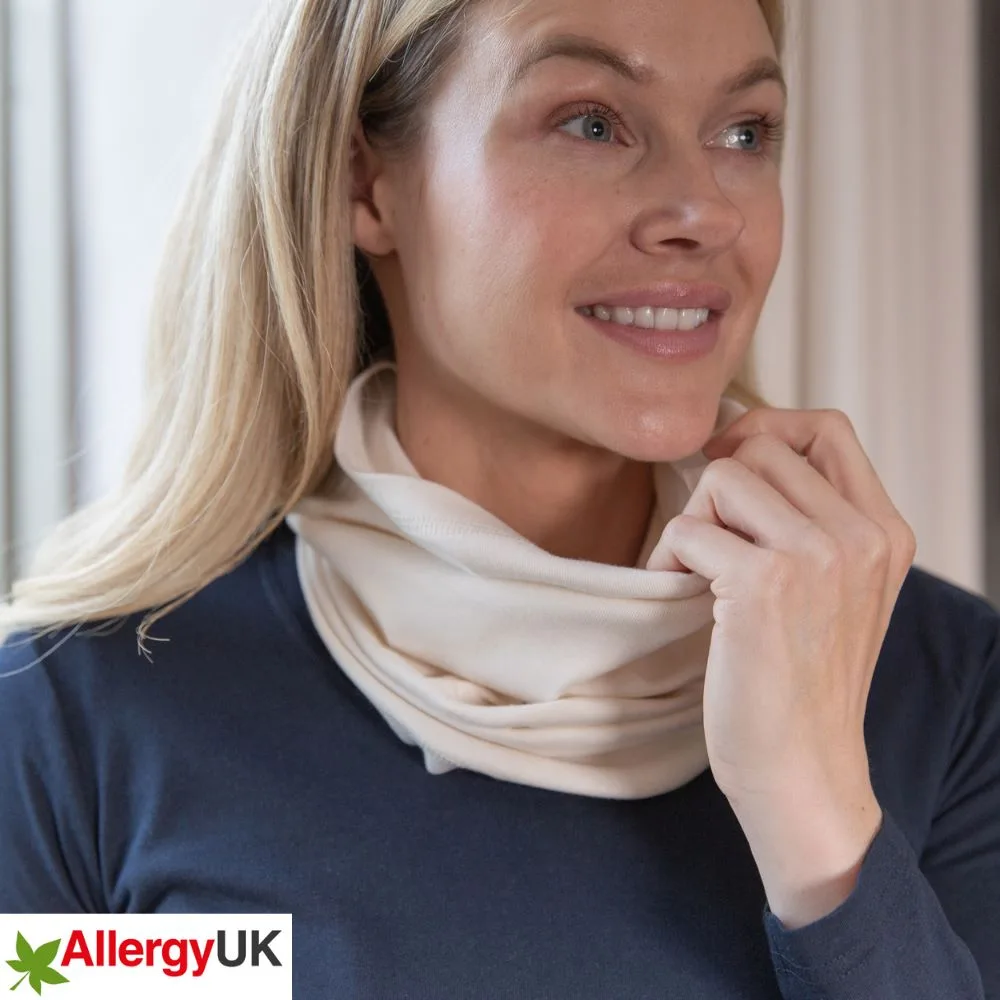
Snood - 100% Organic Cotton
-
Navy Ribbed Knit Scarf - 100% Organic Cotton: 100% organic cotton, GOTS certified, ribbed knit, size 180 x 25 cm. The ribbed knit offers stretch without elastane, and the longer length allows you to adjust layering without tight wraps.