Quick answer
Layer a thermal vest over a long-sleeve base layer and under a winter coat to trap warmth without restricting movement. Choose a vest made from recycled, breathable material for all-day comfort.
Why a thermal vest works for winter layering
A thermal vest adds core warmth without the bulk of a full jacket, making it ideal for active kids who need freedom of movement. The lightweight, soft material of a vest like Wheat's Termovest Ede allows children to run, play, and bend easily while staying warm. It also works as a standalone piece during milder winter days or as an extra layer under a coat when temperatures drop.
Choosing the right thermal vest
Look for a vest made from 100% recycled material if sustainability matters to you. The Termovest Ede is a great example: it's water-repellent (not waterproof) and has a ribbed collar, zipper with chin guard, and front kangaroo pockets. These features make it practical for everyday wear. Keep in mind that because it's not waterproof, it's best for dry winter conditions or as a mid-layer under a waterproof shell.
How to layer a thermal vest for kids in winter
- Start with a moisture-wicking base layer: Choose a long-sleeve top made of merino wool or synthetic fabric that pulls sweat away from the skin. Avoid cotton, which stays damp and can make your child cold. Common mistake: using a cotton t-shirt as a base layer. Cotton traps moisture and leads to chilling.
- Add the thermal vest as the mid-layer: Put the thermal vest over the base layer. Make sure it fits snugly but not tight—your child should be able to move their arms freely and bend easily. The vest should cover the torso without riding up. Checkpoint: the vest should not gap at the neck or ride up when your child raises their arms.
- Finish with a weather-appropriate outer layer: For cold but dry days, a softshell jacket or fleece works. For wet or windy conditions, use a waterproof and windproof coat. The vest adds insulation without adding bulk, so the outer layer should still fit comfortably over it. Common mistake: choosing an outer layer that's too tight over the vest, which compresses the insulation and reduces warmth.
- Adjust for indoor and outdoor transitions: If your child will be indoors for a while (like at school or a playdate), remove the outer layer but keep the vest on. The vest provides enough warmth for indoor activities and is easy to take off if they get too warm. Checkpoint: teach your child to unzip the vest if they feel warm, rather than removing it completely, to avoid sudden temperature changes.
Product facts
-
Termovest Ede - hazel: The Termovest Ede is made from 100% recycled material and is water-repellent, not waterproof. This means it's a sustainable choice for dry winter days or as a mid-layer, but you'll need a waterproof outer shell for wet snow or rain.
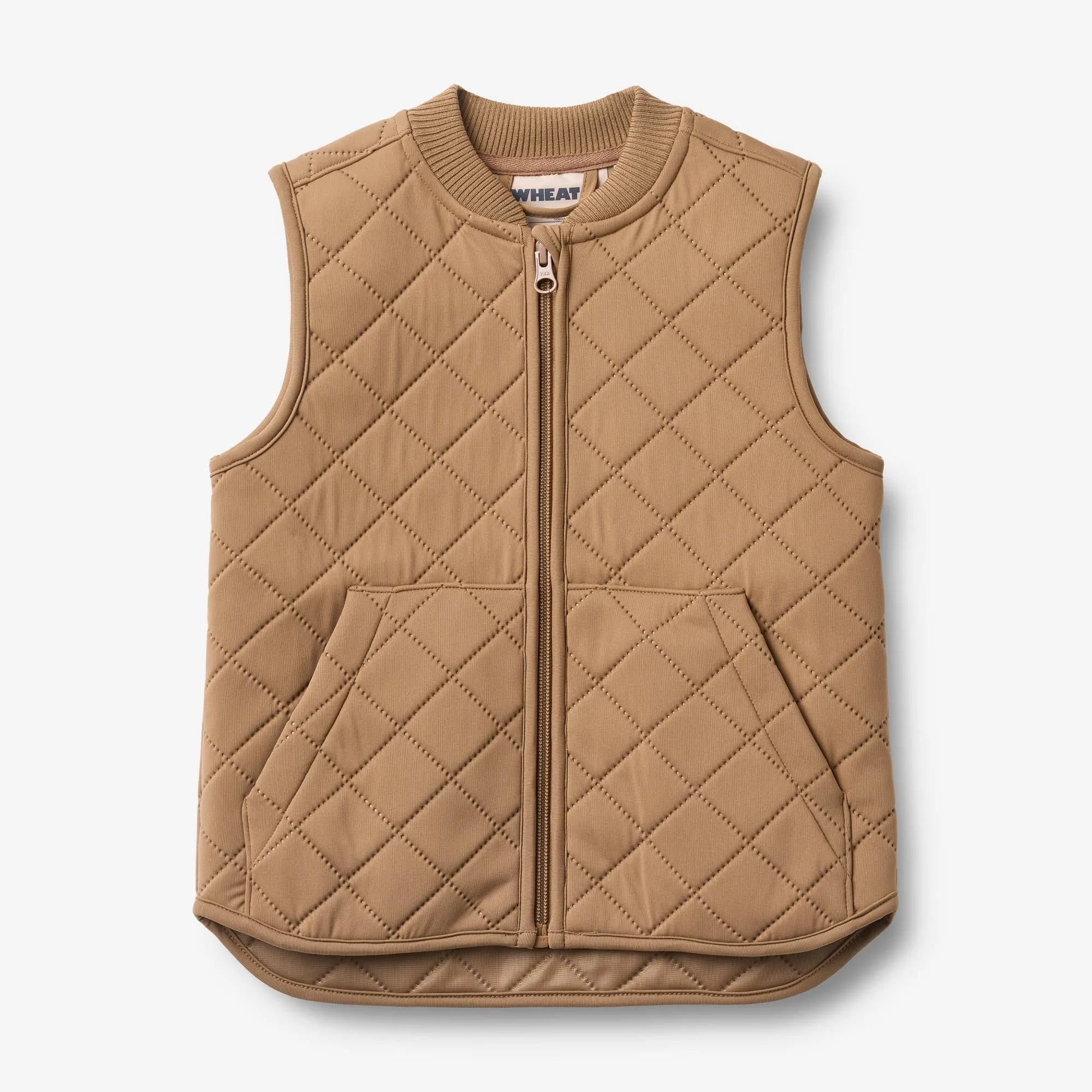
Termovest Ede - hazel