Quick answer
Dress your baby in one thin, breathable base layer, then add a light mid-layer such as a cardigan, and finish with an outer layer only when you go outside. Check the back of the neck or chest every hour — if it feels hot or damp, remove a layer. In autumn, change layers more often than you change outfits.
Why autumn layering is different from summer or winter
Autumn temperatures swing from cool mornings to mild afternoons, and indoor heating may already be on in some homes. A single thick outfit cannot handle that range, which is why layering works better: you can add or remove one thin piece without undressing your baby completely. The goal is not to keep your baby as warm as possible, but to keep them comfortable and dry. Babies overheat faster than adults because their bodies have less surface area to release heat, and they cannot tell you when they are too warm. That makes your hands and eyes the main thermometer.
Choose breathable fabrics for the layers closest to the skin
The layer touching your baby's skin should move moisture away and let air through. Organic cotton is a reliable choice because it is soft, breathable, and less likely to irritate sensitive skin. Avoid thick fleece or synthetic knits as a base layer — they trap heat and moisture against the body, which is the opposite of what you want when the temperature changes. If your baby has eczema or very reactive skin, look for certified organic cotton and check the seams and cuffs for roughness before dressing.
How to check for overheating without waking your baby
Slide two fingers inside the back of the neck or on the chest. Warm and dry means the layering is right. Hot, sweaty, or damp means remove one layer. Cool means add a thin layer. Hands and feet are usually cooler than the core and are not a good guide — cold hands alone do not mean your baby is cold. Other baby overheating signs include flushed cheeks, rapid breathing, fussiness that does not settle with feeding, and a heat rash on the neck or chest. If you see these, take off a layer, offer a feed, and check again in 15 minutes.
Adjust layers for sleep, prams, and car seats
A pram or car seat adds insulation, so dress your baby for the temperature inside the pram, not the outside air. A common mistake is buckling a baby into a car seat wearing a thick coat or snowsuit — the harness cannot sit close enough to the body, which is a safety risk. Instead, use thin layers and add a blanket over the harness after buckling, then remove it once the car warms up. For sleep, keep the room between 16 and 20°C and use a sleep bag or blanket that matches the room temperature rather than adding extra clothing.
Your 5-step autumn layering routine
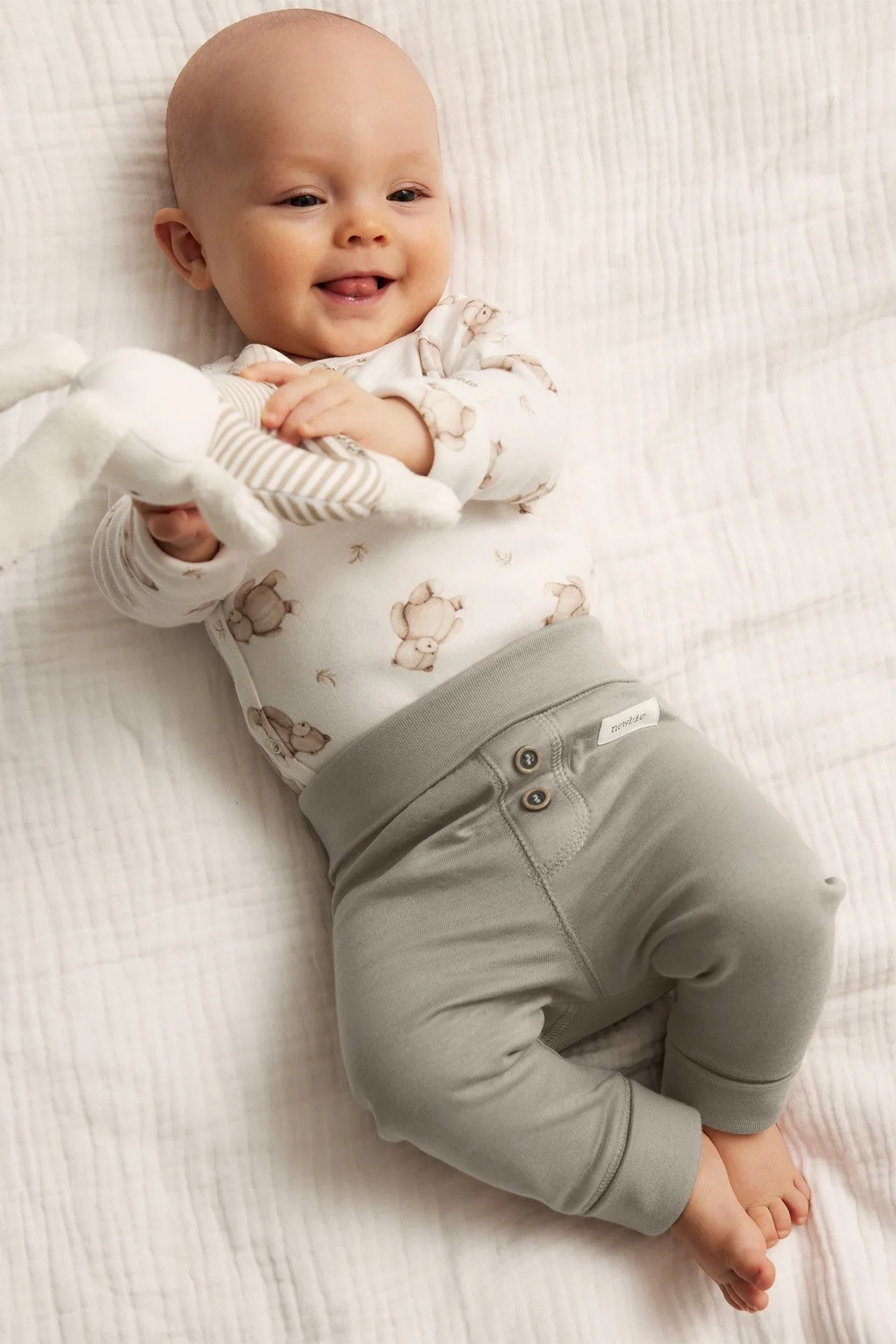
- Step 1: Start with a thin base layer: Put on a breathable bodysuit or vest in organic cotton. This is the layer that manages moisture and sits closest to the skin. Common mistake: choosing a thick or fleecy base layer because it feels cosy — it traps heat and makes the next layer harder to judge. Checkpoint: the fabric should be thin enough to see light through it when held up.
- Step 2: Add a light mid-layer: Add a cardigan, a long-sleeve shirt, or a thin pullover. This is your main adjustment layer for indoor warmth and cool mornings. Common mistake: adding a mid-layer and an outer layer at the same time before you know how warm the room or car will be. Checkpoint: your baby should be able to move arms and legs freely — if the mid-layer restricts movement, it is too thick.
- Step 3: Add an outer layer only for outdoors: Use a jacket, pram suit, or an extra blanket over the pram when you go outside. Remove it as soon as you come back inside or into a warm car. Common mistake: leaving the outer layer on indoors or in the car seat, where heat builds up quickly. Checkpoint: never buckle a car seat harness over a thick outer layer — use thin layers and add a blanket over the harness instead.
- Step 4: Check every hour and after transitions: Feel the back of the neck or chest. Warm and dry is the target. Hot or damp means remove a layer; cool means add one. Also check after entering a shop, after a feed, and after a nap. Common mistake: relying on hands and feet, which are usually cooler than the core. Checkpoint: if you see flushed cheeks, rapid breathing, or a heat rash, remove a layer and recheck in 15 minutes.
- Step 5: Keep one spare layer in your bag: Pack a thin bodysuit, a cardigan, and a small blanket so you can adjust without going home. In autumn, the temperature can drop several degrees between afternoon and evening. Common mistake: packing only a thick coat, which gives you no middle ground. Checkpoint: a spare base layer plus a mid-layer covers almost every autumn scenario.
Newbie pieces that make autumn layering easier
- Baby white floral extender bodysuit: Baby white floral extender bodysuit in soft organic cotton, with a wrap style and anti-scratch cuffs in size 1–6 months, and double rows of popper buttons at the crotch that let the baby grow in the bodysuit. A thin, breathable base layer that adapts as your baby grows — useful when you need to add or remove a mid-layer several times a day.
- Bunny rabbit baby comforter blanket: Bunny rabbit baby comforter blanket made from 100% recycled polyester, size 27 x 17 cm, with a soothing soft toy attached. A small blanket for the pram or supervised rest that adds warmth without the bulk of a coat, so you can layer it over thin clothing and remove it easily.
- Baby & kids yellow floral pyjama set: Baby & kids yellow floral pyjama set from Newbie Rescued Fabrics, with a woven long-sleeve shirt with collar, lapels and chest pocket, and shorts with side pockets, elastic waistband and drawstring, in 100% organic cotton. A breathable two-piece set for mild autumn days or warm rooms, where a full sleepsuit would be too much — the shirt can be worn as a light mid-layer over a bodysuit.