Quick answer
Put the compression shirt on first, smooth it flat against your skin, then pull your workout T-shirt over it. Choose a compression base layer that fits snugly without pinching, and keep the outer tee loose enough to slide over the compression fabric. If you feel restricted or overheated, the base layer is too tight or too heavy for the session.
Start with a compression base that matches the session
The base layer does the work, so pick it before you think about the outer tee. A seamless compression shirt with a smooth, low-profile surface slides under a T-shirt without catching or creating ridges. If you want arm coverage or added warmth, a long-sleeve sport shirt works as the base; if you want less coverage, a compression tank top keeps the core supported while leaving the arms free.
Check the fit before you add the outer layer
A compression shirt should feel firm but not painful. Run through this quick check: raise your arms overhead, twist your torso, and take a deep breath. If the hem rides up, the shirt is too short or too tight; if the fabric wrinkles instead of lying flat, it is too loose. Fix the base layer before adding the T-shirt, because a bad base will show through no matter how good the outer tee is.
Choose an outer T-shirt that layers cleanly
The outer workout T-shirt should be light enough to breathe and loose enough to glide over the compression fabric. A relaxed-fit tee in a breathable fabric prevents the compression layer from bunching at the shoulders or waist. Avoid heavy cotton tees for intense sessions; they trap heat and defeat the purpose of a technical base layer.
Put the layers on in the right order
Step into the compression shirt or pull it over your head, then adjust the hem so it sits flat at your waist. Next, gather the bottom of your workout T-shirt and pull it over your head in one smooth motion, rather than dragging it down over the compression fabric. Smooth the outer tee with your hands from shoulders to hem. This order prevents the compression shirt from rolling up under the outer layer.
Adjust during and after the session
During a workout, check that the compression hem has not crept up and that the outer tee is not twisted. If you get too hot, remove the outer tee and train in the compression shirt alone. After training, peel the layers off separately and wash the compression shirt according to its care label to protect the stretch and seamless construction.
Step-by-step: layering compression shirts under workout T-shirts
- Pick the compression base: Choose a seamless or low-profile compression shirt that matches your coverage needs. For full arm coverage, use a long-sleeve sport shirt; for core support only, use a compression tank top. Checkpoint: the base should feel snug but allow full range of motion.
- Test the fit: Raise your arms, twist, and breathe deeply. The hem should stay put and the fabric should lie flat without wrinkles or pinching. Mistake to avoid: ignoring a riding hem or bunched fabric—it will show under the outer tee.
- Choose the outer T-shirt: Select a light, breathable workout tee that is loose enough to slide over the compression layer without dragging. Checkpoint: the outer tee should not cling to or compress the base layer.
- Layer in order: Put on the compression shirt first and smooth it flat. Then pull the workout T-shirt over your head in one motion, rather than pulling it down over the compression fabric. Mistake to avoid: dragging the outer tee down, which rolls the compression hem.
- Adjust and go: Smooth both layers from shoulders to hem. During the session, check that the compression hem has not crept up and the outer tee is not twisted. If you overheat, remove the outer tee and train in the compression shirt alone.
Products that work as a compression base layer
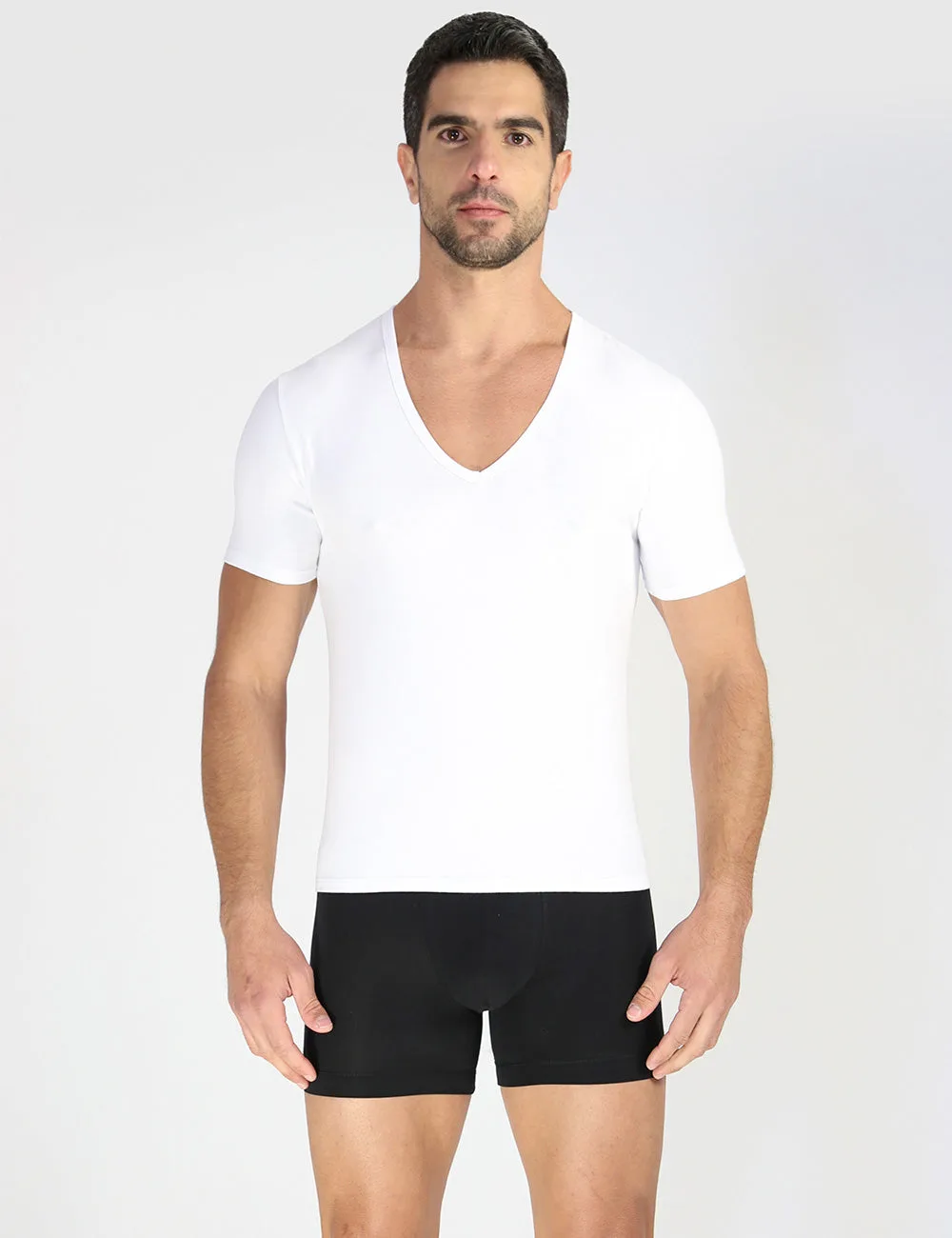
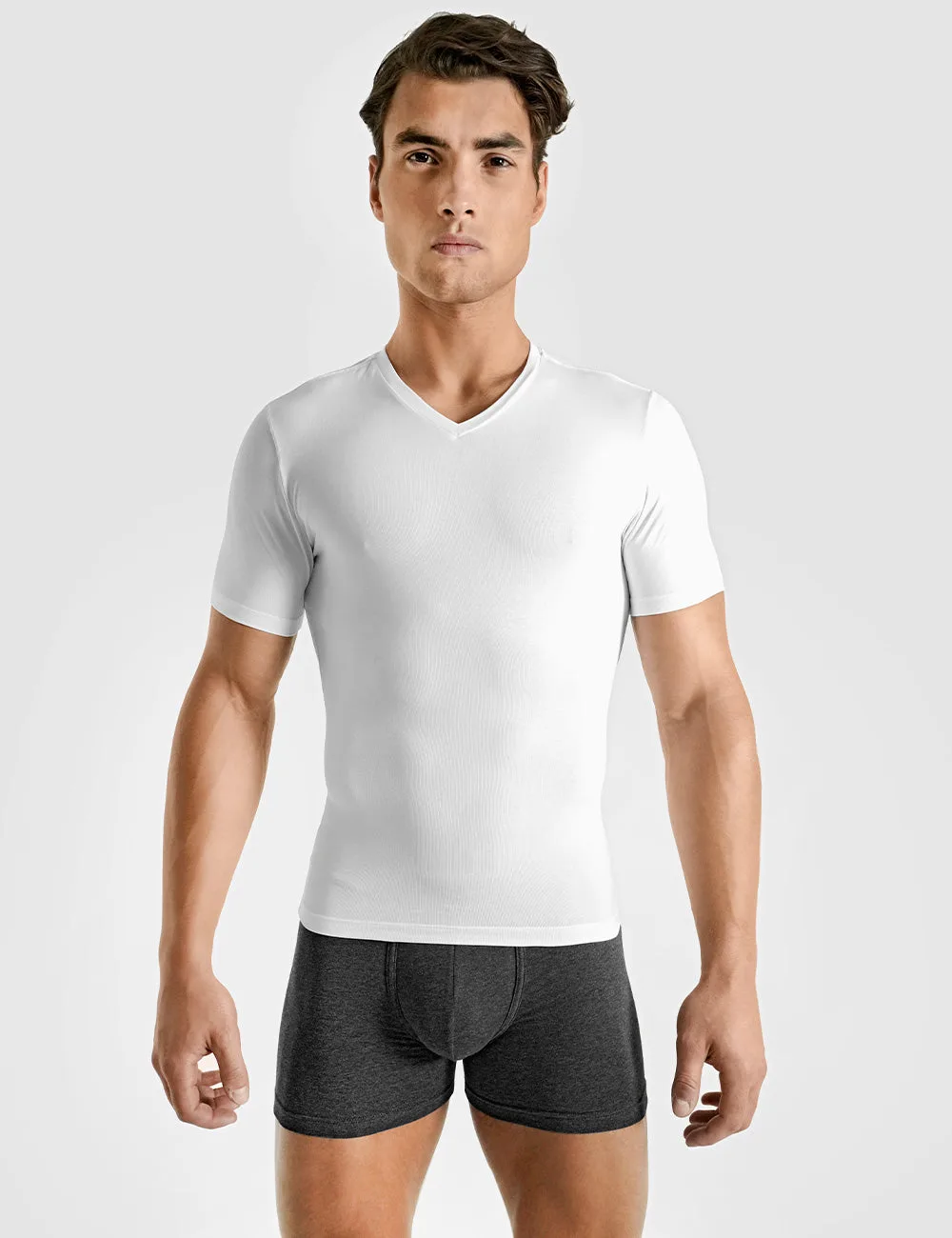
- Seamless Compression T-Shirt: Seamless construction provides comfortable support, slims the waist while increasing muscle definition, and its physio-therapy inspired design pulls back the shoulders and straightens the back. Made with Sorbtek and Lycra for comfort, freshness, and durability. The seamless surface lies flat under a T-shirt, so you avoid visible ridges, and the posture support adds a functional benefit beyond compression.
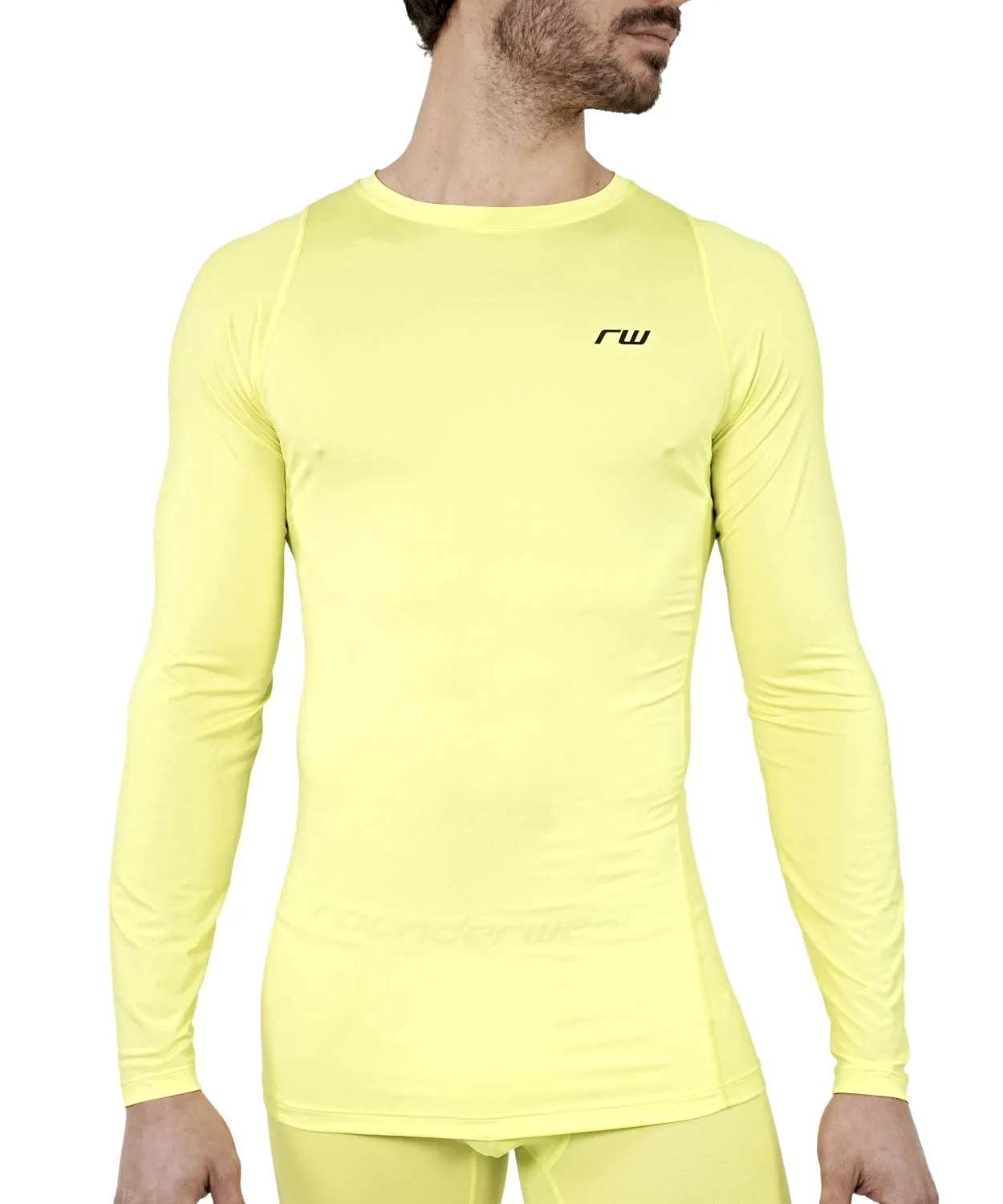
- Sport Long Sleeve Shirt: Long-sleeved sports shirt that sculpts the body on the shoulders and chest, with a soft fall on the torso, ultralight weight, ventilated panels under the armpits, and freedom of movement. Useful as a base layer when you want arm coverage and breathability under a workout tee; the ventilated panels help manage sweat in the areas that need it most.
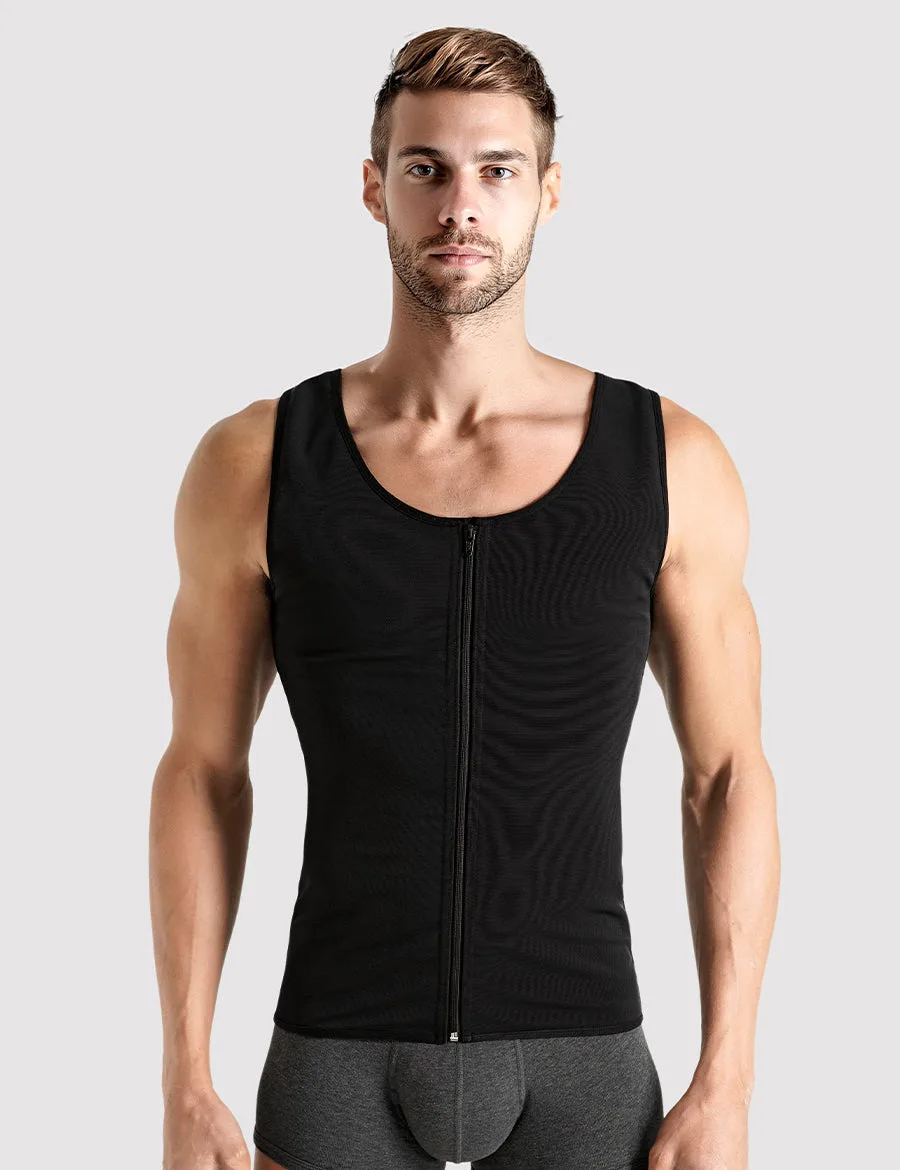
- Cotton Compression Tank Top: Cotton compression undershirt with high elasticity to firm, tone, and slim the upper body. Tapered construction designed to remain tucked in all day long. Features compression tech, slims waist, firms upper body, improves posture, and is undetectable to the eye. A good option if you prefer a tank-style base that stays tucked and stays hidden under a T-shirt, with less coverage than a long-sleeve layer.