Quick answer
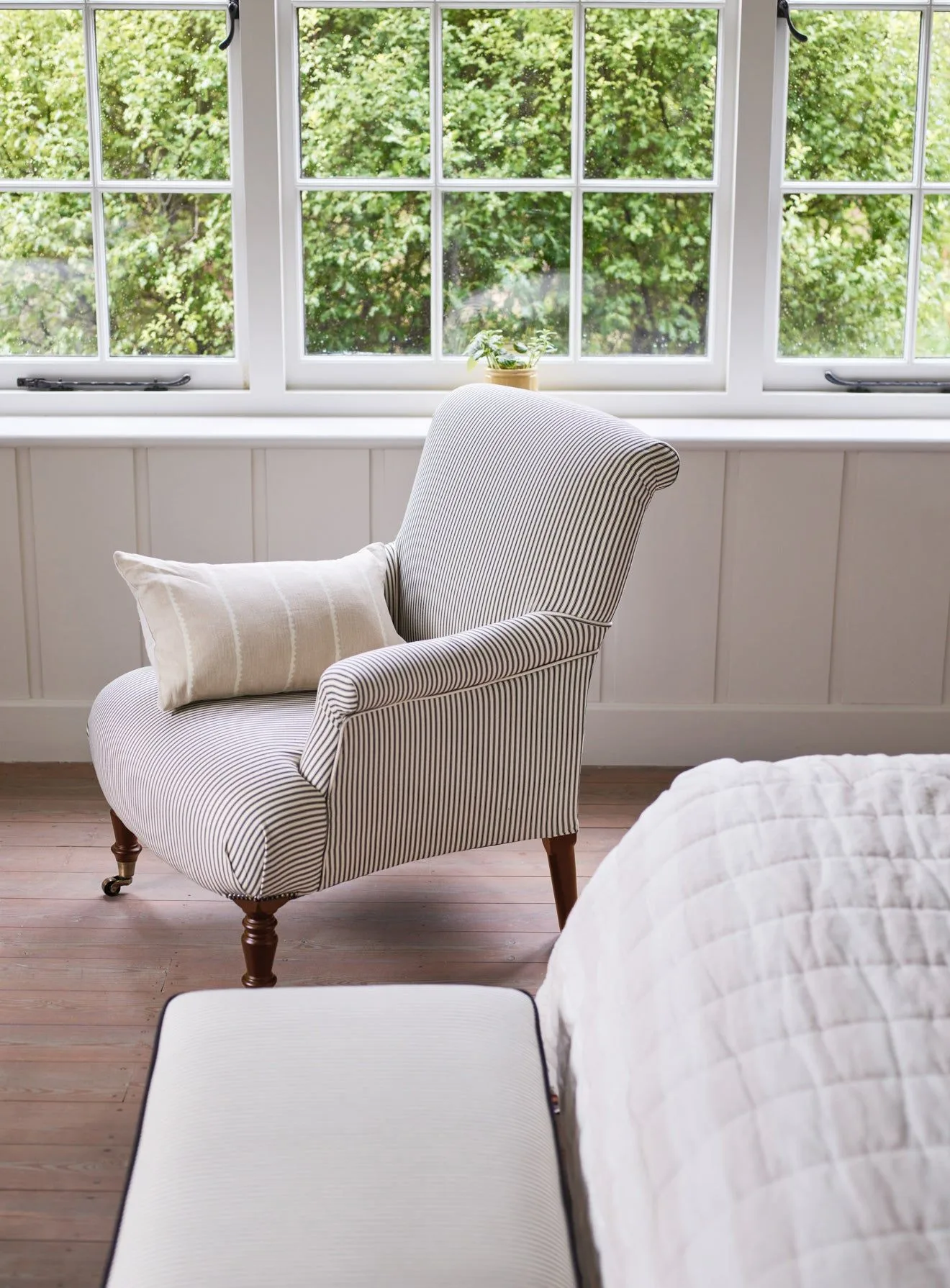
Start with one larger cushion at the back of the seat, add a smaller cushion in front and slightly off-centre, then drape a folded blanket over one arm or the backrest rather than across the seat. Keep to two or three cushions, choose covers you can remove for washing, and adjust the fabric weight to the season.
Work out your armchair's cushion capacity first
Before you buy or rearrange anything, sit in the chair and notice where your back and arms actually rest. A narrow armchair with a high back usually takes two cushions comfortably; a wide, low armchair can carry three without looking crowded. If the seat is shallow, a deep cushion pushes you forward and defeats the purpose.
As a rule, the largest cushion should be no wider than roughly two-thirds of the seat width, and any second cushion should be noticeably smaller. Mixing two sizes reads as deliberate; three identical squares often look like a set that arrived together.
- Measure the seat width and depth before choosing cushion sizes.
- Check that your back still touches the backrest once cushions are in place.
- If you share the chair, choose covers you can swap rather than buying a second set of inserts.
Pair cushion and blanket fabrics by season, not by trend
Cushion and blanket pairing works best when the two share a colour family but differ in texture. In cooler months, a wool or brushed cotton blanket over a linen or cotton cushion gives contrast without visual noise. In warmer months, a lightweight cotton throw with a smooth cushion cover keeps the chair usable rather than decorative.
Seasonal armchair textiles are easier to rotate if you store the off-season covers and throws together in one labelled box. That way, changing the chair takes minutes rather than a full clear-out.
- Cooler months: heavier blanket, lighter cushion.
- Warmer months: lighter throw, slightly crisper cushion cover.
- Keep a neutral base cushion and change only the top layer if storage is tight.
Place the blanket so the chair stays usable
Layering throws on armchairs fails most often when the blanket covers the whole seat. Fold the throw into a wide panel, drape it over one arm and let the end fall down the outside of the chair, or fold it across the backrest so it sits behind your shoulders. Both leave the seat clear.
If you want the blanket within reach while sitting, fold it into a loose rectangle and rest it on the arm you do not use for drinks or books. Avoid tucking it tightly behind the back cushion, which flattens the fold and makes the chair look stuffed.
- Never cover the full seat with a throw if you plan to sit in the chair daily.
- Let the blanket end hang freely rather than tucking it in.
- Re-fold the throw loosely each time you get up to keep the shape.
Adjust for comfort before you adjust for looks
Styling cushions for comfort means testing the chair in real use, not just from across the room. Sit down, lean back and check whether the smaller cushion presses into your lower back or slides sideways. If it does, move it to the side of the seat or remove it.
A cushion that looks good but has to be moved every time you sit will end up on the floor. Keep the arrangement simple enough that it survives daily use, and treat the blanket as the layer that changes with the weather rather than the cushions.
- Test the chair with a book or cup in hand, not just empty.
- If a cushion keeps sliding, a slightly firmer insert usually solves it.
- Comfort first, then step back and check the proportions.
Step-by-step armchair layering
- 1. Clear the chair and sit in it: Remove everything from the armchair, sit down and note where your back, arms and head rest. This tells you the maximum cushion depth the chair can take before it becomes uncomfortable. Checkpoint: if your back no longer reaches the backrest, the cushion is too deep.
- 2. Add the base cushion: Place one larger cushion at the back of the seat, centred or very slightly off-centre. This is the layer that stays put most of the time, so choose a cover that suits the chair's main colour. Mistake to avoid: choosing a base cushion that is wider than two-thirds of the seat.
- 3. Add the smaller cushion in front: Set a smaller cushion in front of the base cushion and shift it a little to one side. The slight offset stops the arrangement looking like a matched pair and gives the eye somewhere to settle. Checkpoint: the smaller cushion should not press into your lower back when you sit.
- 4. Fold and drape the blanket: Fold the throw into a wide panel and drape it over one arm or across the backrest, leaving the seat clear. Let the end hang down the outside of the chair rather than tucking it behind the cushion. Mistake to avoid: covering the whole seat, which makes the chair impractical for daily use.
- 5. Step back and adjust the balance: Look at the chair from the doorway and from the side. If one side feels heavy, move the smaller cushion or shorten the blanket fold until the arrangement reads evenly. Next step: swap the blanket weight when the season changes rather than rebuilding the whole arrangement.
Small pieces that finish the arrangement
- Bingley Brass Candlestick: An elegantly petite brass candlestick inspired by antiques, crafted from brass with a beautifully aged finish, for use in multiples on mantles and table tops or solo on a low lit side table. A low side table beside the armchair is the natural home for a small light source, and a petite candlestick adds warmth without competing with the cushions.
- Vintage Satin Cutlery, 42 Piece Set: A 42-piece heritage cutlery set with a stonewashed finish, premium quality steel with a vintage patina, elegantly curved handles, containing 10 forks, knives, dessert spoons and teaspoons plus two larger serving spoons. If the armchair sits in an open-plan room near a dining table, a relaxed cutlery set keeps the whole space feeling connected rather than styled in separate zones.
- Bilton Toothbrush Holder, Antique Brass: A minimalist toothbrush holder with a rolled-lip edge, crafted from solid brass with a brushed metal finish, substantial in weight, part of the Bilton Collection. The same aged-brass tone used on a bathroom shelf can be repeated on an armchair side table so finishes across the home feel intentional rather than mismatched.