Quick answer
Layering dog clothes works best as a three-part system: a base layer that manages moisture, a midlayer that traps warmth, and an outer shell that blocks wind and rain. Start with a well-fitted midlayer dog coat for cold, dry days, then add or swap layers based on temperature, precipitation, and your dog's activity level. Always check fit at the shoulders and legs before heading out.
Why layering beats one thick coat
A single heavy coat can overheat a dog during active winter walks, then leave them shivering when you stop moving. Layering lets you adjust warmth in real time: remove the outer shell if the sun comes out, add a midlayer if the wind picks up, or switch to a lighter base for indoor warm-ups. This flexibility matters most for dogs that alternate between running and standing still, such as agility or obedience dogs. Cold weather dog clothing is not just about warmth; it is about matching the layer to the condition.
Match layers to your dog's coat and body
Short-haired, senior, or small dogs lose heat faster and often need a midlayer plus a shell on freezing days. Double-coated breeds may only need a windproof outer layer to stay comfortable. Pay attention to how your dog behaves: tucking the tail, lifting paws, or shivering are signs to add a layer. If your dog pants or seeks shade, remove one. The goal is to keep the core warm without trapping sweat against the skin.
Check fit at the shoulders and legs
A layer that restricts the front legs will rub and chafe, no matter how warm it is. Look for designs with articulated front-leg openings or folds that allow a full stride. The coat should cover the back and chest without gaping at the neck or sliding sideways. Measure your dog's back length and chest girth, then compare to the size chart. If your dog is between sizes, size up for a midlayer but keep the outer shell snug enough to block wind.
Protect paws as part of the layering system
Cold pavement, ice, and road salt can end a winter dog walk quickly. Dog boots add a protective layer for the paws, just like a coat adds one for the body. Choose boots with a flexible sole and a secure closure so they stay on during trotting and turning. Introduce them gradually indoors before using them on a full walk. If your dog refuses boots, stick to shorter routes on salted paths and rinse paws after walks.
Step-by-step: layering for a winter walk
- Start with a clean, dry dog: Brush out loose hair and make sure the coat and skin are dry. Moisture trapped under layers will chill your dog once you slow down. Checkpoint: if your dog is damp from a previous walk or a bath, dry them thoroughly before dressing.
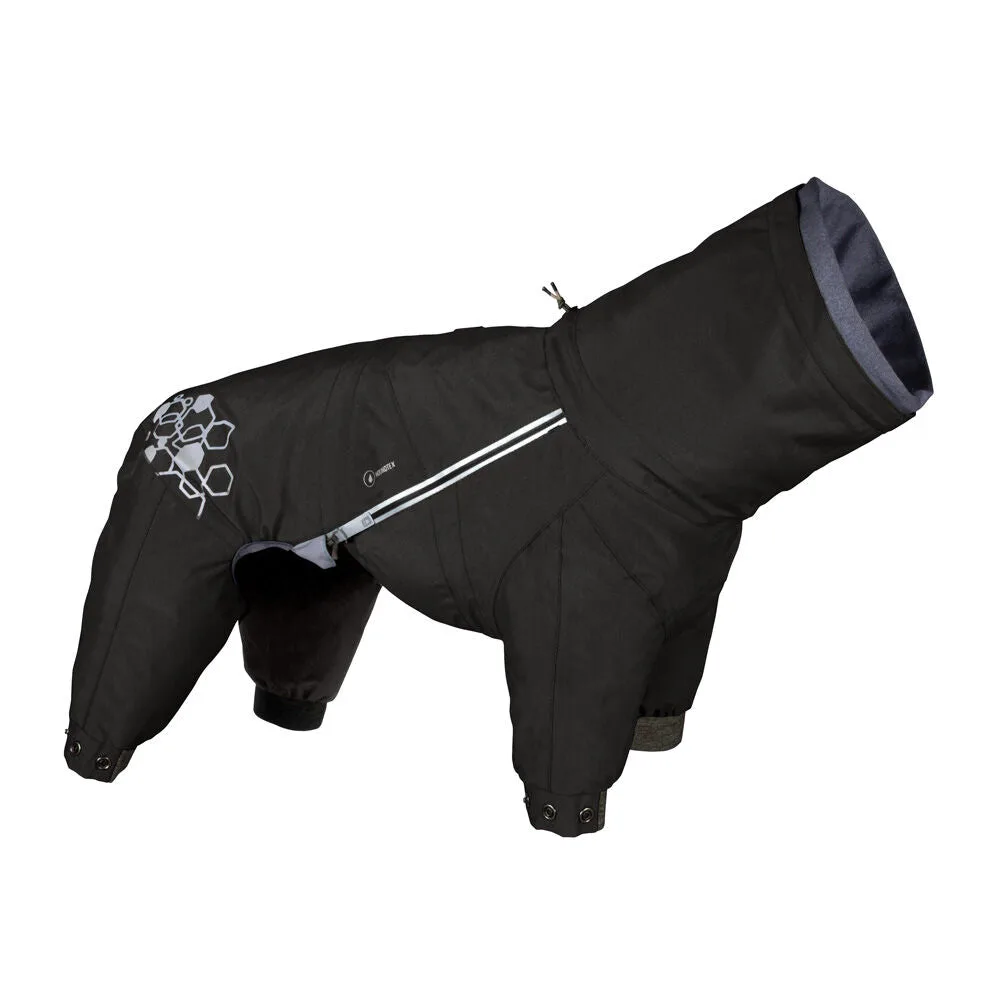
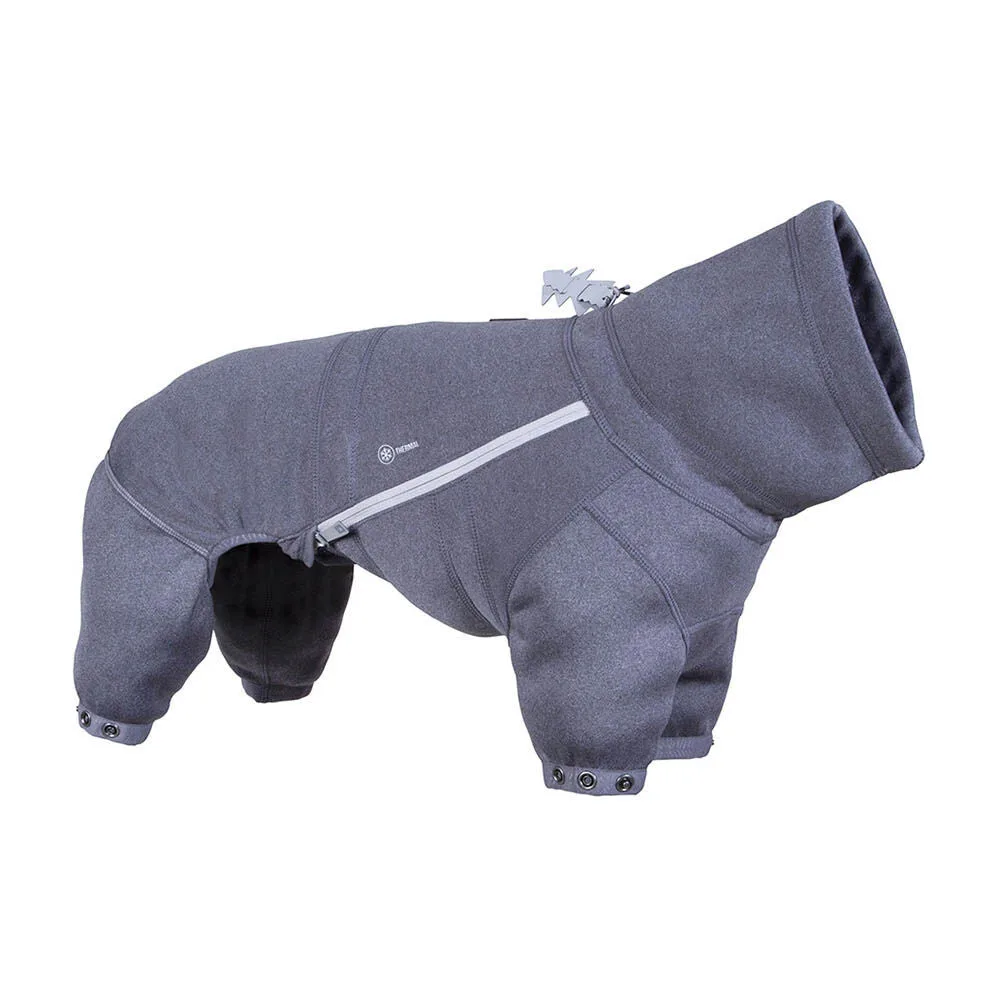
- Add a base or midlayer: For cold, dry days, a midlayer dog coat like the Lämmittävä Midlayer ECO provides warmth and freedom of movement. For very cold or wet conditions, use the Midlayer Overall as a base under a waterproof shell. Common mistake: putting a waterproof shell directly over a dry dog without a warming layer, which can feel cold and clammy.
- Add an outer shell if needed: If it is raining, snowing, or windy, add a windproof and waterproof outer layer over the midlayer. The shell should fit over the midlayer without compressing it. Checkpoint: lift the shell at the neck and chest; if it pulls tight across the shoulders, size up or remove the midlayer.
- Protect the paws: Put on dog boots like the Weekend Warrior boots before you leave. Make sure the closures are snug but not tight, and that the boots do not twist. Common mistake: skipping boots on salted sidewalks, which can cause stinging and cracked pads.
- Adjust during the walk: Watch your dog for signs of overheating (heavy panting, lagging) or chilling (shivering, lifting paws). Remove or add a layer as needed. Checkpoint: if your dog is panting in cold weather, unzip or remove the outer shell.
- Remove and dry gear after the walk: Take off all layers and boots, check for rubbing or moisture, and hang the gear to dry. Damp layers lose their insulating value. Next step: store gear flat or hanging, not compressed, so it keeps its shape for the next walk.
Products that support this layering system
- Lämmittävä Midlayer ECO koiran takki: The Lämmittävä Midlayer ECO dog coat now includes a foil tricot lining known from the Extreme Warmer, and its front-leg folds are shaped to give the dog more room to move. This makes it a warm, flexible midlayer for cold and damp weather, suitable for agility, obedience, senior dogs, and layering under a shell.
- Midlayer haalari: The Midlayer Overall is designed to fit under the Mudventure Overall ECO for extra warmth, and works well for lounging, city walks, or as a pre- and post-training layer for active dogs. It adds full-body warmth without bulk, so you can use it as a base or midlayer depending on the temperature and your dog's activity.
- Weekend Warrior tossut: Weekend Warrior boots protect paws from cold streets, sharp stones, branches, glass, and road salt, and can also shield an injured paw. They complete the layering system for winter dog walks, reducing the risk of paw irritation and letting you walk longer in harsh conditions.