Quick answer
To layer glass airtight containers in your fridge, group them by meal or ingredient, place heavier containers on lower shelves, and use stackable sets like Caraway's Glass Airtight Container Trio to maximize vertical space without risking spills.
Why layering glass containers works
Glass containers are heavier than plastic, so a smart layering system protects both your food and your fridge shelves. By stacking only containers of similar size and weight, you reduce pressure on the bottom containers and keep the seal intact.
Airtight glass containers also lock in freshness longer, so organizing them by use—meal prep, leftovers, or dry staples—means you grab what you need without shifting everything around.
Know your fridge zones
Different shelves have different temperatures. The upper shelves are more consistent, while lower shelves are coldest. Place dairy and ready-to-eat meals on upper shelves, and raw ingredients on lower shelves to avoid cross-contamination.
Stacking works best on sturdy, flat shelves. Avoid placing glass containers on the fridge door, where temperature fluctuations and constant movement can weaken the seal and cause spills.
Step-by-step layering guide
- Sort by category: Group your glass containers by what you store: meal prep, leftovers, produce, or dry goods. This makes it easier to decide what needs to be stacked together and what should be separated. Check that you have at least one container per category to avoid mixing smells or flavors.
- Choose the right shelf: Place heavier or taller containers on lower shelves, and lighter or shorter ones on upper shelves. This keeps the center of gravity low and prevents top-heavy stacks from toppling. Verify that the bottom container is stable and not overfilled before adding another layer.
- Stack by size and weight: Only stack containers that are the same width or have a stable base. If you use a set like Caraway's Glass Airtight Container Trio, follow its stackable design and place the largest container at the bottom, then work up to the smallest. Never stack a smaller container on a larger one if the base doesn't sit flush—this can crack the glass or break the seal.
- Leave breathing room: Don't fill containers to the brim. Leave about half an inch of space so the airtight seal can close properly and food won't push against the lid when frozen or expanded. Check that each lid clicks or seals fully; a loose lid means air is getting in.
- Label and rotate: Add a label with the date and contents to each container, then place newer items behind older ones. This keeps your fridge organized and reduces food waste. Do a quick weekly check to remove any containers that are past their prime.
Recommended product
-
Glass Airtight Container Trio: Caraway's Glass Airtight Container Trio is non-toxic, BPA-free, and stackable for coffee, rice, cereal, and everyday essentials. The stackable design lets you build a tidy fridge tower that saves shelf space while keeping your food fresh and free from harmful chemicals.
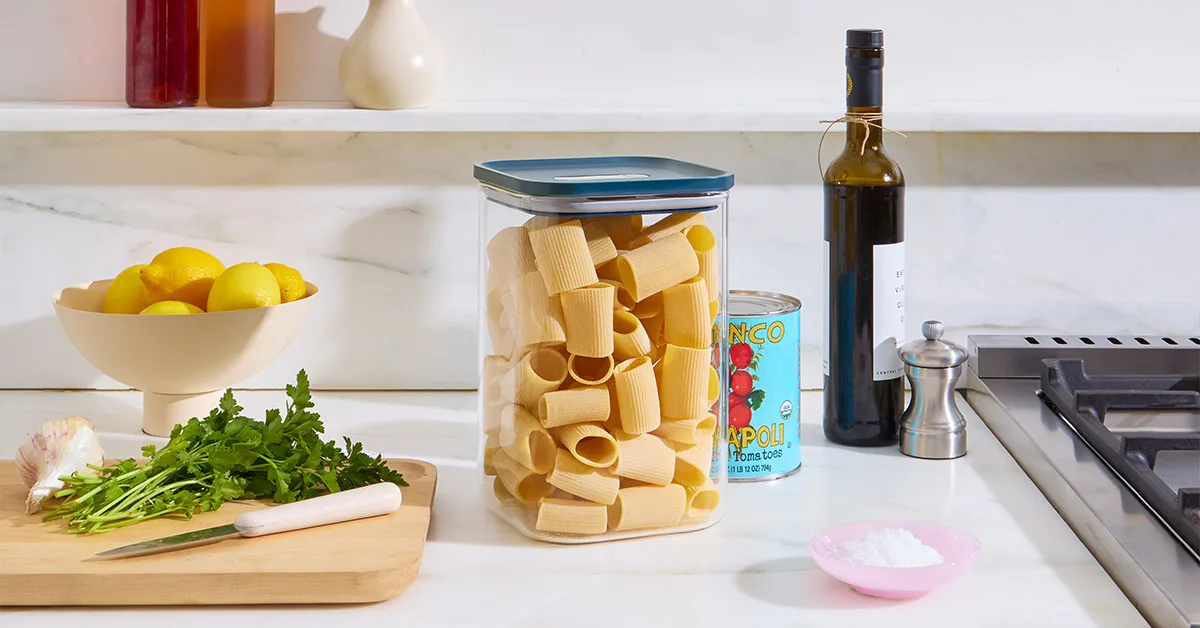
Glass Airtight Container Trio