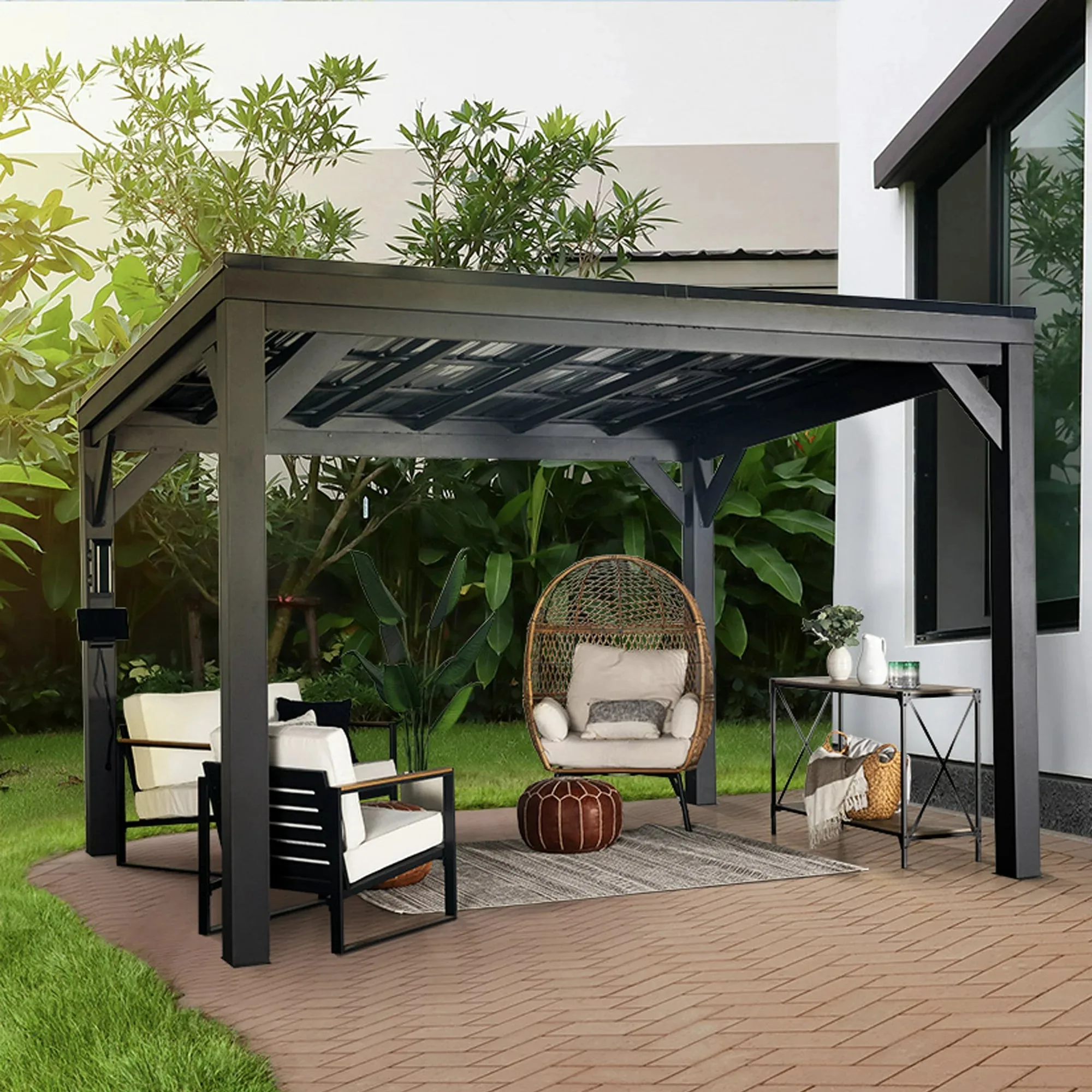
Quick Answer
To level ground for a gazebo, mark the footprint, remove sod, dig to a consistent depth, and use a gravel and paver base, checking with a level and string lines. For uneven yards, consider a concrete pad or adjustable deck blocks to compensate for slopes.
Why a level base matters for your gazebo
A level foundation is critical for the structural integrity of any gazebo. An uneven base can cause the frame to twist, doors to stick, and the roof to stress, leading to premature wear or even collapse. Proper leveling also ensures water drains away from the structure, preventing rot and rust.
Gazebos are heavy, and the ground must support their weight evenly. For example, the Barrington Gazebo is Pro-Tect™ tested to withstand up to 8,800 pounds of snow load, but only if the foundation is stable. A level base distributes that load uniformly, protecting both the gazebo and the people under it.
Choosing the right foundation for your gazebo type
The best foundation depends on your gazebo's size, weight, and your local soil conditions. For lightweight or portable gazebos, a simple gravel pad with paver stones may suffice. For permanent, heavy wooden gazebos like the 14x12 Barrington or Arcadia, a concrete slab or a system of deck blocks on footings is recommended to handle the load and resist frost heave.
If your yard has a significant slope, you might need to excavate on the high side and build up on the low side, or use adjustable post anchors to level the structure without extensive digging. Always check local building codes and HOA rules before starting.
Step-by-Step: Leveling Ground for a Gazebo
- Mark the gazebo footprint: Measure and mark the exact footprint of your gazebo using stakes and string. Ensure the area is clear of obstacles and check for underground utilities before digging. Double-check the diagonal measurements to ensure the rectangle is square.
- Remove sod and topsoil: Strip away grass and topsoil within the marked area. Dig down to a depth that allows for your base material (typically 4-6 inches for gravel) plus the thickness of your pavers or concrete slab. Keep the sod for patching around the base later.
- Compact the soil: Use a hand tamper or plate compactor to firm up the exposed soil. This prevents future settling, which can create low spots under the gazebo. Water the soil lightly and re-compact if it's very dry or sandy.
- Add and level a gravel base: Spread 3-4 inches of crushed gravel or paver base, then rake it smooth. Use a long level and a straight board to check for high and low spots, adding or removing gravel as needed. Slightly slope the gravel (about 1/4 inch per foot) away from the center to promote drainage.
- Set pavers or pour a concrete pad: For a paver base, place concrete pavers on the gravel, leveling each with a rubber mallet and a level. For a concrete pad, build forms and pour concrete, then screed it level. Allow concrete to cure for at least 48 hours before installing the gazebo.
- Verify levelness and squareness: Place a level across multiple points on the finished base. Also, re-check the diagonal measurements of the footprint. Adjust pavers or shim under the gazebo posts if needed. A final check now saves you from misaligned roof panels later.
Gazebo models that benefit from a level base
-
14x12 Barrington Gazebo: The Barrington Gazebo features a heavy-gauge galvanized steel hip roof and is Pro-Tect™ tested to withstand up to 8,800 pounds or 30 inches of snow. This heavy-duty gazebo requires a level, stable foundation to distribute that snow load evenly and prevent structural stress.
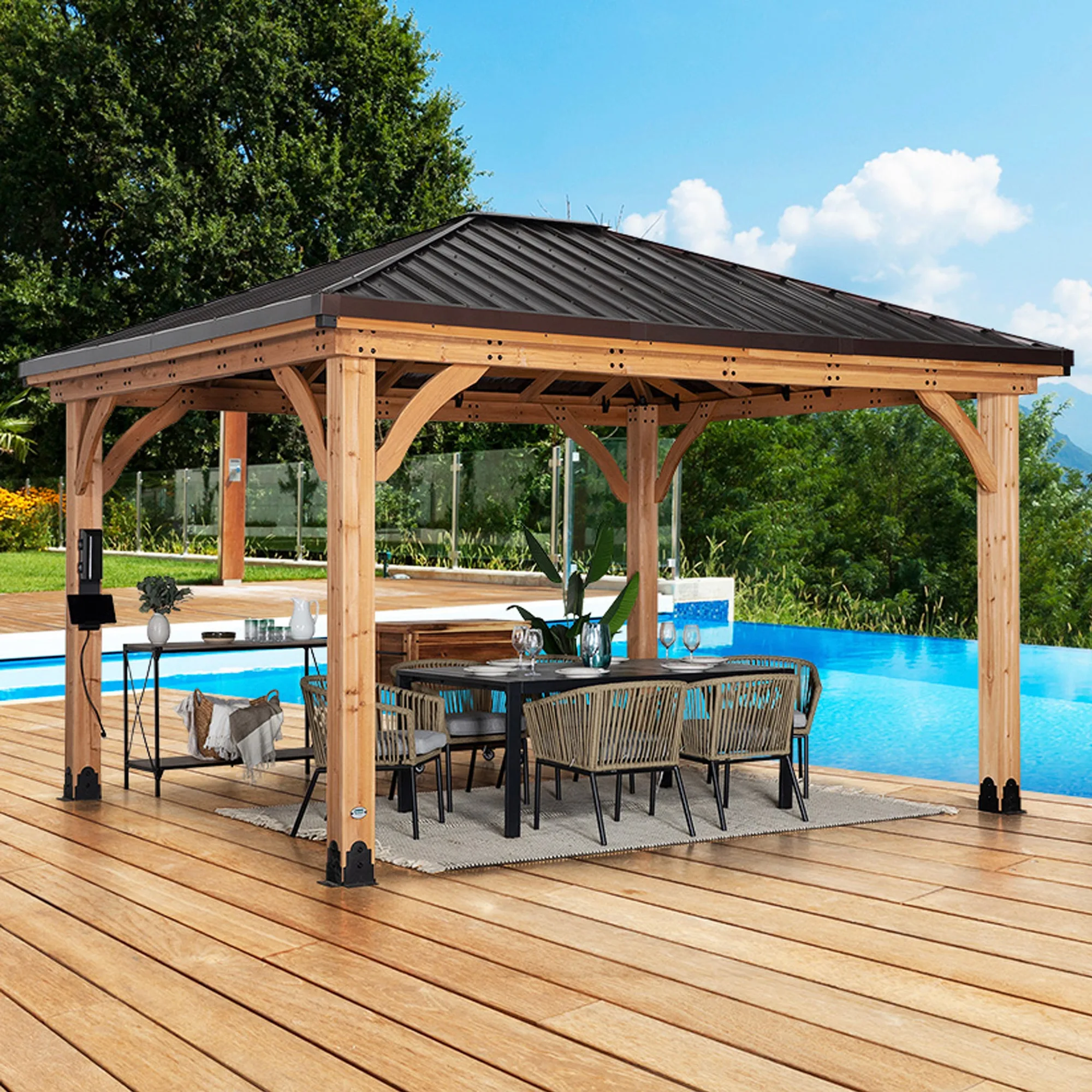
14x12 Barrington Gazebo
-
14x12 Arcadia Gazebo: The Arcadia Gazebo has a durable, sloped galvanized steel roof that prevents water from pooling. A level base ensures water runs off properly, protecting the wooden frame from moisture damage.
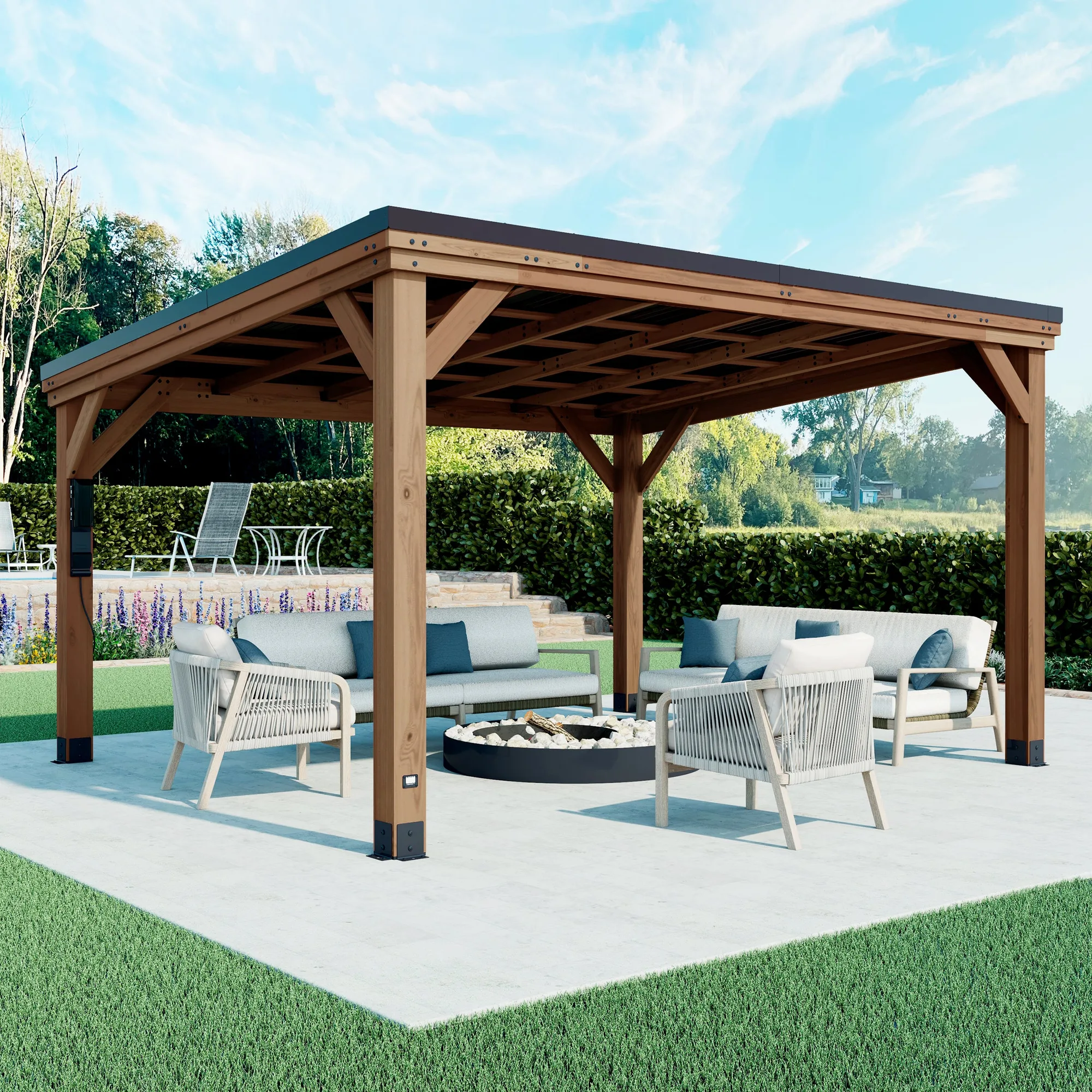
14x12 Arcadia Gazebo
-
12x9.5 Stonebridge Gazebo: The Stonebridge Gazebo is constructed from powder-coated galvanized steel, resisting rust, corrosion, and UV damage. Its modern design and low-maintenance finish still need a level base to keep the frame square and the roof aligned.