Quick answer
Clean and dry your poles after every trip, check the locking mechanisms and tips before each hunt, and replace worn tips before they fail. Store poles fully collapsed, clean, and dry. This five-minute routine is the core of trekking pole maintenance and the fastest way to extend pole life.
Trekking poles take a beating in the backcountry: mud, grit, snow, and repeated folding and unfolding. Most pole failures are not sudden; they build up from dirt in the joints, worn tips, or corrosion in storage. A short maintenance routine after each hunt prevents most of it.
This guide walks through the steps in order, from post-hunt cleaning to off-season storage, with the checkpoints that catch problems before they end a hunt. The same routine works whether you carry the PEAX Backcountry Z or the PEAX Backcountry Z (Cork) trekking poles.
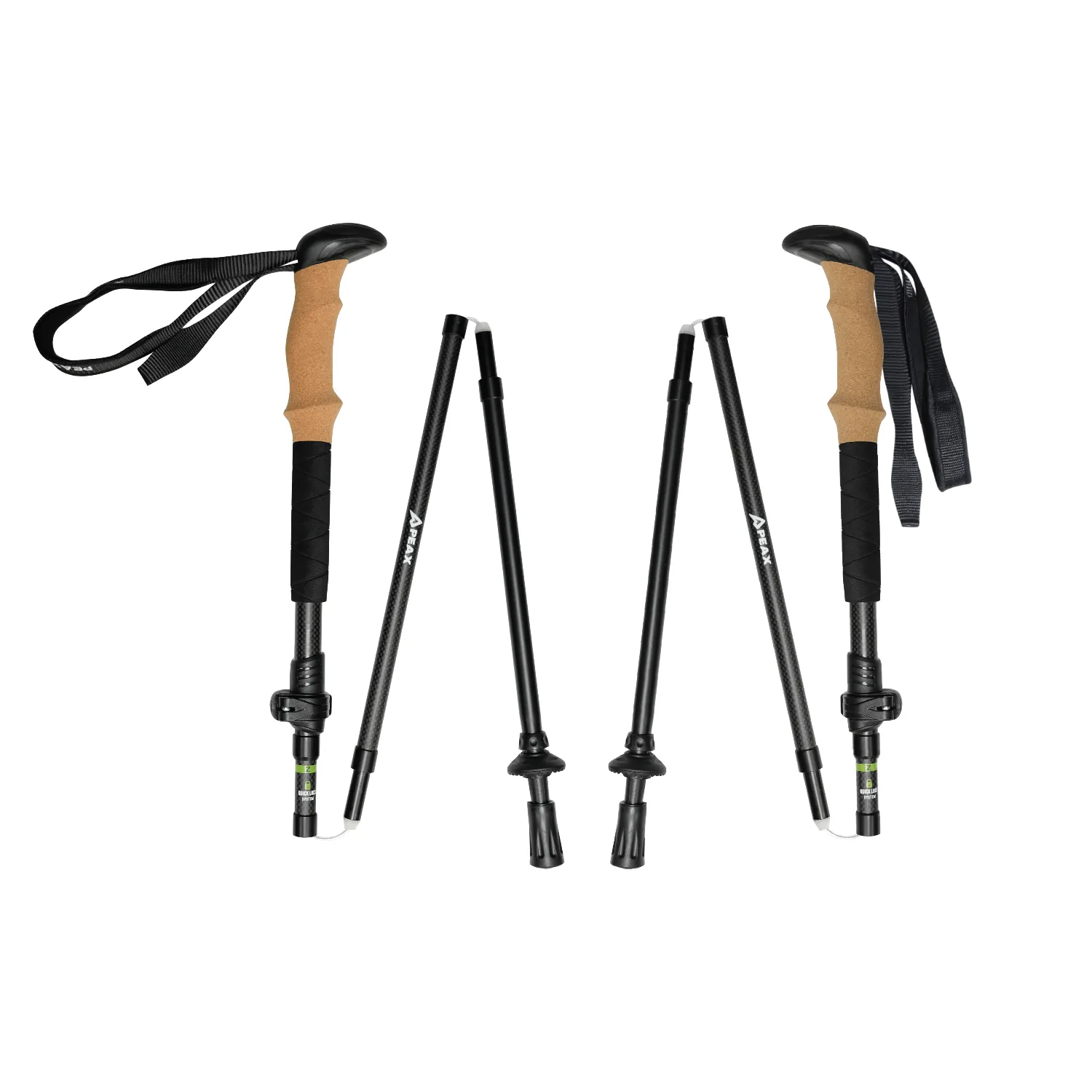
PEAX Backcountry Z (Cork) trekking poles
Why trekking pole care matters on backcountry hunts
Poles are load-bearing gear. On steep climbs and technical descents, a slipping lock or a worn tip can cost you stability exactly when you need it. Dirt and grit inside the joints accelerate wear on the locking mechanism, and a tip worn down to the metal loses grip on rock and wet ground.
The payoff for trekking pole care is simple: predictable performance, fewer mid-hunt failures, and more seasons out of the same pair. It also makes packing easier, since clean, dry poles collapse and store without grit grinding in the joints.
- Clean and dry poles the same day you get home; grit left in joints does the most damage.
- Check tips and locks before every trip, not just at the end of the season.
What you need before you start
You do not need a workbench. A soft brush or old toothbrush, a bucket or sink with warm water, a mild soap, a dry rag, and a small amount of light lubricant for metal joints cover almost everything. A towel or drying rack keeps poles from sitting in a puddle.
If your poles have cork grips, keep soap and soaking to a minimum on the cork and dry it fully. Cork is comfortable but absorbs moisture, so it needs more drying time than foam or rubber.
- Avoid harsh solvents, which can damage grip materials and coatings.
- Do not submerge poles in water if you can avoid it; wipe and rinse instead.
Common mistakes that shorten pole life
The most common mistake is storing poles dirty and wet. Grit in the joints wears the locking mechanism, and moisture left in a collapsed pole can corrode metal parts. The second is ignoring tip wear until the tip falls off mid-hunt.
Another frequent error is over-lubricating. A light film on metal joints is enough; excess lubricant attracts dirt and makes the problem worse. Finally, do not force a stuck pole apart. Clean and dry it first, then work it loose gradually.
- Never store poles collapsed and wet; dry them fully first.
- Replace tips at the first sign of heavy wear, not after they fail.
Trekking pole maintenance steps
- Step 1: Rinse and wipe down after every hunt: Wipe mud, grit, and moisture off the shafts, grips, and tips with a damp rag and mild soap, then dry everything with a clean cloth. Checkpoint: no visible grit left around joints or under the grip.
- Step 2: Clean the joints and locking mechanisms: Work each joint open and closed a few times, brushing out grit with a soft brush. Do not force a stuck joint; clean and dry it first. Checkpoint: joints move smoothly without grinding or catching.
- Step 3: Inspect and replace worn tips: Compare tip wear to a new tip. If the carbide or rubber is worn flat or the tip wobbles, replace trekking pole tips before your next hunt. Checkpoint: tips grip firmly on rock and wet ground.
- Step 4: Check locks, straps, and baskets: Test each locking mechanism under hand pressure, inspect straps for fraying, and confirm baskets are secure and not cracked. Checkpoint: no slippage when you push down hard on the pole.
- Step 5: Dry fully, then store collapsed: Let poles air-dry completely, including inside the collapsed sections and cork grips, before collapsing and storing them in a dry place. Checkpoint: no moisture left in joints or grips before storage.
Pole details worth knowing
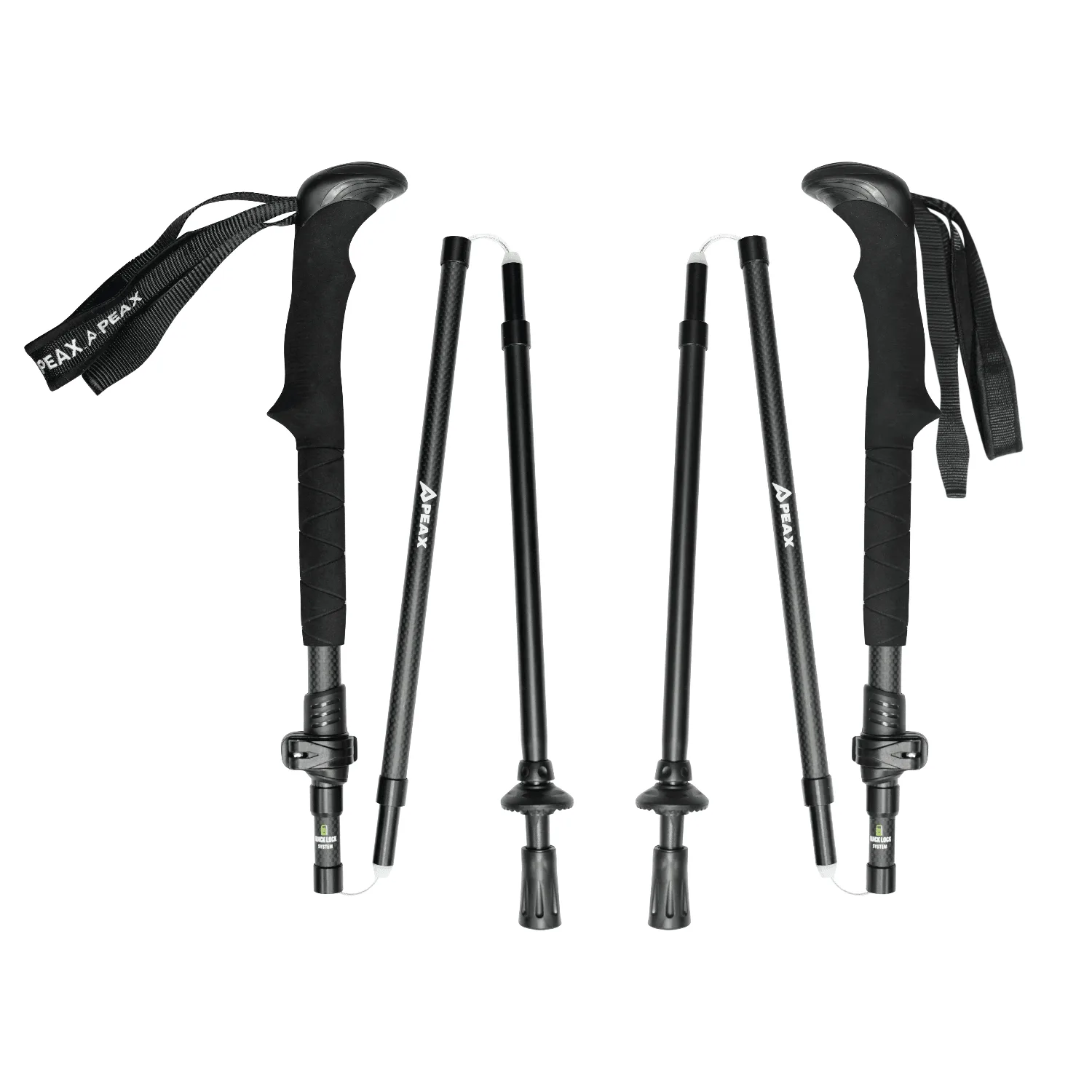
- PEAX BACKCOUNTRY Z TREKKING POLES: The PEAX Backcountry Z are folding collapsible trekking poles built for hunters who need lightweight stability when conditions demand it and compact storage when they don't. Folding poles have more joints than fixed-length poles, so cleaning and drying the connection points after each hunt matters more, not less.
- PEAX BACKCOUNTRY Z (CORK) TREKKING POLES: The PEAX Backcountry Z cork trekking poles provide added stability and confidence while packing down small when they're no longer needed, with cork handles for all-day comfort. Cork grips need thorough drying after wet hunts, so give them extra time before collapsing and storing the poles.
Trekking pole maintenance is a five-minute habit, not a project. Clean and dry your poles after each hunt, check locks and tips before you leave, and replace worn tips early. Do that consistently, and your poles will stay dependable for many seasons.