Quick answer
For toddlers (12–24 months), choose simple, graspable wooden toys like the Vroom Bus or Geo Matching Blocks that build fine motor skills without small parts. For preschoolers (3–5 years), add open-ended sets like Urban City Blocks or dollhouse figures that encourage storytelling and social play. Always prioritize solid wood construction and non-toxic finishes.
Why Age Matters in Pretend Play Kitchen Toys
Children develop at different rates, but their play needs shift noticeably between 12 months and 5 years. A toy that engages a toddler may frustrate a preschooler, and a complex set meant for older kids can overwhelm a younger child. Matching the toy to the child's developmental stage helps them build confidence, fine motor skills, and social abilities without unnecessary frustration.
Wooden toys from PlanToys are designed with these stages in mind. They use chemical-free rubberwood, formaldehyde-free glue, organic pigments, and water-based dyes, so safety is consistent across all ages. The key difference is in the complexity and number of pieces, not the materials.
Toddlers (12–24 Months): Grasp, Push, and Explore
At this stage, children are mastering basic motor skills. They enjoy toys they can easily hold, push, and roll. Simple cause-and-effect play—like pushing a car or stacking blocks—builds hand-eye coordination and spatial awareness. Avoid sets with many small pieces that could be a choking hazard or require complex assembly.
The Vroom Bus is a good fit for this age. Its catalog description notes it is "intentionally designed for easy grabbing, gripping and playing," and it helps develop fine motor skills and hand-eye coordination. The Geo Matching Blocks, with 10 blocks in 5 shapes, also work well for stacking and sorting without overwhelming a toddler.
Preschoolers (3–5 Years): Storytelling and Open-Ended Play
Preschoolers begin to create narratives and enjoy role-playing. They can handle more pieces and more complex interactions. Open-ended toys that allow them to build scenes, act out stories, and collaborate with others are ideal. This is also the age when pretend play kitchen sets become especially engaging, as children mimic adult activities.
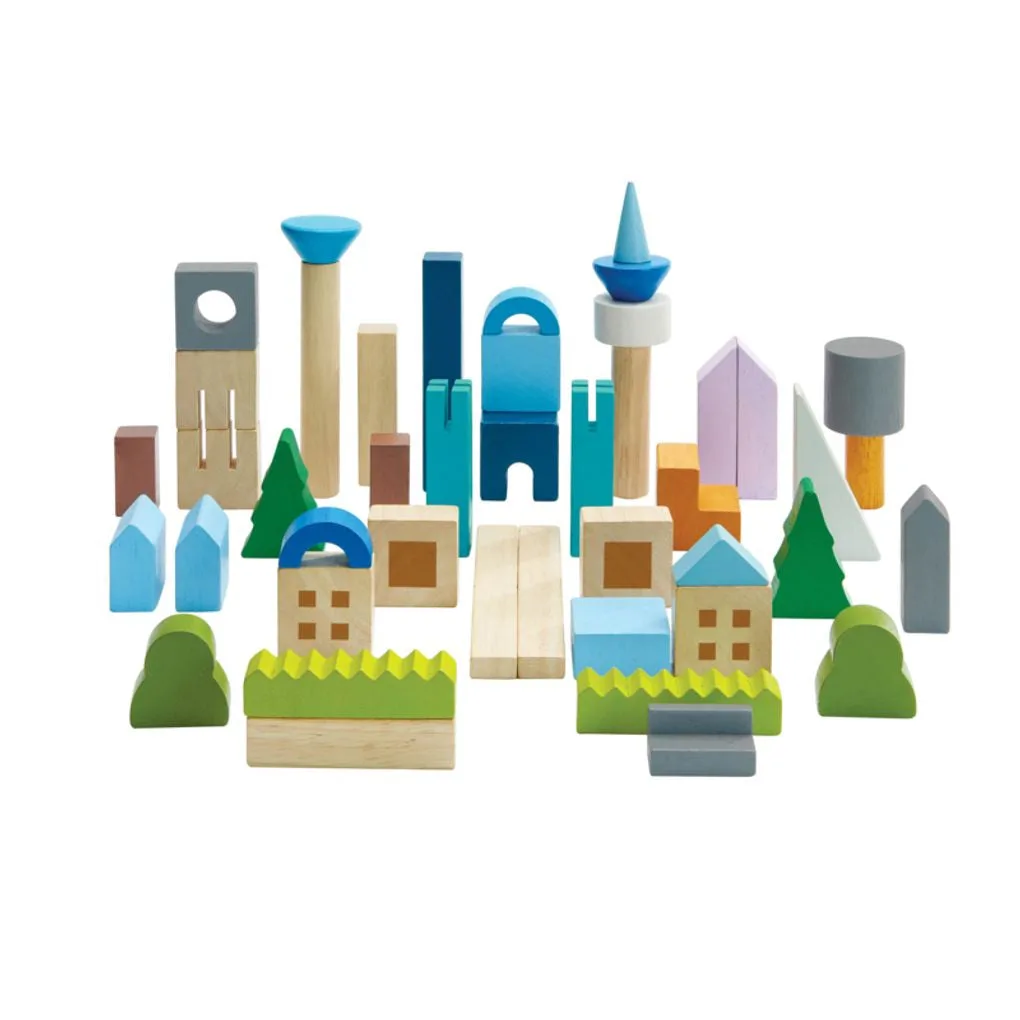
The Urban City Blocks set includes 45 unique blocks, trees, and arches, which can be used to build a cityscape or integrate with other play environments. The Girl Dollhouse Figure (light skin tone) is a 1:12 scale doll with solid wood body and poseable wire limbs, compatible with PlanToys dollhouses. Both encourage imaginative storytelling and social play.
Trade-Offs: Simplicity vs. Complexity
Choosing a simpler toy for an older child may lead to boredom, while a complex set for a toddler can cause frustration or safety concerns. The Vroom Bus offers great grip for little hands but lacks the narrative depth a preschooler might want. Conversely, the Urban City Blocks offer rich open-ended play but may have too many pieces for a 1-year-old to manage safely. Consider your child's current attention span and fine motor control, not just their age.
Decision Rules for Choosing Pretend Play Kitchen Toys by Age
- Rule 1: Match piece count to attention span: Toddlers (12–24 months) do best with 5–15 pieces. Preschoolers (3–5 years) can handle 30–50 pieces. More pieces offer more play possibilities but also more cleanup and potential overwhelm. Check the piece count before buying. Fewer pieces for younger children, more for older.
- Rule 2: Prioritize safety and material quality at every age: All PlanToys products use chemical-free rubberwood, formaldehyde-free glue, organic pigments, and water-based dyes. No matter the age, solid wood construction is safer and more durable than plastic alternatives. Always verify materials. Wooden toys with non-toxic finishes are a safe choice from toddler through preschool.
- Rule 3: Choose open-ended over single-purpose for older children: Preschoolers benefit from toys that can be used in multiple ways—building, storytelling, sorting. The Urban City Blocks and dollhouse figures support this. Single-purpose toys (like a simple car) may not hold their interest as long. For ages 3+, prefer toys that allow multiple play patterns.
- Rule 4: Consider compatibility with other sets: Many PlanToys sets are designed to work together. The Urban City Blocks are compatible with Unit Blocks, and the dollhouse figure fits PlanToys dollhouses. This extends the life of the toy as the child grows. Look for toys that can integrate with future purchases to avoid redundancy.
Product Facts at a Glance
- Vroom Bus: Vroom Bus: Designed for little hands to easily grab, grip, push and roll. Helps develop fine motor skills and hand-eye coordination. Ideal for toddlers who are still building basic motor control. The simple action of pushing and rolling builds confidence and coordination.
- Geo Matching Blocks: Geo Matching Blocks: 10 blocks with 5 different shapes for matching, stacking, categorizing and building. Challenges logical thinking, shape differentiation, sequencing, and concentration. Great for toddlers transitioning to preschoolers. The limited number of pieces reduces overwhelm while still offering cognitive challenges.
- Urban City Blocks: Urban City Blocks: 45 unique blocks including trees and decorative arches. Compatible with PlanToys Unit Blocks. Allows open-ended play for creating skylines and urban environments. Suits preschoolers who enjoy building and storytelling. The large set encourages collaboration and extended play sessions.
- Girl Dollhouse Figure - Light Skin Tone: Girl Dollhouse Figure - Light Skin Tone: Solid wood body and head, poseable wire limbs. 1:12 scale, compatible with PlanToys dollhouses. Sustainably made in Thailand. Perfect for preschoolers who engage in narrative role-play. The poseable limbs add realism, and the solid wood construction ensures durability.
Which Age Group Fits Best?
Best for
- Toddlers (12–24 months) who need simple, graspable toys that build fine motor skills
- Preschoolers (3–5 years) who enjoy open-ended building and narrative role-play
Not ideal for
- Children under 12 months who still mouth toys (small parts in some sets may pose a risk)
- Older children (6+) who may prefer more complex, themed playsets with more pieces or electronic features