Quick answer
Wrap a soft measuring tape around the middle of your dog's neck, snug but not tight, and note the measurement. Add about two finger-widths of slack for comfort, then choose a collar whose adjustable range includes that number. Recheck the fit every few weeks, especially on puppies and dogs whose coat or weight changes with the seasons.
Why collar sizing is not the same as collar length
A collar's listed length is usually the total material length, not the neck size it fits. The usable range is shorter because the buckle and adjustment holes take up space. Always compare your dog's neck measurement to the collar's stated fit range, not its full length. If a product page only lists a single length, treat that as a decision limitation and look for a size range or contact the seller before buying.
What you need before you start measuring
A flexible cloth tape measure works best because it follows the curve of the neck. If you only have a straight ruler, use a piece of string or a shoelace, wrap it around the neck, mark the overlap, then lay it flat against the ruler. Have a few small treats on hand to keep your dog standing still and relaxed. Measuring while your dog is sitting or lying down can give a false reading because the neck skin bunches.
Where exactly to place the tape
Find the middle of the neck, roughly halfway between the base of the skull and the top of the shoulder blades. This is the spot where a collar naturally settles. Place the tape there, not up near the ears and not down on the shoulders. For dogs with a thick ruff or a heavy winter coat, measure over the fur as the collar will sit, then check the fit again after a groom or seasonal shed.
Tight collar signs to watch for
A collar is too tight if you cannot slide two fingers flat between the collar and the neck. Other warning signs include red or rubbed skin, hair loss around the neck, a dog that paws at the collar, or a hoarse cough when the leash is attached. A tight collar can restrict breathing and cause discomfort during walks. If you see any of these signs, loosen the collar by one hole or size up.
Loose collar danger and how to spot it
A collar is too loose if it can slide over your dog's head without being unbuckled, or if it hangs low enough that a front leg can slip through during play. A loose collar can catch on furniture, fence posts, or crate bars and cause a choking hazard. It can also let your dog back out of the collar during a walk. If the collar slips past the ears with gentle pulling, it needs to be tightened or replaced with a smaller size.
Using a dog collar size chart correctly
Most dog collar size charts list a neck range, such as 14 to 18 inches. Your dog's measurement should fall comfortably inside that range, not at the very edge. If your dog measures 17.5 inches and the range tops out at 18, the collar will fit but with little room to adjust. When in doubt, size up and use the adjustment holes to fine-tune. For growing puppies, always buy for the upper end of their current measurement so the collar lasts through the next growth spurt.
Step-by-step collar measuring process
- Gather your tools: Use a flexible cloth tape measure, or a string and a straight ruler. Have treats ready to keep your dog standing still. Checkpoint: Your dog should be standing, not sitting or lying down.
- Find the middle of the neck: Locate the midpoint between the base of the skull and the top of the shoulder blades. This is where the collar will rest. Mistake to avoid: Measuring too high near the ears or too low on the shoulders.
- Wrap the tape snugly: Wrap the tape around the neck at that midpoint. Pull it snug against the fur but do not compress the skin. Checkpoint: The tape should touch the fur all the way around without leaving a dent.
- Record the measurement: Note the number where the tape meets. If using string, mark the overlap and measure it flat against a ruler. Write it down in inches or centimeters, whichever the collar size chart uses.
- Add two-finger slack: Add roughly two finger-widths (about 1 to 1.5 inches) to your measurement for comfort and movement. Checkpoint: This adjusted number is the neck size to match against the collar's fit range.
- Match to the collar size range: Compare your adjusted number to the collar's stated neck range. Choose a size where your number falls in the middle, not at the edge. Mistake to avoid: Buying based on total collar length instead of the fit range.
- Test the fit on your dog: Put the collar on and try sliding two fingers flat between the collar and the neck. If they fit, the collar is not too tight. Checkpoint: If the collar slides over the head without unbuckling, it is too loose.
A collar built for adjustable fit
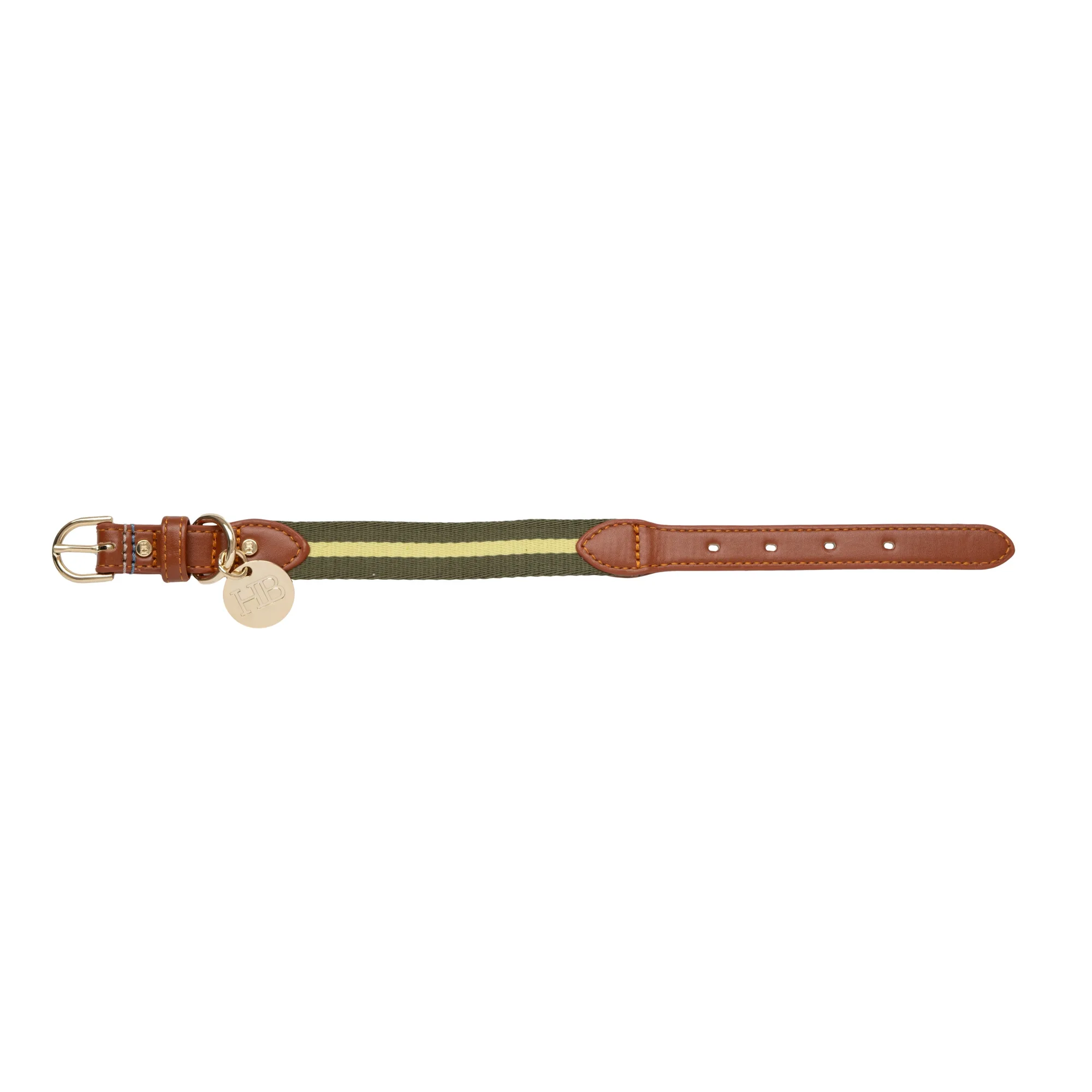
- Duo Color Signature Stripe Collar: The Duo Color Signature Stripe Collar is made with sustainable practices in mind, according to Harry Barker. If you want a collar that aligns with environmentally responsible choices, this option combines style with a lower-impact approach.