Quick Answer
Measure your dog's chest girth at the widest point behind the front legs, then measure the neck base where a collar would sit. Write both numbers down and compare them to the harness size chart, choosing the size that fits the girth measurement first. Re-measure every few months for puppies and dogs whose weight changes, and always check fit with the harness on before trusting the number on the tag.
The Two Measurements That Actually Matter
Most harness sizing problems start with measuring the wrong spot. You need two numbers: chest girth and neck base. Chest girth is the distance around the widest part of the ribcage, usually right behind the front legs. Neck base is the distance around the lower neck where a collar naturally rests, not up near the ears. Use a soft tape measure or a piece of string you later lay against a ruler. Keep the tape snug but not tight — you should be able to slide one finger underneath. If your dog is between sizes on the chart, size up for the girth and rely on the adjustment range to take up the slack, because a harness that is too small will rub and restrict movement.
Why 'It Looks About Right' Fails
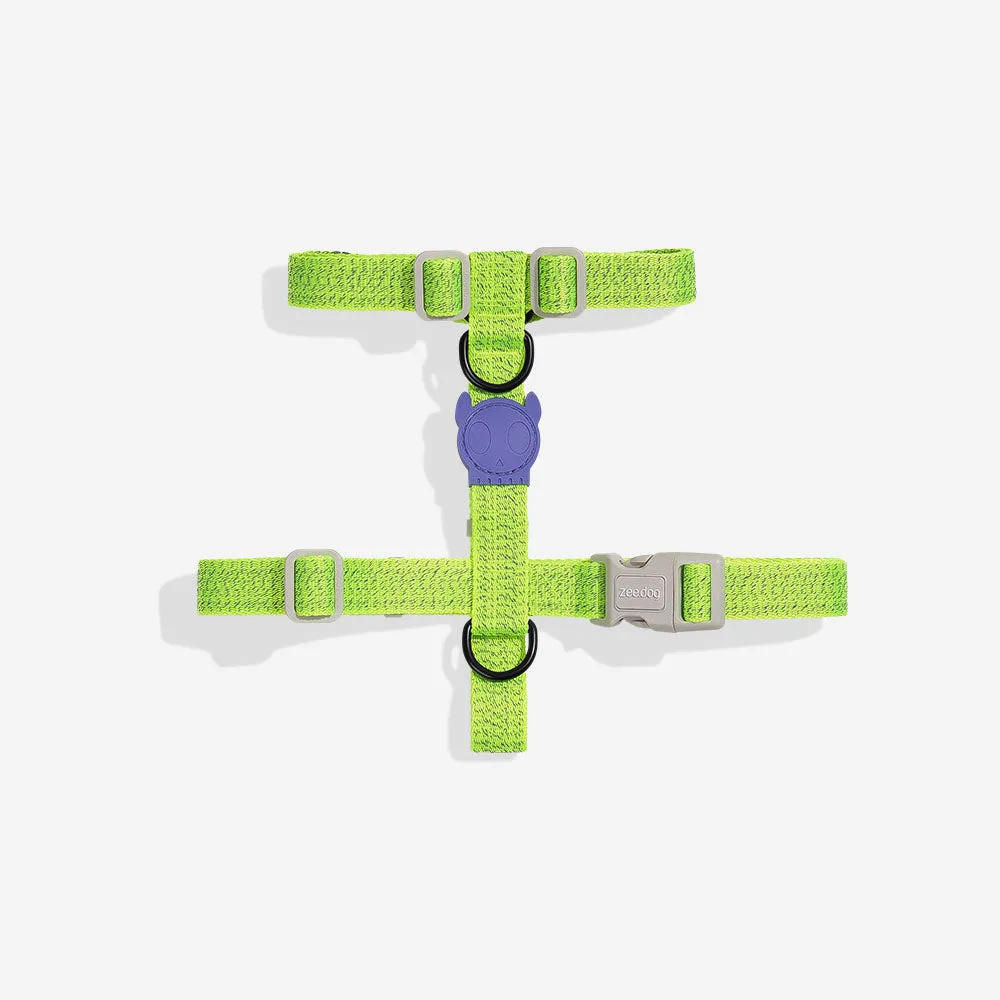
Eyeballing a harness size is the most common mistake because dog body shapes vary far more than most people expect. A dog with a deep chest and narrow waist can wear a medium in one brand and a large in another. Even within the same brand, a dog H-harness and an adjustable air mesh harness can fit differently because of strap placement and padding thickness. The fix is to measure, then test the harness on your dog with the straps adjusted to your measurements before deciding. Check that you can fit two fingers under every strap, that the chest strap sits behind the shoulder blades rather than across them, and that the d-ring stays centered on the back. If any strap digs in or the harness twists when your dog walks, the size or adjustment is wrong.
When to Stop Adjusting and Change the Harness
Some fit problems cannot be solved by adjusting straps. If you have already sized up and the harness still slips over the shoulders, or if the chest panel sits too far forward and rubs the front legs, the harness style is wrong for your dog's body. Dogs with very narrow chests often do better in an H-harness with two d-ring placements, because the straps can be tightened independently. Dogs with sensitive skin or short coats may prefer a mesh harness with soft edges and breathable padding. Stop adjusting when the harness leaves marks, restricts leg movement, or your dog can back out of it even when the girth strap is snug. At that point, switch to a different harness design rather than forcing the fit.
Symptom-to-Fix Diagnosis
- Harness slips over the shoulders or dog backs out: The girth strap is too loose or the harness is too large for the chest depth. Measure chest girth again and tighten the girth strap until you can fit no more than two fingers underneath. If the harness still slips, size down or switch to an H-harness with independent neck and girth straps. If tightening does not stop the slipping, the harness shape is wrong for your dog — choose a different style.
- Red marks, rubbing, or hair loss behind the front legs: The chest strap is sitting too far forward or the harness is too small. Reposition the chest strap so it rests behind the shoulder blades. If the marks persist, size up or choose a mesh harness with softer edges and breathable padding. Stop using a harness that leaves marks — chafing gets worse with every walk.
- Harness twists or shifts to one side during walks: The straps are uneven or the d-ring is pulling the harness off-center. Adjust both sides to equal lengths and check that the d-ring sits centered on the back. A second d-ring placement can help if your dog pulls to one side. If the harness still twists after balancing the straps, the design does not match your dog's build.
Harness Options That Address Common Fit Issues
- NOX Lumen | H Harness: The NOX Lumen H-harness is fully adjustable with two d-ring placements on the back, providing two safe options to clip your leash. Two d-rings let you reposition the leash attachment to reduce pulling and twisting, which helps if your dog's harness tends to rotate during walks. The H shape also gives independent neck and girth adjustment, useful for narrow-chested dogs.
- Brain | Adjustable Air Mesh Harness: The Brain Adjustable Air Mesh Harness is a lightweight, breathable mesh chest harness that's soft on fur and fully adjustable around the neck and girth. Breathable mesh reduces heat buildup and chafing for dogs with short coats or sensitive skin. Full adjustability around both neck and girth means you can fine-tune the fit after measuring, which matters when your dog is between sizes.