Quick answer
Measure your dog's chest girth at the deepest point behind the front legs, then measure the neck circumference at the base where the harness collar sits. Write both numbers down and compare them to the harness size chart before ordering. For a leather working harness, chest girth matters most because the breast plate carries the load and must sit flat without restricting breathing.
Why chest girth is the measurement that matters most
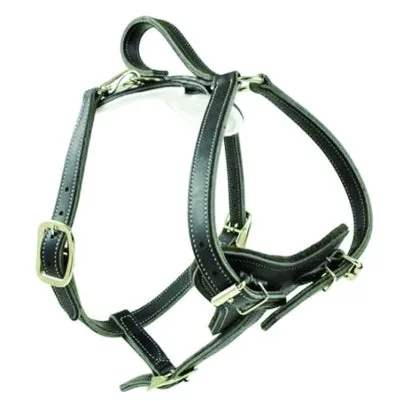
Most harness sizing problems come from measuring the neck first or guessing based on breed. A leather harness like the Tactical K9 Leather Harness uses a Y-shaped breast plate to distribute load across the chest, so the chest girth determines whether the harness sits correctly. If the chest measurement is too small, the breast plate rides up into the throat. If it is too large, the harness shifts side to side during movement and rubs behind the front legs.
Measure the chest at the widest point, which is usually just behind the front legs and over the deepest part of the ribcage. Keep the tape snug but not tight. You should be able to slide two fingers under the tape without effort. If you cannot, the tape is too tight and the harness will restrict breathing during hard work.
How to measure neck size without guessing
The neck measurement sets the collar portion of the harness. Measure at the base of the neck where the harness collar naturally rests, not up near the ears and not down at the shoulders. For dogs with a thick coat, press the tape down through the fur until it contacts the skin, but do not compress the coat so much that you create a false reading. If your dog has a very thick ruff, add one finger width to the measurement to account for coat compression when the harness is tightened.
A common mistake is measuring the neck too high. That gives a smaller number and leads to a harness that sits too low on the shoulders. The correct position is where a flat collar would sit during a walk. If you already have a well-fitting collar, measure the inside circumference of that collar as a cross-check.
Check the harness adjustment range before you buy
A measurement only helps if the harness can adjust to it. Leather harnesses typically have a narrower adjustment range than nylon ones because leather does not stretch. Check the size chart for both the minimum and maximum chest girth of each size. If your dog measures near the top of a size range, consider sizing up rather than down, especially for a working dog that will wear the harness over a coat in cold weather.
The Tactical K9 Leather Harness is adjustable with solid fittings, but the breast plate is intentionally smaller and lighter than most. That design takes the load better and avoids cutting off air, which means better endurance for the dog. The tradeoff is that the smaller plate leaves less room for error in the chest measurement. Measure twice and write the number down before ordering.
Test the fit before the first real walk
Once the harness arrives, put it on with all straps at the middle of their adjustment range. Check three points: the breast plate should sit flat on the chest without digging in, the shoulder straps should clear the front leg movement without rubbing, and you should be able to fit two fingers under every strap. Walk your dog on a lead for five minutes and watch for any twisting or sliding.
If the harness shifts, adjust one strap at a time and recheck. Leather takes a short break-in period, so a fit that feels slightly firm at first will often settle after a few walks. If the breast plate still rides up or the harness twists after adjustment, the size is wrong, not the adjustment.
Three-step measuring process for a leather harness
- Step 1: Measure chest girth at the deepest point: Wrap a soft tape measure around the widest part of the ribcage, just behind the front legs. Keep the tape level and snug, allowing two fingers to slide underneath. Write the number down immediately. Checkpoint: if the tape slopes down toward the belly, start again. A sloped tape adds length and gives a false measurement.
- Step 2: Measure neck circumference at the base: Measure where a flat collar naturally sits, at the base of the neck. For thick-coated dogs, press the tape through the fur to the skin and add one finger width for coat compression. Checkpoint: compare this number to your dog's current collar size. If it differs by more than 2 cm, remeasure both.
- Step 3: Compare both numbers to the harness size chart: Find the size where both your chest and neck measurements fall inside the adjustment range, not at the extreme ends. For leather harnesses, choose the size where your dog is in the middle of the range. Checkpoint: if your dog is between sizes, size up for working dogs that wear harnesses over coats, and size down only if the harness will always be worn on a short coat.
Product facts that affect harness sizing
- Tactical K9 Leather Harness: The Tactical K9 Leather Harness has an improved breast plate that is smaller and lighter than most, with a Y shape design that takes the load better and does not cut your dog's air, which means better endurance. A smaller breast plate gives less margin for a wrong chest measurement, so accurate measuring is more important than with a bulkier harness. The Y shape also means the neck and chest measurements work together to keep the plate flat.