Quick answer
Measure your dog's paw width and length while they are standing, using a ruler or a piece of paper and a pen. Compare the measurements to the brand's size chart for the specific boot or shoe model you're considering.
Why paw shape matters more than weight
Many people guess boot size based on breed or weight, but paw shape varies widely even within a litter. A narrow paw needs a snug fit to avoid slipping, while a wide paw needs enough room to splay naturally. Measuring both width and length gives you a reliable starting point.
Boots like the Ridgeline Shoes use an articulated knit construction that mimics a dog's paw shape, so width is especially important for that model. The Summit Trex Dog Shoes have a more traditional design that still benefits from accurate width measurement.
When to remeasure
Puppies grow quickly, but even adult dogs can change paw size after weight gain, loss, or seasonal coat changes. Measure before every boot purchase, especially if it has been more than six months since your last fitting.
Step-by-step paw measurement guide
- Step 1: Gather your tools: You will need a ruler, a piece of paper, a pen, and your dog. A helper can keep your dog calm and standing still. A flexible measuring tape works too, but a ruler on paper is more accurate for paw width.
- Step 2: Trace the front paw: Place your dog's front paw on the paper. While they are standing and bearing weight, trace around the paw with the pen held vertically. Do not press the paw flat—let it rest naturally. Common mistake: tracing while the paw is lifted often results in a smaller outline. Always trace with the dog standing.
- Step 3: Measure length and width: Use the ruler to measure the longest distance from the tip of the longest toe to the back of the paw pad (length). Then measure the widest point across the paw pad (width). Record both in millimeters or inches. If the two front paws differ, use the larger measurement to ensure a comfortable fit for both.
- Step 4: Check the size chart: Compare your measurements to the size chart for the specific boot model. For Ruffwear boots, the chart usually lists paw width and length ranges for each size. If your dog falls between sizes, choose the larger size for comfort. Do not rely on breed or weight alone—the chart is model-specific. The Grip Trex boots, for example, may fit differently than the Summit Trex shoes.
- Step 5: Test the fit: Put the boot on your dog and check that the toes are not cramped and the boot does not spin around the paw. The closure should be snug but not tight. Walk your dog indoors for a few minutes to see if the boot stays in place. If the boot slides off or leaves red marks, remeasure and consider a different size or model.
Boot and shoe options to consider
-
Summit Trex™ Dog Shoes: The Summit Trex Dog Shoes balance durability and flexibility with a weather-resistant polyester ripstop upper and non-marking outsole. This makes them a good choice for everyday walks on pavement or trails where you need reliable traction without the bulk of a heavier boot.
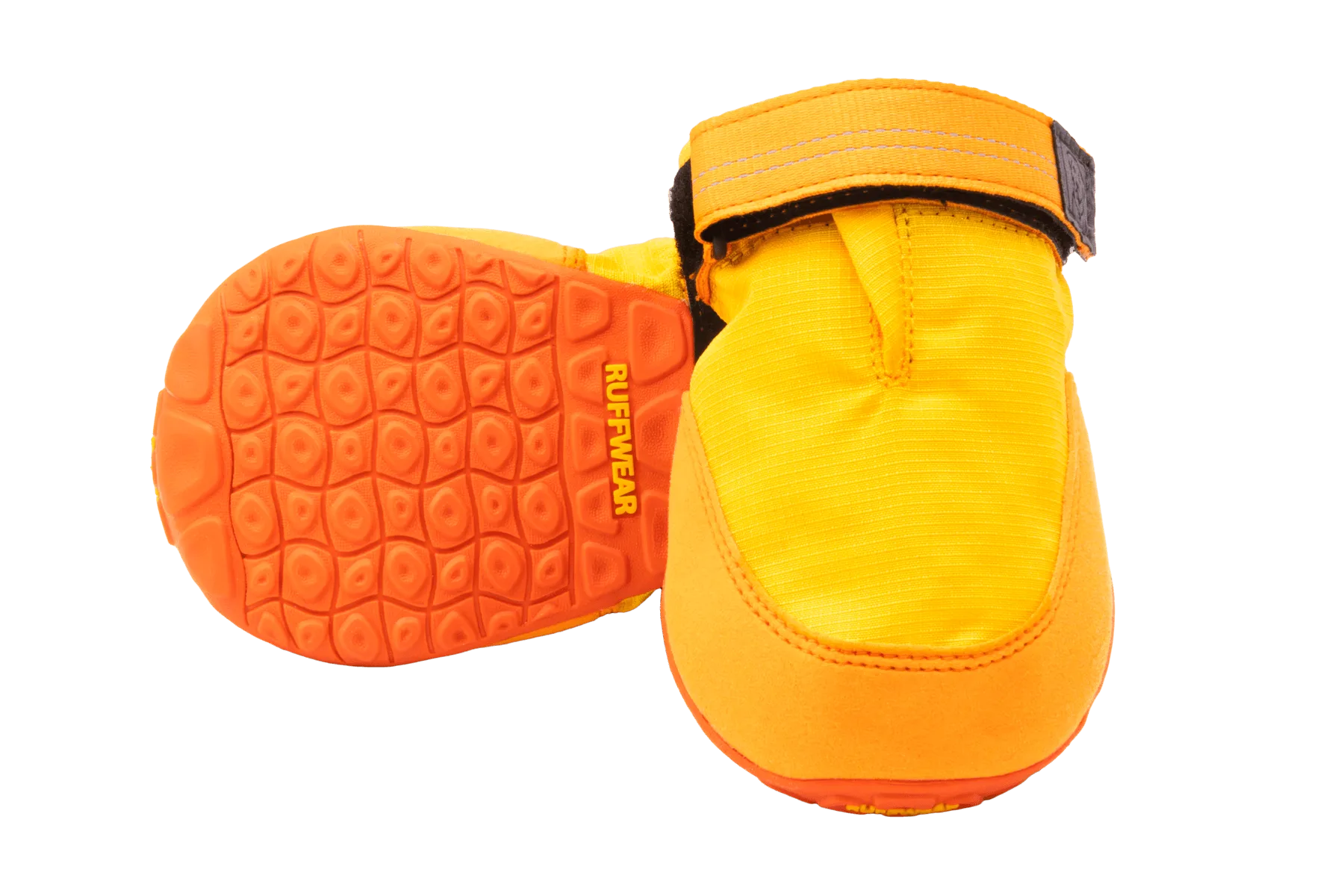
Summit Trex™ Dog Shoes
-
Ridgeline™ Shoes: The Ridgeline Shoes feature an articulated, engineered knit construction that delivers superior fit, comfort, and breathability for nimble paw protection on rugged terrain. The knit construction hugs the paw closely, so accurate width measurement is critical to avoid pressure points or slippage during multi-day excursions.
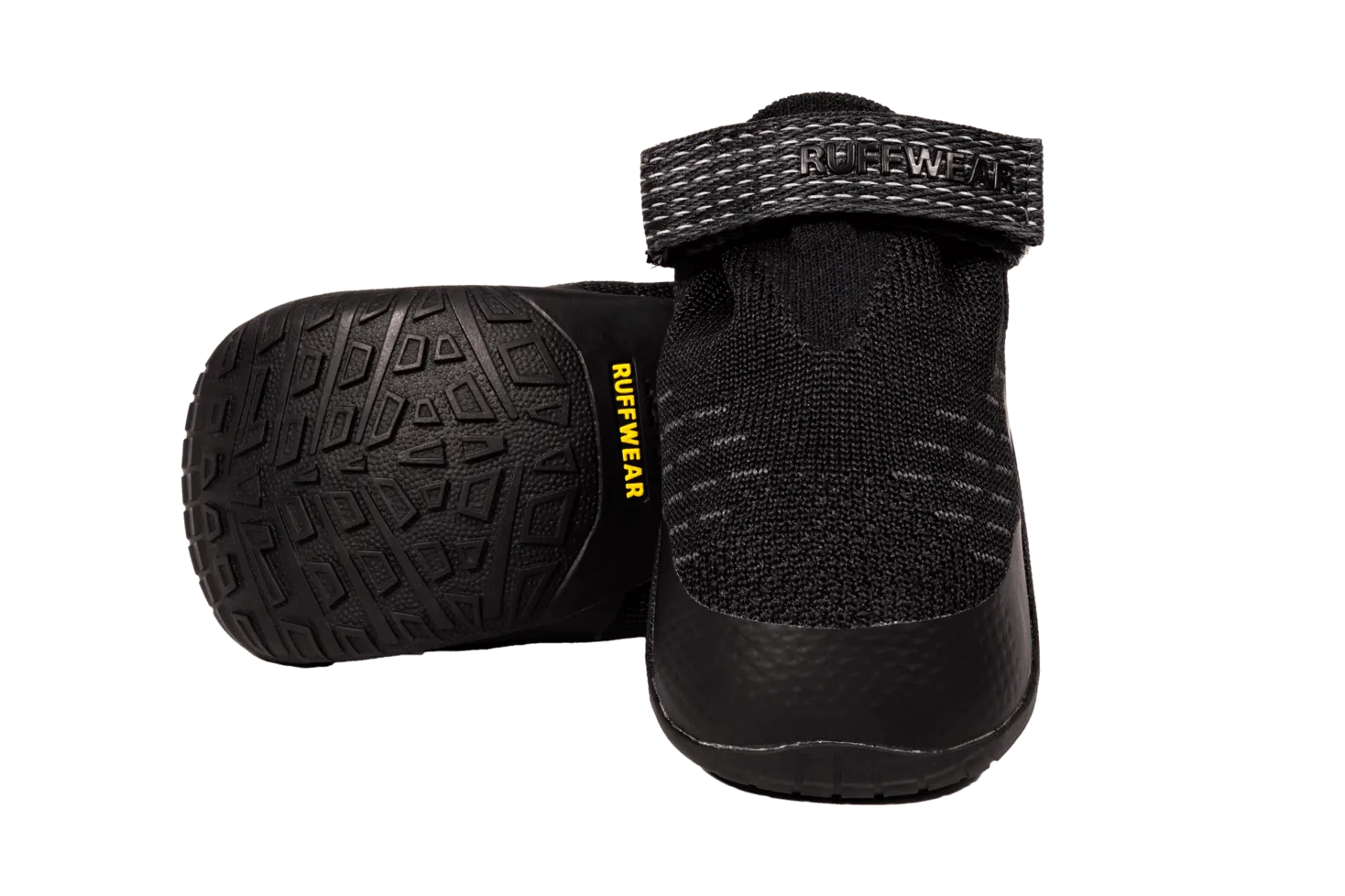
Ridgeline™ Shoes