Quick answer
Measure your underbust snugly and your bust at the fullest point while wearing an unpadded bra, then subtract the underbust from the bust to estimate cup size. Always try the calculated size in the exact bra style you want, because padding, underwire, and cup construction change how a bra fits.
What you need before you start
A soft measuring tape, a mirror, and a bra without padding give the most reliable numbers. If you only have a padded bra, take it off for the bust measurement and keep your arms relaxed. Write down both numbers in inches or centimeters, but stay consistent. A common mistake is measuring over a thick sweatshirt or a push-up bra, which adds inches that do not exist.
How to measure your underbust
Wrap the tape around your ribcage directly under your bust, keeping it level all the way around. Pull it snug, but not tight enough to leave marks. Breathe normally and check in the mirror that the tape is horizontal. If the number is odd, round down to the nearest even number for most sizing systems. A common mistake is letting the tape dip at the back, which makes the band size too large.
How to measure your bust
Stand straight and wrap the tape around the fullest part of your bust, usually across the nipple line. Keep the tape parallel to the floor and do not pull it tight. Arms should rest at your sides. If you are between two numbers, round to the nearest whole number. A common mistake is measuring while leaning forward, which can add or subtract an inch depending on your shape.
How to find your correct cup size
Subtract your underbust measurement from your bust measurement. Each inch of difference generally equals one cup size, starting with A for a one-inch difference. For example, a two-inch difference points to a B cup, three inches to a C cup, and so on. This is a starting point, not a guarantee. A common mistake is assuming the calculator result is final; different brands and styles can shift you up or down a cup.
How to check underwire bra fit
Put on the bra on the loosest hook and adjust the straps so they stay flat without digging. The underwire should sit flat against your ribcage, not on breast tissue. The center gore should touch your sternum. If the band rides up in the back, go down a band size and up a cup size. If the cups gape or wrinkle, try a smaller cup or a different style. A common mistake is judging fit by the straps alone; the band provides most of the support.
How to translate your measurements into a real bra
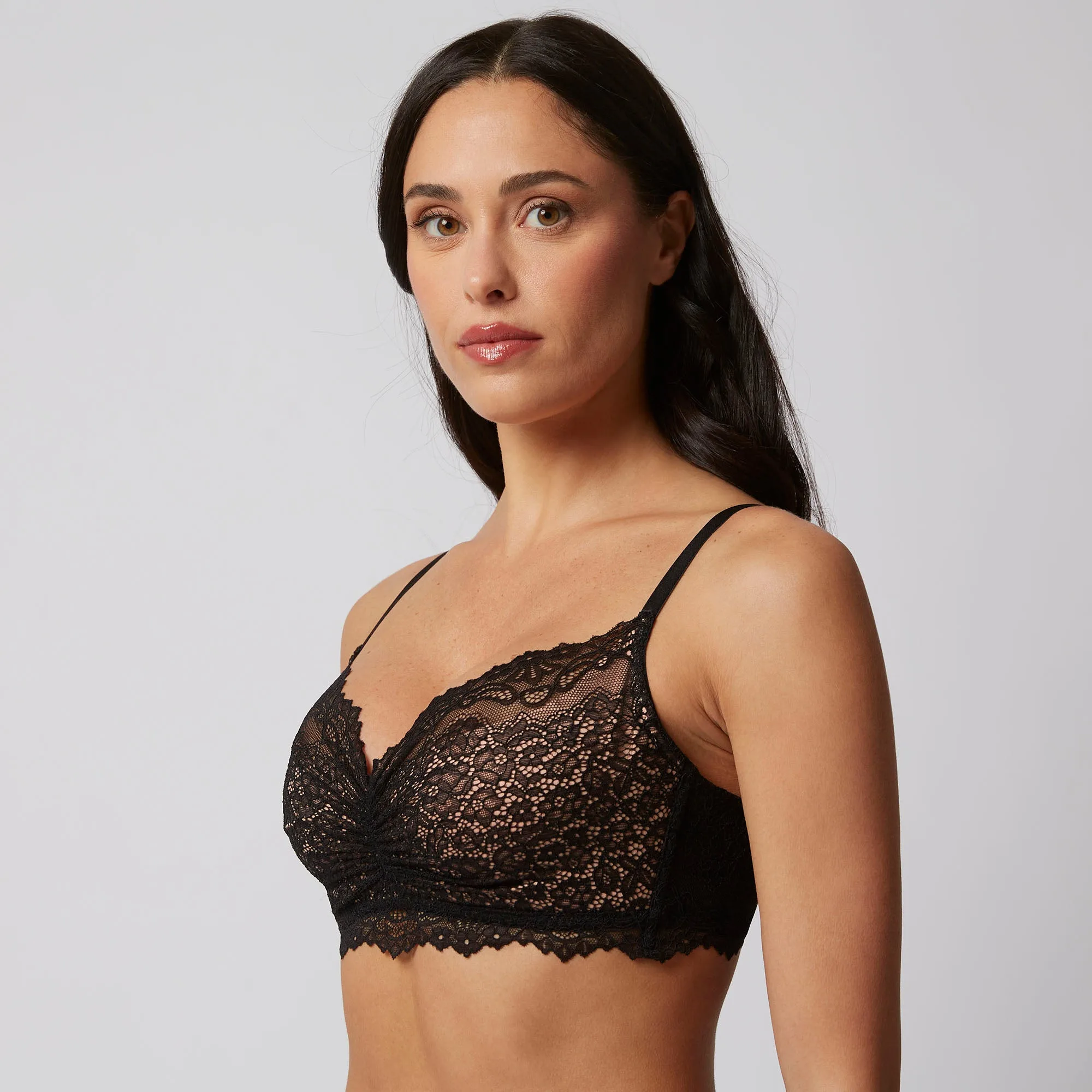
Once you have your starting size, look for bras that match your shape and coverage needs. Padded balconette styles with differentiated cups can offer a tailored fit and enhanced shape, while push-up styles add volume. If you prefer a natural silhouette, a soft cup or lightly lined bra may work better. Always check the brand's size chart because sizing can vary between collections. A common mistake is buying multiple bras in the same size without trying different cup constructions first.
Your step-by-step bra measuring routine
- Measure your underbust: Wrap a soft tape snugly around your ribcage under your bust, keeping it level. Round down to the nearest even number. Checkpoint: the tape should not leave red marks or slide down when you move.
- Measure your bust: Wrap the tape around the fullest part of your bust, parallel to the floor, without pulling tight. Arms at your sides. Checkpoint: the tape should touch your back at the same height as the front.
- Calculate cup size: Subtract underbust from bust. Each inch of difference equals one cup size (1 inch = A, 2 = B, 3 = C, etc.). Checkpoint: treat this as a starting size, not a final verdict.
- Try your starting size in the style you want: Put on the bra on the loosest hook, adjust straps, and check the band, cups, and underwire. Checkpoint: the band should be level and snug, the center gore should touch your sternum, and the underwire should not sit on breast tissue.
- Adjust size if needed: If the band rides up, go down a band size and up a cup size. If cups gape, try a smaller cup or a different construction like padded or push-up. Checkpoint: a well-fitting bra feels secure without digging or shifting when you raise your arms.
Product facts that affect fit
- Balconcino imbottito c/coppe differenziate Executive Lace: Padded balconette bra with differentiated cups for a customized fit and support, with elegant lace detailing. Differentiated cups can accommodate slight asymmetry and give a more tailored shape than standard cups.
- Balconcino con coppe differenziate e ferretto Emerald Touch: Balconette bra in recycled satin with recycled embroidered tulle, differentiated cups, underwire, and adjustable straps with tone-on-tone rhinestone details. The underwire and differentiated cups provide structured support, while adjustable straps let you fine-tune the lift.
- Push Up - New Justin: Push-up bra with underwire from the New Justin series, made in soft microfiber with recycled fibers, designed to increase volume naturally. If you want extra volume, a push-up style can change how your calculated cup size feels, so try your measured size in this style before assuming it will fit the same as an unlined bra.