Quick answer
Use a small accessories bag with multiple zippered pockets to sort your sewing tools by size and frequency of use, making them portable and instantly accessible.
Why a small bag works better than a drawer
A dedicated sewing tools storage bag keeps your most-used items separate from bulk supplies. Unlike a deep drawer or a pegboard that stays in one place, a bag lets you carry your essentials to a cutting table, a class, or another room without losing track of anything.
The trade-off is limited capacity. A small accessories bag is not meant for fabric bolts or large rulers. If you work with many oversized tools, you will still need a larger tote or a dedicated station.
Steps to organize your sewing tools with a small accessories bag
- Empty and sort your current tools: Take everything out of your sewing area and group items by type: cutting tools (scissors, rotary cutter), marking tools (chalk, pens), needles and pins, and thread-related items (bobbins, small spools). Discard duplicates or broken pieces. A common mistake is keeping too many duplicates. If you haven’t used a tool in six months, leave it out of the bag.
- Assign pockets by frequency of use: Place your most-used tools (scissors, seam ripper, tweezers) in the outer, easy-to-reach pockets. Reserve the inner and smaller pockets for backup items like extra needles, hand-sewing thread, or a measuring tape. The bag’s 11 pockets let you dedicate one to each category. Check that each pocket closes fully. Overstuffing a zippered pocket makes it hard to open and risks damaging the zipper.
- Label or color-code pockets if needed: If you share the bag or have many similar-looking tools, attach a small fabric tag or use a permanent marker on the inside seam of each pocket to note its contents. This step is optional but saves time when you are in the middle of a project. Skip labeling if you are the only user and you remember where everything goes—labels can add visual clutter.
- Store the bag in a consistent, accessible spot: Keep the bag near your sewing machine or on a shelf where you can grab it quickly. Because it is compact, it also fits inside a larger project bag or a drawer. Avoid stacking heavy items on top of it to preserve the shape of the pockets. If you store the bag out of sight, you might forget what is inside. Place it where you see it daily.
- Review and reset weekly: Once a week, open the bag and remove any lint, loose threads, or items that drifted into the wrong pocket. Return tools to their assigned pocket. This five-minute reset keeps the system working long-term. Skipping the weekly reset is the main reason small organizers become junk drawers. Make it part of your post-project cleanup.
Product used in this guide
-
The Small Accessories Bag - Sewing Tools Storage Bag: This bag has 11 zippered pockets in various sizes, designed to hold scissors, seam rippers, thread spools, bobbins, and more. You can assign each pocket to a tool category, so every item has a fixed home and you can see at a glance if something is missing.
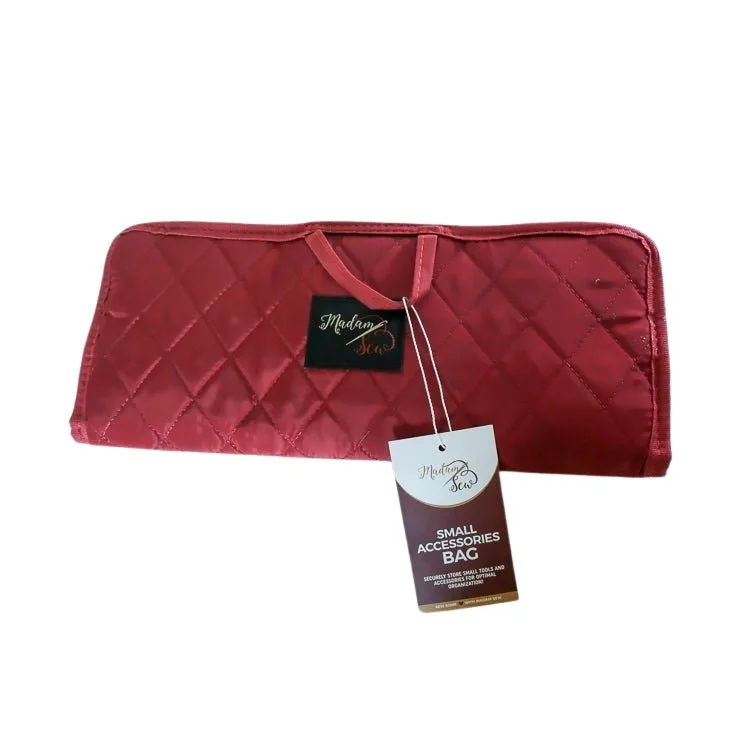
The Small Accessories Bag - Sewing Tools Storage Bag