Quick answer
Organize your tool backpack by placing the heaviest items closest to your spine and at the bottom, using internal dividers and external pockets for lighter accessories, and choosing a backpack with a supportive frame and padded straps.
Why weight distribution matters for heavy tools
Carrying heavy tools in a backpack that isn't organized properly can lead to back strain, fatigue, and reduced mobility on the jobsite. The key is to keep the load centered and close to your body's natural center of gravity. A well-organized tool backpack distributes weight evenly, prevents tools from shifting, and makes it easier to access what you need without unpacking everything.
Choosing the right backpack for heavy loads
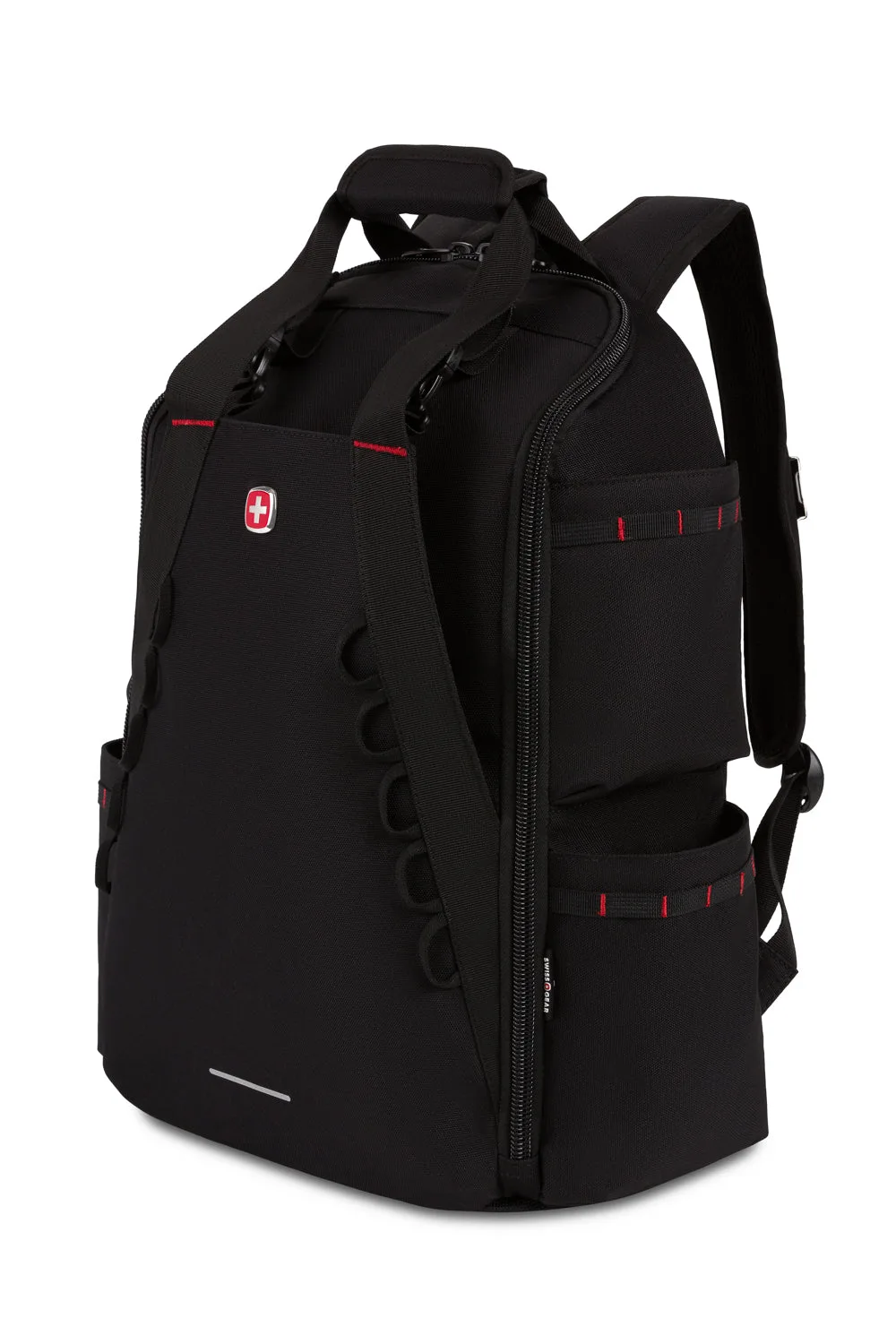
Not every tool backpack is built for heavy tools. Look for a model with a rigid or semi-rigid frame that keeps the bag upright even when loaded, rip-resistant material for durability, and ergonomic padded shoulder straps and a hip belt to transfer weight off your shoulders. The SWISSGEAR ProTool Max Tool Backpack, for example, features a superstructure that keeps it upright and is crafted from strong rip-resistant material, making it a solid choice for heavy tool storage.
Steps to organize your tool backpack for heavy tools
- Place heaviest tools against your spine: Load power tools, heavy hand tools, and battery packs into the main compartment closest to your back. This keeps the weight centered and reduces strain on your shoulders. Common mistake: putting heavy tools in outer pockets, which pulls you backward and increases fatigue.
- Use internal dividers to prevent shifting: Separate heavy items with padded dividers or use tool rolls to keep them from banging into each other. This also helps maintain balance when you walk or climb. Checkpoint: if tools rattle when you move, add more padding or reposition them.
- Store lighter accessories in external pockets: Use front and side pockets for measuring tapes, screwdrivers, pliers, and small parts. Keep frequently used items in easy-to-reach spots, but avoid overloading one side. Common mistake: stuffing every pocket full, which makes the backpack lopsided and harder to carry.
- Secure cords and cables with the front panel: If your backpack has an extendable front panel or cord management system, use it to store extension cords, chargers, and cables. This keeps them tangle-free and off the ground. Checkpoint: wrap cords loosely and secure them with a strap or clip to prevent snagging.
- Adjust straps and use the hip belt: Tighten shoulder straps so the backpack sits high on your back, and fasten the hip belt to transfer up to 30% of the weight to your hips. This reduces shoulder strain and improves stability. Common mistake: leaving the hip belt loose or unused, which forces your shoulders to bear all the weight.
Product facts
-
SWISSGEAR ProTool Max Tool Backpack: Crafted from strong rip-resistant material with a superstructure that keeps it upright. The rigid frame prevents the backpack from sagging or tipping over when loaded with heavy tools, and the durable material withstands rough jobsite conditions.
SWISSGEAR ProTool Max Tool Backpack