Quick answer
Sort wooden play food into categories, use open baskets or bins, label them with pictures, and rotate sets weekly to keep the play kitchen tidy and engaging.
Why wooden play food needs special storage
Wooden play food is heavier and more delicate than plastic versions. It can scratch or dent if tossed into a deep bin with other toys. A dedicated storage system protects the paint and wood while making it easy for kids to access and put away on their own.
The trade-off with open bins
Open bins let toddlers see and grab pieces without help, but they also collect dust. Choose bins with low sides and wipe them monthly. Avoid deep bins where small pieces disappear at the bottom.
5 steps to organize wooden play food
- Sort into food groups: Group pieces by type: fruits, vegetables, proteins, breads, and utensils. This helps kids find what they need for a recipe and makes cleanup a matching game. Common mistake: mixing all pieces together makes it hard for toddlers to find items and discourages independent cleanup.
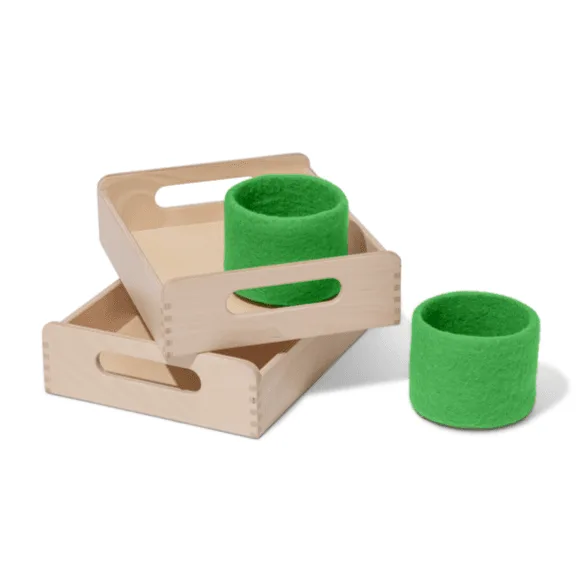
- Choose the right container: Use shallow, open baskets or bins that are wide enough for small hands. Each group gets its own bin. Avoid containers with lids or deep sides. Checkpoint: ensure the bins are lightweight so a child can carry them to the play kitchen.
- Label with pictures: Attach a simple photo or drawing of the food group to each bin. Non‑reading kids can match the picture to the food inside. Common mistake: using only text labels – toddlers cannot read yet, so pictures are essential.
- Store near the play kitchen: Place the bins on a low shelf or in a caddy next to the play kitchen. Keep the most‑used groups (fruit, veggies) at the front. Checkpoint: if the bins are out of sight, kids will leave food on the floor. Keep them visible and reachable.
- Rotate sets weekly: Swap out one or two food groups each week. This renews interest and prevents the same pieces from being ignored. Store off‑rotation sets in a closed box in another room. Common mistake: keeping all food available at once overwhelms children and leads to messy play. Rotating limits choices and keeps the kitchen fresh.
Recommended product
-
Tiny Land® Play Kitchen Accessories – Wooden Play Food for Play Kitchen: Pretend Cooking Set for Kids: Made of light natural wood, sanded smooth, covered with colorful, non-toxic, water-based paint for durability and safety. The smooth finish and non-toxic paint mean you can store these pieces in open bins without worrying about wear from frequent handling or cleaning.
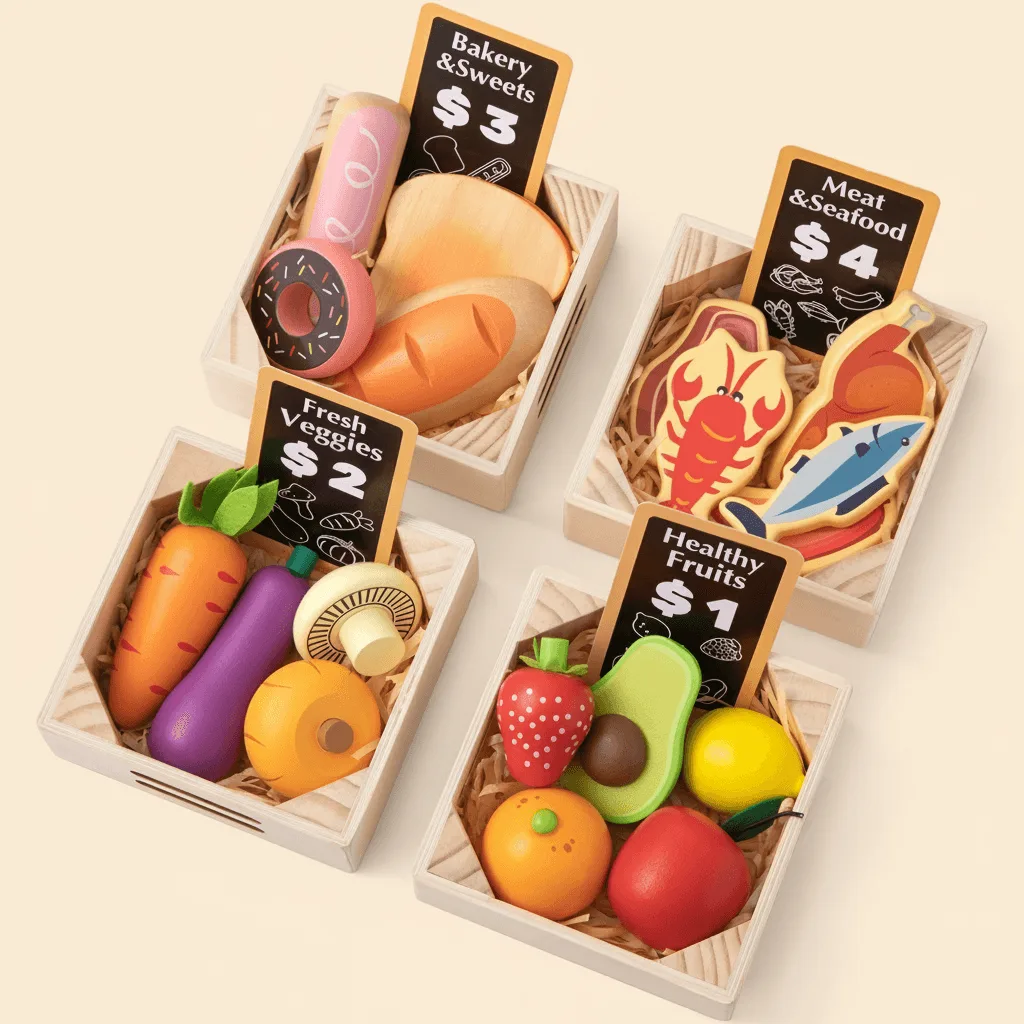
Tiny Land® Play Kitchen Accessories – Wooden Play Food for Play Kitchen: Pretend Cooking Set for Kids