Quick answer
To pack a week in a carry-on, start with a 5-4-3-2-1 clothing count, roll or fold clothes into packing cubes by category, compress soft items, and keep the heaviest cube at the bottom of the bag. Use the cubes as drawers at your destination. Check the bag's closed dimensions and weight before you leave, and remove one item if it feels tight.
Packing cubes turn a carry-on from a loose pile into a set of labeled drawers. For a week-long trip, the goal is not to bring less for its own sake; it is to bring exactly what you will wear and know where it lives.
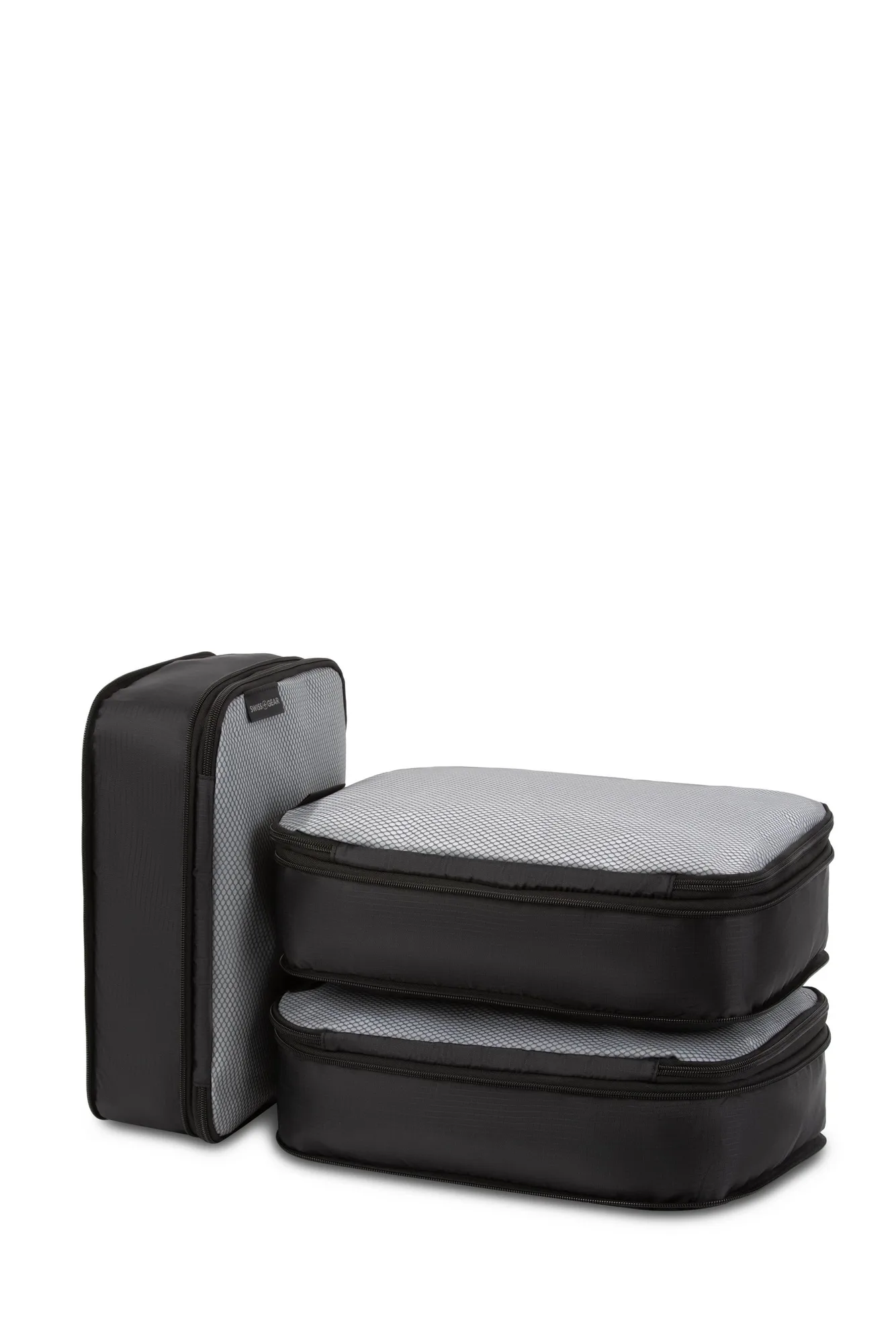
This guide walks through a repeatable packing cube travel method, from the first clothing count to the final zip. It uses the SWISSGEAR Travel Smart 3-Piece Packing Cube Set as a concrete example, but the steps work with any cube set you already own.
Step 1: Set a clothing count before you touch a cube
Decide the numbers first: five tops, four bottoms, three pairs of shoes, two outer layers, and one swimsuit or special item. This 5-4-3-2-1 framework keeps a week of outfits within a carry-on without counting every sock. Lay everything on the bed and remove anything you cannot picture wearing at least twice.
The common mistake is packing for mood instead of for the itinerary. If you have one dinner reservation, pack one dinner outfit, not three. Checkpoint: if your clothing pile does not fit in a single layer on the bed, it will not fit in the bag.
- Choose bottoms that match every top you pack.
- Wear your bulkiest shoes and jacket on travel day.
Step 2: Sort clothes into cube categories
Assign one cube to tops, one to bottoms, and one to small items like socks, underwear, and chargers. The SWISSGEAR Travel Smart 3-Piece Packing Cube Set gives you three sizes (S/M/M), so the small cube can hold accessories while the two medium cubes handle clothing. Category-based cubes mean you never unpack the whole bag to find a T-shirt.
Avoid the temptation to mix clean and dirty items in the same cube. Checkpoint: before zipping, each cube should contain only one category of item, so you can pull it out and use it as a drawer at the hotel.
- Keep a small cube for cables, adapters, and toiletries that might leak.
- If a cube is more than three-quarters full before compression, you are overpacking it.
Step 3: Roll or fold into the cubes, then compress
Roll knit fabrics and casual shirts to save space and reduce creases. Fold structured items like blazers along their natural seams. Place rolled items side by side rather than stacking them, so the cube stays flat. The Travel Smart cubes have dual zippers that let you expand or compress contents, which helps when you are close to the bag's limit.
The common mistake is compressing before the cube is closed. Zip the cube first, then use the compression zipper to pull the sides in. Checkpoint: a compressed cube should feel firm but not hard; if it bulges, remove one item.
- Put a dryer sheet or cedar block in one cube for longer trips.
- Do not over-compress wrinkle-prone fabrics like linen.
Step 4: Load the carry-on in weight order
Place the heaviest cube at the bottom of the bag, closest to your back or wheels. Medium cubes go in the middle, and the small cube goes on top or in an outer pocket. This keeps the bag stable when you carry it and makes the items you need least often the hardest to reach. If your bag has a laptop compartment, keep electronics out of the cubes and in their own padded sleeve.
The mistake here is filling the bag front-to-back instead of bottom-to-top, which makes it tip forward. Checkpoint: stand the packed bag upright and let go; it should stay standing.
- Use the bag's compression straps after the cubes are in.
- Leave a fist-sized gap near the top for a jacket or souvenirs.
Step 5: Add the non-clothing carry-on packing list
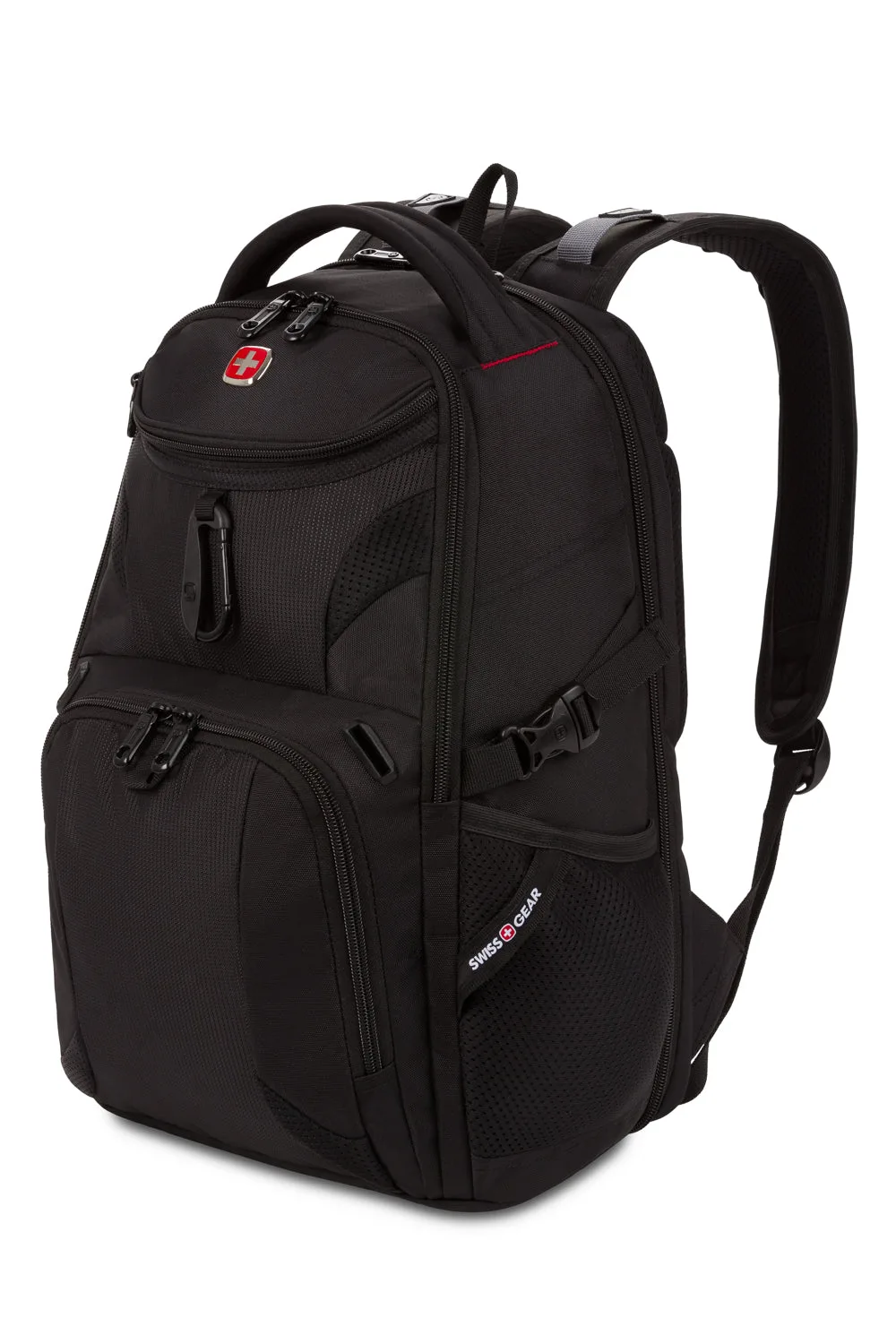
After cubes are loaded, add the items that do not belong in them: a quart-sized toiletries bag, medications, a charger pouch, a collapsible water bottle, and one change of underwear in your personal item. Keep travel documents and a pen in an outer pocket. If you use a travel laptop backpack with a dedicated padded laptop compartment, the laptop stays separate from the cubes and is easy to remove at security.
Avoid packing toiletries inside a clothing cube, where a leak can ruin a week of outfits. Checkpoint: everything you need for the first 24 hours should be in your personal item, not checked or buried in the carry-on.
- Decant liquids into travel-size bottles.
- Pack a folded tote bag for laundry or day trips.
Step 6: Do a final fit and weight check
Zip the carry-on and lift it by the handle. It should feel balanced and close without force. Weigh it if your airline has a carry-on limit; if it is over, move the heaviest cube to your personal item or remove one bottom. Check the bag's dimensions against your airline's published limits before you leave home.
The common mistake is discovering a weight problem at the gate. Checkpoint: if you cannot close the bag with one smooth pull, you have one item too many. Put it back in the closet.
- Take a photo of the packed bag so you can repack it on the return trip.
- Leave one cube empty for dirty clothes on the way home.
Carry-on packing checkpoints
- Count before you cube: Use the 5-4-3-2-1 clothing count and lay everything out before packing. If the pile does not fit in one layer on the bed, remove two items.
- One category per cube: Sort tops, bottoms, and small items into separate cubes so you can use them as drawers. A mixed cube means you will unpack the whole bag to find one sock.
- Zip, then compress: Close the cube first, then use the compression zipper to pull the sides in. A compressed cube should feel firm, not hard.
- Heavy at the bottom: Load the heaviest cube closest to your back or wheels, and keep the small cube on top. The packed bag should stand upright on its own.
- Keep toiletries out of clothing cubes: Use a separate quart-sized bag for liquids, and keep first-24-hour items in your personal item. A leak in a clothing cube can ruin the trip.
- Final fit and weight check: Zip the bag with one smooth pull and weigh it against your airline's limit. If it does not close easily, you have one item too many.
Products that support this method
- SWISSGEAR Travel Smart 3-Piece (S/M/M) Packing Cube Set: Made from durable ripstop polyester with a coated mesh top panel on each cube for protection and visibility, and dual zippers that let you expand or compress contents. The mesh panel lets you see what is in each cube without opening it, and the dual zippers help you compress soft items when the carry-on is nearly full.
- SWISSGEAR Voyager USB 21.5" Travel Laptop Backpack: Designed with the versatility of carry-on luggage, including a spacious expandable clothing compartment with clothing straps and two removable zippered accessory bags. If you prefer a backpack to a suitcase, the clothing straps and removable bags give you cube-like organization without a separate packing cube set.
A week in a carry-on comes down to a repeatable system: count, sort, compress, load, check. The SWISSGEAR Travel Smart 3-Piece Packing Cube Set gives you the three sizes this method needs, and the steps above work with any cube set you already own. Pack once with the checkpoints, then reuse the same layout on every trip.